Best hand lenses & loupes for rockhounding trips

Identify crystals and minerals before you haul rock home

A 10x hand lens is the standard field tool for identifying crystal faces, fossil details, and mineral cleavage — before you commit pack weight to a specimen. We compared triplet loupes, folding geologist lenses, and illuminated models for low-light work.

Hand Lenses & Loupes comparison chart

ProductPriceMagnificationLens typeLightBest forBuy
Best overall10x Triplet LoupeBelOMO$35 approx.10xTriplet achromaticNoneSerious ID workView on
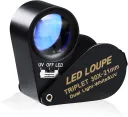
Best with light30x 21mm LED Illuminated LoupeCarson$12 approx.30x / 21xAsphericLEDLow light / fine detailView on
Budget pick10x Folding Pocket MagnifierFolding$8 approx.10xSingle glassNoneCasual collectingView on
Best wide field20x Wide Field Geologist LoupeBausch & Lomb$28 approx.20xGlass doubletNoneFossil detailView on

Product details

Best overall

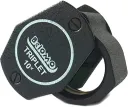
BelOMO 10x Triplet Loupe

BelOMO triplet loupes are the gold standard for field mineralogy — achromatic glass eliminates distortion at the edges so you can actually identify cleavage and crystal form.

Features

  • Triplet achromatic lens
  • 20.5 mm viewing field
  • Metal body with swing-away case
  • Made in Belarus — industry standard

Pros and cons

ProsCons
Optical quality unmatched at priceNo built-in light
Durable metal constructionPremium vs cheap loupes
Trusted by geologistsGlass requires care

Activities and environments best for

  • Mineral identification
  • Crystal collecting
  • Fossil detail work

Overall

The loupe to buy once and carry for decades.

Customer reviews

4.7 out of 5

4,200 global ratings

5 star80%
4 star14%
3 star4%
2 star1%
1 star1%
Best with light

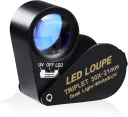
Carson 30x 21mm LED Illuminated Loupe

Carson’s LED loupe combines magnification with built-in lighting — essential for examining vug crystals in shade or checking fossil sutures on overcast days.

Features

  • Dual magnification (30x and 21x)
  • LED illumination
  • Compact folding design
  • Aspheric lens reduces distortion

Pros and cons

ProsCons
Built-in lightHigher magnification has narrow field
AffordableBattery dependent
Dual magnification options

Activities and environments best for

  • Shaded outcrops
  • Micro fossils
  • Night camp ID sessions

Overall

When you cannot see enough detail even with a good 10x.

Customer reviews

4.5 out of 5

6,800 global ratings

5 star71%
4 star19%
3 star7%
2 star2%
1 star1%
Budget pick

Folding 10x Folding Pocket Magnifier

A basic folding 10x magnifier covers casual field ID without a big investment — adequate for checking whether a find is worth wrapping.

Features

  • Folds into protective metal case
  • 10x standard geology magnification
  • Pocket clip friendly size
  • Glass lens (not plastic)

Pros and cons

ProsCons
Very cheapSingle lens distortion at edges
Pocket sizedNot achromatic quality
Adequate for beginners

Activities and environments best for

  • Beginners
  • Backup loupe
  • Kids

Overall

Fine to start — upgrade to a triplet when ID matters.

Customer reviews

4.3 out of 5

5,200 global ratings

5 star65%
4 star22%
3 star10%
2 star2%
1 star1%
Best wide field

Bausch & Lomb 20x Wide Field Geologist Loupe

A 20x wide-field loupe reveals fine fossil sutures and crystal zoning without the tunnel vision of cheap high-power loupes — popular with paleontology field trips.

Features

  • 20x magnification with wider field of view
  • Glass optics
  • Metal fold-away housing
  • Suitable for fossil prep assessment

Pros and cons

ProsCons
More detail than 10xNo light
Wider field than cheap 20xHigher magnification needs steady hands
Solid build

Activities and environments best for

  • Fossil hunting
  • Fine crystal zoning
  • Advanced collectors

Overall

Step up from 10x when trilobite sutures and crystal phantoms matter.

Customer reviews

4.4 out of 5

1,100 global ratings

5 star70%
4 star20%
3 star7%
2 star2%
1 star1%

Hand Lenses & Loupes FAQ

What magnification do rockhounds need?

10x is the geology standard for field mineral and fossil ID. Add 20–30x with LED for micro detail, but start with a quality 10x triplet.

Triplet vs single lens loupe?

Triplet lenses (three glass elements) correct color fringing and edge distortion. Single lenses are cheaper but distort at the edges where you need clarity.

Do I need a lighted loupe?

Not always, but LED models help in shade, overcast weather, and when examining vug crystals that sit in shadow on the rock face.