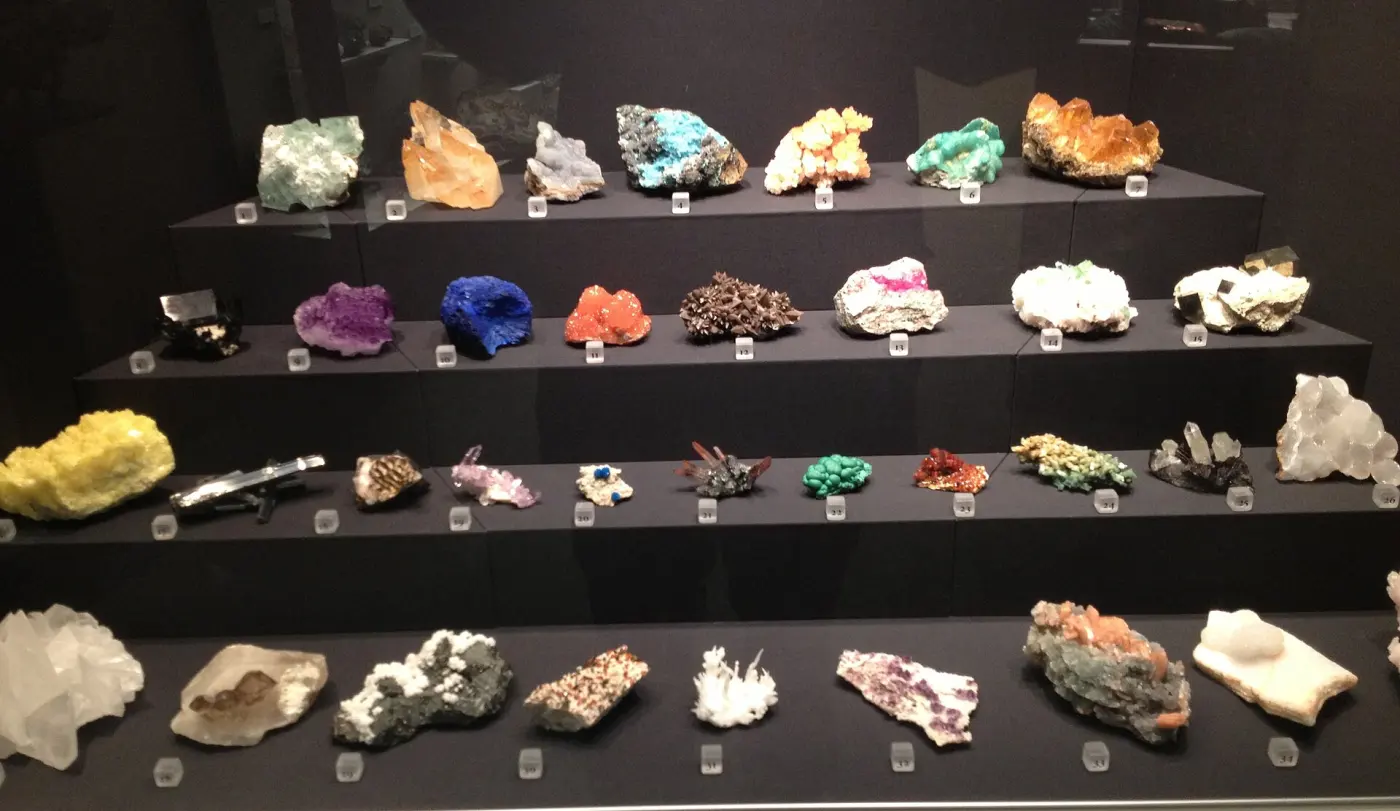
Jade Creek Jade Locality
Rockhounding site in Kobuk, Alaska · Other
Jade Creek Jade Locality is a jade rockhounding site near Kobuk, AK. Fee required. Best season: Late June through early September, the short Arctic summer.
Typical season: Late June through early September, the short Arctic summer
About Jade Creek Jade Locality
The Jade Mountains run along the eastern border of Kobuk Valley National Park in Alaska's Brooks Range, roughly between Onion Portage inside the park and the village of Ambler outside it, half of the range inside the park boundary and half outside. They are a small offshoot of the larger Baird Mountains, surrounded by coniferous forest and tundra with rivers and creeks running through the valleys, and they are the best-known source of nephrite jade in North America.
Nephrite is a fibrous amphibole rock rather than a single mineral, and its interlocking fibre structure makes it extraordinarily tough, far harder to break than its Mohs hardness of about 7 would suggest. That toughness is precisely why the Iñupiaq valued it: the National Park Service notes that jade was one of the strongest materials available to them, used for adzes, knives and ornaments long before European contact. Alaska adopted jade as its state gem in 1968 largely on the strength of these deposits.
For a visiting collector, though, the honest headline is access rather than geology. There are no roads. Travel is by bush plane, river boat or snowmachine, and the prime jade ground is split between a national park where collecting is prohibited and Native corporation land where it requires permission.
Key facts
Structured details for trip planning — verify access and fees with the land manager before you visit.
- Specimen type
- Jade
- Primary specimens
- Nephrite Jade, Serpentine, Garnet, Chromite
- Fee status
- Fee required
- Nearest town
- Kobuk
- State
- Alaska
- Coordinates
- 67.45000, -156.48000
- Best season
- Late June through early September, the short Arctic summer. The region is snow-covered and dark for much of the year
- Access difficulty
- Expedition level. There is no road access. Travel is by bush plane, river boat or snowmachine, and self-sufficiency is mandatory
- Collecting hazards
- Access restrictions
- Camping
- Wilderness camping only, with full backcountry self-sufficiency and bear-safe food storage
- Land manager
- National Park Service
- Activities
- Wilderness travel and river journeys. Jade collecting requires landowner permission and is not available casually
- Facilities
- None. Kobuk, Shungnak and Ambler are small villages with limited supplies; Kotzebue is the regional hub
- Last updated
- 2026-09-15
What to pack for Jade Creek Jade Locality
Gear we compare for other trips like this one — tools, safety, and the hike in.


Disclosure: Gear links may earn a commission as an Amazon Associate — at no extra cost to you. Learn more.
The experience
- Best time to visitLate June through early September, the short Arctic summer. The region is snow-covered and dark for much of the year
- AccessExpedition level. There is no road access. Travel is by bush plane, river boat or snowmachine, and self-sufficiency is mandatory
- FacilitiesNone. Kobuk, Shungnak and Ambler are small villages with limited supplies; Kotzebue is the regional hub
- Camping nearbyWilderness camping only, with full backcountry self-sufficiency and bear-safe food storage
Highlights & features
- The Jade Mountains are the best-known nephrite jade source in North America
- They run along the eastern border of Kobuk Valley National Park, half inside and half outside
- Positioned between Onion Portage inside the park and the village of Ambler outside it
- A small offshoot of the larger Baird Mountains, surrounded by boreal forest and tundra
- Jade was a primary toolstone for Inupiaq people, valued at hardness 7 on the Mohs scale
- Nephrite jade is a tough, fibrous amphibole rock, far more resistant to breaking than its hardness alone suggests
- The Brooks Range jade occurrences are associated with serpentinite and ultramafic rock
- Alaska adopted jade as its state gem in 1968, largely on the strength of these deposits
How to get there
There is no road access to the Jade Mountains or to Kobuk Valley National Park. Every trip begins with a flight. Kotzebue is the regional hub, reached by scheduled jet service from Anchorage. From there, air taxis fly to the Kobuk River villages of Ambler, Shungnak and Kobuk, and charter bush flights land on gravel bars and tundra strips. River travel on the Kobuk is the other common approach, typically by boat from the villages. This is genuine wilderness logistics. Flights are weather dependent and can be delayed for days, costs are high, and there is no infrastructure at the destination. Contact the National Park Service office in Kotzebue at 907-442-3890 for current park information, and arrange transport and any land access permissions well in advance.
There is no road access to the Jade Mountains or to Kobuk Valley National Park. Every trip begins with a flight.
Kotzebue is the regional hub, reached by scheduled jet service from Anchorage. From there, air taxis fly to the Kobuk River villages of Ambler, Shungnak and Kobuk, and charter bush flights land on gravel bars and tundra strips. River travel on the Kobuk is the other common approach, typically by boat from the villages.
This is genuine wilderness logistics. Flights are weather dependent and can be delayed for days, costs are high, and there is no infrastructure at the destination. Contact the National Park Service office in Kotzebue at 907-442-3890 for current park information, and arrange transport and any land access permissions well in advance.
Plan your visit
Treat this as an expedition, not a collecting trip. Anyone travelling here needs Arctic backcountry competence, bear-country practice, and a plan that works if the plane cannot come for three days.
Settle land access before anything else. Determine whether your intended ground is inside Kobuk Valley National Park, on NANA Regional Corporation land, on Bureau of Land Management ground, or on state land, and secure written permission where it is required.
Bring full expedition kit: satellite messenger, bear-resistant food storage, cold and wet weather gear, water treatment, surplus food and fuel, and repair supplies. Jade is dense, so any serious specimen has a real weight cost on a bush flight with a strict payload.
Timing: late June through early September. Facilities: none; limited supplies in the villages.
Most people interested in Alaskan jade will be better served buying from village carvers and Kotzebue outlets, which supports the communities whose land it comes from. See other Alaska collecting areas.
Things you need to take to Jade Creek Jade Locality

DEWALT DPG82 Concealer Safety Glasses
Buy two pairs — one lives in your pack permanently.
Check price on Amazon
SE Specimen Storage Bags 10-Pack
The basic system every collector should have in their pack.
Check price on Amazon
Osprey Talon 22 Backpack
The pack to save for if you collect more than a few times a year.
Check price on Amazon
NoCry Professional Construction Knee Pads
Buy once — your knees will notice by lunch.
Check price on AmazonDisclosure: Gear links may earn a commission as an Amazon Associate — at no extra cost to you. Learn more.
Access & fees
Land status here is the entire story and is unusually complicated. About half the Jade Mountains lie inside Kobuk Valley National Park. Collecting rocks and minerals is prohibited in National Park Service units, so no jade may be removed from the park side. Subsistence use by local residents is governed by separate provisions and does not extend to visiting collectors. Most of the prime jade-bearing ground outside the park, including Jade Mountain itself and the nearby creeks, is NANA Regional Corporation land. NANA is an Alaska Native Claims Settlement Act corporation and this is private land: entering or collecting requires the corporation's permission, and access policies are set by NANA rather than by any public agency. Some ground in the wider region is Bureau of Land Management or state land with different rules. Do not assume, and do not rely on a rockhounding guide's summary. Confirm the specific parcel before removing anything, and understand that taking jade from Native corporation land without permission is theft from a community that has held these mountains for millennia.
Land status here is the entire story and is unusually complicated.
About half the Jade Mountains lie inside Kobuk Valley National Park. Collecting rocks and minerals is prohibited in National Park Service units, so no jade may be removed from the park side. Subsistence use by local residents is governed by separate provisions and does not extend to visiting collectors.
Most of the prime jade-bearing ground outside the park, including Jade Mountain itself and the nearby creeks, is NANA Regional Corporation land. NANA is an Alaska Native Claims Settlement Act corporation and this is private land: entering or collecting requires the corporation's permission, and access policies are set by NANA rather than by any public agency.
Some ground in the wider region is Bureau of Land Management or state land with different rules. Do not assume, and do not rely on a rockhounding guide's summary. Confirm the specific parcel before removing anything, and understand that taking jade from Native corporation land without permission is theft from a community that has held these mountains for millennia.
Frequently asked questions
Can you collect jade in the Jade Mountains of Alaska?
Not casually. About half the range lies inside Kobuk Valley National Park, where collecting rocks and minerals is prohibited. Most prime jade ground outside the park is NANA Regional Corporation land, which is private and requires the corporation's permission. Confirm the specific parcel before removing anything.
How do you get to the Jade Mountains?
By air or river only; there are no roads. Kotzebue is the regional hub, reached by jet from Anchorage, with air taxis serving the Kobuk River villages of Ambler, Shungnak and Kobuk. River travel by boat is the other approach. Flights are weather dependent and can be delayed for days.
What is nephrite jade?
A tough, fibrous amphibole rock rather than a single mineral. Its interlocking fibre structure makes it far harder to break than its Mohs hardness of about 7 suggests, which is why the Iñupiaq used it for adzes and knives. Alaska adopted jade as its state gem in 1968.
Where are the Jade Mountains located?
Along the eastern border of Kobuk Valley National Park in Alaska's Brooks Range, half inside the park and half outside, positioned between Onion Portage within the park and the village of Ambler beyond it. They are a small offshoot of the larger Baird Mountains.
Is there a legitimate way to get Alaskan jade?
Yes. Buying from village carvers and Kotzebue outlets supports the communities whose land the jade comes from, and commercial recovery in the region operates under agreements with the Native corporation and local villages. For most people that is a far better option than an expedition into roadless Arctic wilderness.
Is jade Alaska's state gem?
Yes. Alaska adopted jade as its state gem in 1968, largely on the strength of the nephrite deposits in the Jade Mountains and the wider Kobuk region of the Brooks Range. Nephrite from this area was worked by Inupiaq people for tools and ornaments long before that designation.
What is the difference between nephrite and jadeite?
They are two distinct minerals both called jade. Nephrite is a fibrous amphibole, exceptionally tough because of its interlocking fibre structure, and it is what occurs in Alaska. Jadeite is a pyroxene, rarer and the source of the finest Burmese material. Alaskan jade is nephrite.
Can you collect in Kobuk Valley National Park?
No. Collecting rocks and minerals is prohibited in National Park Service units, and about half the Jade Mountains lie inside the park boundary. Subsistence provisions for local residents are a separate matter and do not extend to visiting collectors.
What is NANA Regional Corporation?
The Alaska Native regional corporation for the Northwest Arctic, established under the Alaska Native Claims Settlement Act of 1971. Its land is private property rather than public land, and most prime jade-bearing ground outside Kobuk Valley National Park belongs to it, so collecting there requires the corporation's permission.
How do you get to Kobuk Valley National Park?
By air or river only; there are no roads. Kotzebue is the regional hub, reached by jet from Anchorage, with air taxis serving Ambler, Shungnak and Kobuk on the Kobuk River. Charter bush flights land on gravel bars and tundra strips, weather permitting.
Can a visitor realistically collect Alaskan jade?
The answer collectors give is almost always no, and the reasons are access rather than geology. The prime ground is split between a national park where collecting is prohibited and Native corporation land that is private property requiring permission, and reaching either means bush flights or river travel with full Arctic self-sufficiency. The recommendation people make instead is to buy from village carvers and Kotzebue outlets, which supports the communities whose land the jade comes from.
How do collectors handle Native corporation land in Alaska?
The point made repeatedly is that Alaska Native Claims Settlement Act land is private property, not public land, despite often appearing as undeveloped country on a terrain map. Collectors describe carrying a land status map that distinguishes federal, state, borough, private and corporation ground, and treating unmarked wilderness as closed until confirmed otherwise. Several frame taking material from corporation land without permission as theft from a community rather than as a technical infraction.
Explore related hubs
Report an access change
Field conditions change. If this site is closed, claimed, flooded, or the fee has changed, tell us — we update listings with community tips and desk verification.
Include the date you visited and any land-manager contact. Do not share private gate codes.
Map & location
Culture & history
The Iñupiaq people of the Kobuk valley worked jade from these mountains for centuries, using it for adzes, knives and ornaments because it was among the strongest materials available to them. Onion Portage, inside the park to the west, is one of the most important archaeological sites in the Arctic, recording thousands of years of caribou hunting at a river crossing. That continuity matters to how the area should be treated today. The Native corporation lands around the Jade Mountains are not an administrative abstraction; they are the legal expression of a long-standing relationship between these communities and this ground. Commercial jade recovery in the region has operated under agreements with the corporation and local villages, which is the model any legitimate collecting follows.
Conservation
The clearest ethical line in this entry is about ownership rather than about resource depletion. Jade from the Jade Mountains belongs either to a national park where collecting is prohibited or to a Native corporation whose permission is required. Beyond that, Arctic environments recover slowly. Tundra damaged by vehicles or heavy foot traffic can show scars for decades, stream disturbance affects fish habitat in short-season waters, and wildlife is under pressure from a changing climate. Travel lightly, camp on durable surfaces, pack out everything including human waste where required, store food securely, and leave archaeological material completely undisturbed.
Sources & updates
Official land managers cited on this page
Always confirm current rules, closures, and fees on the agency site before visiting.
Spotted outdated access, fees, or safety info? Use Report an access change on this page or send a correction with the page URL — we review every submission.