Keokuk Geode Beds
Rockhounding site in Keokuk, Iowa · Geodes
Keokuk Geode Beds is a geode rockhounding site near Keokuk, IA. Fee required. Best season: April through October.
Typical season: April through October
About Keokuk Geode Beds
The Keokuk geode belt is one of the best known mineral localities in North America, and the name has been attached to a style of geode collected worldwide. It is centred on Keokuk, in the far southeastern corner of Iowa where the Des Moines River meets the Mississippi, and it extends across a tri-state area into northeast Missouri and western Illinois.
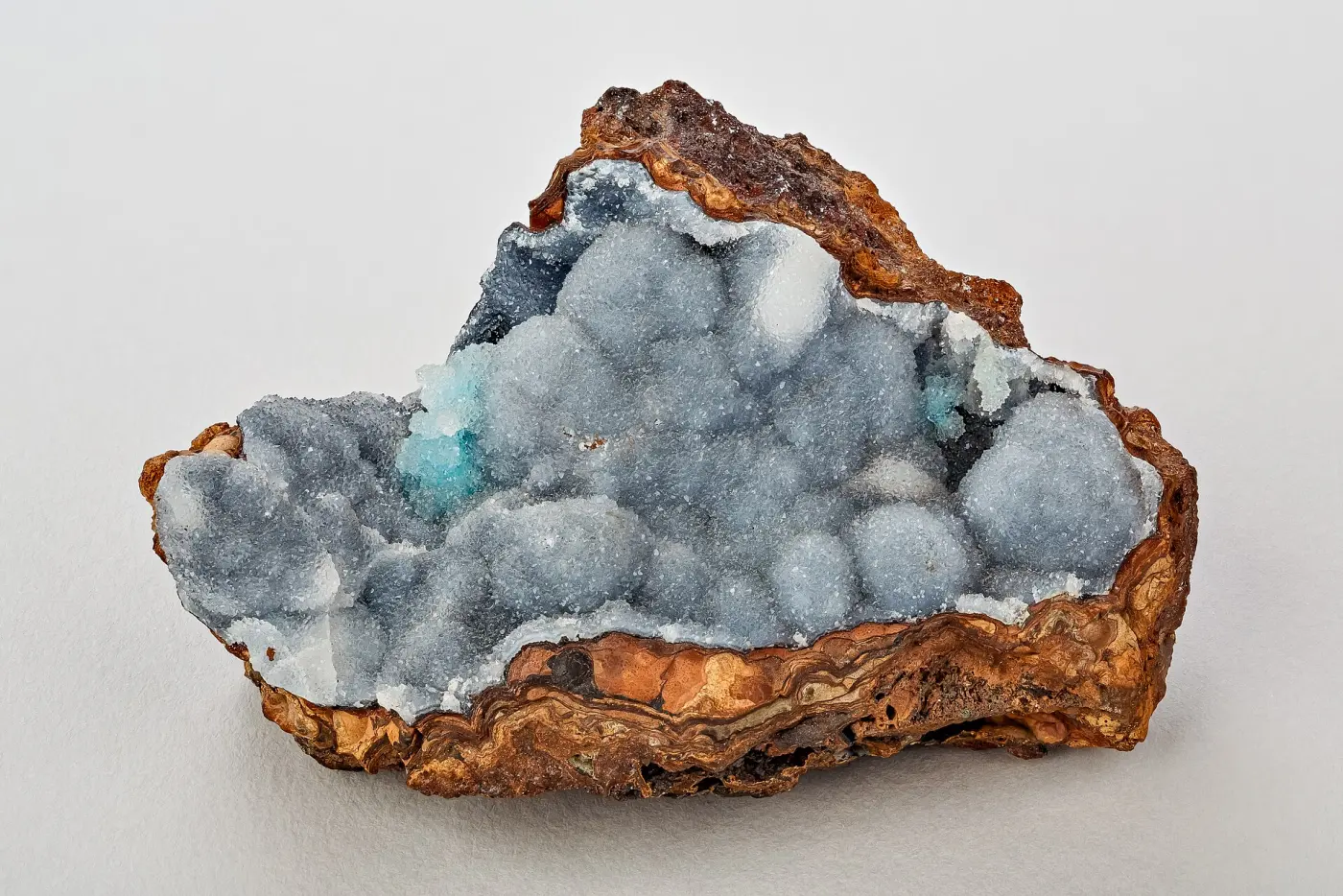
The source is the Mississippian Warsaw Formation, a shale and limestone unit exposed along the Des Moines River and its tributaries. Geodes weather out of that soft rock and collect in stream beds, banks and hillside float. Every Keokuk geode has a chalcedony outer shell. Inside, quartz is dominant in most specimens, with beautiful transparent to white crystals lining the cavity walls, and white, gray, blue, yellow or orange chalcedony encrusting many interiors. Calcite is common, and pyrite, marcasite and dolomite turn up regularly.
Sizes run from marbles to specimens well over a foot across, with the largest documented examples reaching several feet. The catch is access: almost all of the belt is private farmland, and the practical routes for a visitor are landowner permission or one of the appointment-only fee-dig mines.
Key facts
Structured details for trip planning — verify access and fees with the land manager before you visit.
- Specimen type
- Geode
- Primary specimens
- Keokuk Geodes, Quartz, Chalcedony, Calcite, Pyrite, Marcasite, Dolomite
- Fee status
- Fee required
- Nearest town
- Keokuk
- State
- Iowa
- Coordinates
- 40.39800, -91.39800
- Best season
- April through October. Spring and early summer after high water are productive, when the Des Moines River and its tributaries have scoured fresh geodes out of the banks
- Access difficulty
- Moderate. Creek walking on slick cobbles and digging into stream banks and weathered shale; fee-dig mines involve sustained pick and pry-bar work
- Parking
- See facilities notes
- Collecting hazards
- Flood / current risk
- Camping
- Geode State Park in Henry County, Iowa, has camping, though collecting is not permitted inside the state park. Private campgrounds operate around Keokuk
- Land manager
- State park / recreation agency
- Activities
- Creek and stream-bank searching for weathered-out geodes, and appointment-only digging at private geode mines
- Facilities
- None in the field. Keokuk has full services; fee-dig operations provide parking and basic amenities only
- Last updated
- 2026-09-15
What to pack for Keokuk Geode Beds
Gear we compare for geodes trips like this one — tools, safety, and the hike in.


Disclosure: Gear links may earn a commission as an Amazon Associate — at no extra cost to you. Learn more.
The experience
- Best time to visitApril through October. Spring and early summer after high water are productive, when the Des Moines River and its tributaries have scoured fresh geodes out of the banks
- AccessModerate. Creek walking on slick cobbles and digging into stream banks and weathered shale; fee-dig mines involve sustained pick and pry-bar work
- FacilitiesNone in the field. Keokuk has full services; fee-dig operations provide parking and basic amenities only
- Camping nearbyGeode State Park in Henry County, Iowa, has camping, though collecting is not permitted inside the state park. Private campgrounds operate around Keokuk
Highlights & features
- One of the most famous geode localities in North America, and the reason 'Keokuk geode' is a recognised term worldwide
- Chalcedony forms the outer shell of every Keokuk geode, with quartz dominant in most interiors
- Linings can include transparent to white quartz, coloured chalcedony, calcite, pyrite, marcasite, dolomite and more
- The belt spans a tri-state area of southeast Iowa, northeast Missouri and western Illinois
- Sheffler Rock Shop and Geode Mine offers appointment-only fee digging nearby in Alexandria, Missouri
- The geodes weather out of the Mississippian Warsaw Formation, a shale and limestone unit exposed along the Des Moines River and its tributaries
- Sizes range from marbles to specimens well over a foot across, with the very largest reaching several feet
- Beautiful transparent to white quartz crystals line the interior walls of many geodes
How to get there
Keokuk sits at the junction of US Highway 136 and US Highway 218 in Lee County, Iowa, on the Mississippi River opposite Hamilton, Illinois, and just north of the Missouri line. The productive ground spreads outward along the Des Moines River and its tributary creeks to the northwest of town, and across the river into Clark and Lewis counties in Missouri and Hancock County in Illinois. These are rural county roads and farm lanes, paved and gravel, easily driven in any vehicle but often narrow with limited turnarounds. Sheffler Rock Shop and Geode Mine, the best known fee dig in the area, is at 26880 Outer Road 27 in Alexandria, Missouri, a short drive south of Keokuk. Call 319-795-5013 to arrange a visit; they do not accept walk-ups.
Keokuk sits at the junction of US Highway 136 and US Highway 218 in Lee County, Iowa, on the Mississippi River opposite Hamilton, Illinois, and just north of the Missouri line.
The productive ground spreads outward along the Des Moines River and its tributary creeks to the northwest of town, and across the river into Clark and Lewis counties in Missouri and Hancock County in Illinois. These are rural county roads and farm lanes, paved and gravel, easily driven in any vehicle but often narrow with limited turnarounds.
Sheffler Rock Shop and Geode Mine, the best known fee dig in the area, is at 26880 Outer Road 27 in Alexandria, Missouri, a short drive south of Keokuk. Call 319-795-5013 to arrange a visit; they do not accept walk-ups.
Plan your visit
Decide first whether you are doing a fee dig or a permission dig, because they need different preparation.
For Sheffler Rock Shop, book by phone in advance. The fee is about $25 per person for ages 12 and up, and children under 12 must dig with an adult. That covers 50 pounds of geodes, with additional material around 75 cents per pound. Bring your own buckets, rock hammer and pry bar, because the shop does not provide digging equipment. Dogs are welcome on leash but not inside the mine.
For creek searching with landowner permission, bring a bucket, a small pry bar, boots you can wade in, and gloves. A short-handled sledge is useful for testing whether a nodule rings hollow.
Timing: April through October, and especially after high water. Facilities: none in the field; full services in Keokuk.
Geode State Park in Henry County is a good camping base, but do not collect inside it. Pair the trip with other Iowa collecting areas.
Things you need to take to Keokuk Geode Beds

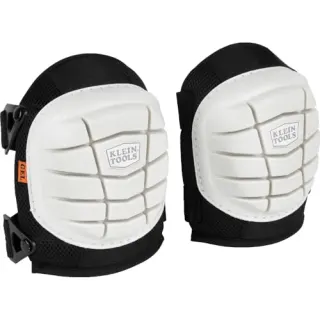
NoCry Professional Construction Knee Pads
Buy once — your knees will notice by lunch.
Check price on Amazon
DEWALT DPG82 Concealer Safety Glasses
Buy two pairs — one lives in your pack permanently.
Check price on Amazon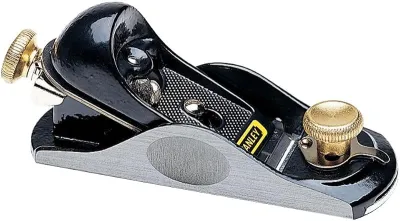
Osborn 8-Piece Wire & Nylon Brush Set
The standard field brush kit — keep one in every pack.
Check price on Amazon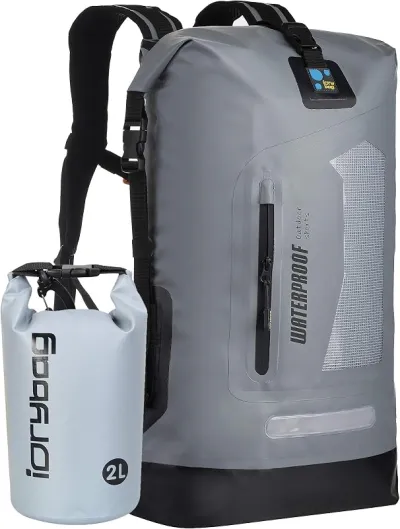
Osprey Talon 22 Backpack
The pack to save for if you collect more than a few times a year.
Check price on AmazonDisclosure: Gear links may earn a commission as an Amazon Associate — at no extra cost to you. Learn more.
Access & fees
Land status is the single most important thing to understand about the Keokuk belt. The overwhelming majority of the productive ground is private farmland, and no general public collecting area exists. Road cuts are highway right-of-way, stopping on them is usually prohibited, and working a cut face is unsafe regardless. Creek beds crossing private land are private access even where the water is navigable. The correct approach is to identify the landowner, ask permission, and agree in advance where you may park, where you may dig and what you may take. Geode State Park in Henry County is named for the occurrence but does not permit collecting, which surprises visitors every year. The reliable alternative is a fee-dig operation such as Sheffler Rock Shop and Geode Mine at Alexandria, Missouri, which is appointment-only at 319-795-5013. Fill any hole you open, close farm gates behind you, and do not drive across planted ground.
Land status is the single most important thing to understand about the Keokuk belt. The overwhelming majority of the productive ground is private farmland, and no general public collecting area exists.
Road cuts are highway right-of-way, stopping on them is usually prohibited, and working a cut face is unsafe regardless. Creek beds crossing private land are private access even where the water is navigable. The correct approach is to identify the landowner, ask permission, and agree in advance where you may park, where you may dig and what you may take.
Geode State Park in Henry County is named for the occurrence but does not permit collecting, which surprises visitors every year. The reliable alternative is a fee-dig operation such as Sheffler Rock Shop and Geode Mine at Alexandria, Missouri, which is appointment-only at 319-795-5013. Fill any hole you open, close farm gates behind you, and do not drive across planted ground.
Frequently asked questions
Where can you legally collect Keokuk geodes?
Either with explicit landowner permission on private ground, or at a fee-dig operation. Sheffler Rock Shop and Geode Mine at Alexandria, Missouri, is the best known, charging about $25 per person for 50 pounds by appointment only. There is no general public collecting area in the belt.
Can you collect geodes at Geode State Park in Iowa?
No. The park in Henry County is named for the regional occurrence, but collecting is not permitted inside it. It works well as a camping base for a Keokuk-area trip, but the actual collecting has to happen on permitted private ground or at a fee-dig mine.
What is inside a Keokuk geode?
Chalcedony forms the outer shell of every Keokuk geode. Quartz is dominant in most interiors, often as transparent to white crystals lining the cavity walls, and white, gray, blue, yellow or orange chalcedony encrusts many. Calcite is common, and pyrite, marcasite and dolomite appear regularly.
What rock do Keokuk geodes come from?
The Mississippian Warsaw Formation, a shale and limestone unit exposed along the Des Moines River and its tributaries around Keokuk. The geodes weather out of that soft rock and accumulate in stream beds, banks and hillside float across southeast Iowa, northeast Missouri and western Illinois.
When is the best time to hunt Keokuk geodes?
April through October, and particularly after high water. Spring flooding scours fresh geodes out of banks and concentrates them in creek beds, so the weeks after the water drops are the most productive. Winter freezes the ground and summer vegetation hides the banks.
How big do Keokuk geodes get?
From marbles to specimens well over a foot across, with the very largest documented examples reaching several feet. Most collected material falls in the fist to melon range. Size tends to correlate with how far the geode has travelled from its Warsaw Formation source, since larger ones break down more slowly.
How do you open a Keokuk geode?
A diamond slab saw gives the cleanest result and preserves thin-walled specimens that a hammer would shatter. Soil-pipe chain cutters and pipe cutters are the traditional field alternative, applying even pressure around the circumference. Many collectors crack a few in the field to judge a spot and take the rest home to saw.
Can you find geodes in the Des Moines River?
The Des Moines River and its tributaries are exactly where the Warsaw Formation is exposed and where geodes weather out, so the drainage is the source of the belt's reputation. Access is the issue rather than geology: the banks are almost entirely private farmland and permission is required.
What is the Warsaw Formation?
A Mississippian shale and limestone unit exposed along the Des Moines River and its tributaries around Keokuk, and the source of the geodes. It is soft enough that geodes weather free of it readily and accumulate in stream beds and hillside float, which is why collecting here is mostly surface searching.
Do you need permission to hunt Keokuk geodes?
Almost always yes. The belt is overwhelmingly private farmland across southeast Iowa, northeast Missouri and western Illinois, and there is no general public collecting area. Sheffler Rock Shop and Geode Mine at Alexandria, Missouri, offers appointment-only fee digging as the permission-free alternative.
Is a Keokuk fee dig worth it compared with creek hunting?
Collectors who have done both make the same point: the fee dig removes the permission problem entirely, which in this belt is the main obstacle rather than finding geodes. At around $25 per person for 50 pounds at Sheffler, people describe the value as reasonable given that you dig in known productive ground with no landowner negotiation. Creek hunting is free and can be excellent, but only after you have secured access, and that is a project rather than a morning.
Why is collecting banned at Geode State Park?
This surprises visitors every year, and the explanation collectors give is simply that Iowa state park rules protect natural features regardless of the park's name. The park was named for the regional occurrence rather than designated as a collecting area. People generally recommend using it as a camping base and doing the actual collecting on permitted private ground or at a fee mine nearby.
Regional guide
This spot is featured in our Keokuk geode belt roundup with related rockhounding sites in Iowa.
Explore related hubs
Report an access change
Field conditions change. If this site is closed, claimed, flooded, or the fee has changed, tell us — we update listings with community tips and desk verification.
Include the date you visited and any land-manager contact. Do not share private gate codes.
Map & location
Culture & history
Keokuk geodes have been collected and traded since the nineteenth century, and the locality is embedded in American mineralogical literature to the point that specimens from unrelated deposits are sometimes described as Keokuk-type. Local rock shops around Keokuk and Hamilton have served collectors for generations. Iowa named Geode State Park in Henry County for the occurrence in the 1930s, a recognition of how closely this corner of the state is identified with the mineral. The town of Keokuk itself grew as a Mississippi River port at the foot of the Des Moines rapids, and the river engineering that followed exposed and moved a great deal of geode-bearing rock.
Conservation
The belt survives on landowner goodwill, and that is fragile. A single group that leaves gates open, ruts a field or digs without asking can close a creek to collectors for a generation. Ask permission every time, even where you have collected before. Fill your holes, especially in stream banks where an open cut accelerates erosion into the Des Moines River system. Take what you will actually cut and use rather than filling a trailer, and leave the creek bed passable for the next visitor. Report commercial-scale extraction on land you have permission for to the owner.
Sources & updates
Official land managers cited on this page
Always confirm current rules, closures, and fees on the agency site before visiting.
Spotted outdated access, fees, or safety info? Use Report an access change on this page or send a correction with the page URL — we review every submission.