
Sterling Hill Mining Museum
Rockhounding site in Ogdensburg, New Jersey · Gold & Minerals
Sterling Hill Mining Museum is a fluorescent rockhounding site near Ogdensburg, NJ. Fee required. Best season: Year round.
Typical season: Year round
About Sterling Hill Mining Museum
Sterling Hill at Ogdensburg, New Jersey, sits on one of the world's richest zinc ore deposits, and together with neighbouring Franklin it forms a mineral district unlike anywhere else on earth. The ore body has yielded over three hundred mineral species and is the type locality for dozens of them, which is why the two towns have supplied museum cases worldwide for more than a century.
The mine worked until the 1980s and reopened as a museum, which means visitors walk real workings rather than a reconstruction. The centrepiece is the Rainbow Tunnel, an underground passage where ultraviolet light turns the walls into sheets of brilliant green willemite and red calcite, with black franklinite giving the contrast. It is the most direct demonstration of mineral fluorescence available to the public anywhere.
Above ground, the Mine Run Dump lets visitors collect fluorescent rock to take home, and two museums, Zobel Hall and the Warren Museum of Fluorescence, cover the mining history and the science of fluorescence respectively. For a collector, the combination of a real underground tour, a genuine collecting dump and a world-class mineral assemblage in one place is close to unique in the eastern United States.
Key facts
Structured details for trip planning — verify access and fees with the land manager before you visit.
- Specimen type
- Fluorescent
- Primary specimens
- Willemite, Calcite, Franklinite, Hardystonite, Zincite, Esperite, Clinohedrite
- Fee status
- Fee required
- Nearest town
- Ogdensburg
- State
- New Jersey
- Coordinates
- 41.07000, -74.59000
- Best season
- Year round. The mine holds a steady cool temperature underground regardless of season, so a jacket is needed even in August
- Access difficulty
- Easy. The tour route is a walking tour on a prepared underground path; dump collecting means picking over loose rock on the surface
- Collecting hazards
- Unstable terrain
- Camping
- No camping on site. Lodging and campgrounds operate around Sussex County and the Kittatinny Valley
- Activities
- Guided underground mine tour, fluorescent mineral collecting on the Mine Run Dump, sluicing, museum visits
- Facilities
- Zobel Hall and the Warren Museum of Fluorescence, gift shop, restrooms, Mine Run Dump collecting area, sluice, astronomical observatory
- Last updated
- 2026-09-15
What to pack for Sterling Hill Mining Museum
Gear we compare for gold & minerals trips like this one — tools, safety, and the hike in.


Disclosure: Gear links may earn a commission as an Amazon Associate — at no extra cost to you. Learn more.
The experience
- Best time to visitYear round. The mine holds a steady cool temperature underground regardless of season, so a jacket is needed even in August
- AccessEasy. The tour route is a walking tour on a prepared underground path; dump collecting means picking over loose rock on the surface
- FacilitiesZobel Hall and the Warren Museum of Fluorescence, gift shop, restrooms, Mine Run Dump collecting area, sluice, astronomical observatory
- Camping nearbyNo camping on site. Lodging and campgrounds operate around Sussex County and the Kittatinny Valley
Highlights & features
- Built on one of the world's richest zinc ore deposits, with an ore assemblage found almost nowhere else
- The Rainbow Tunnel, an underground passage where the walls fluoresce brilliant green and red under ultraviolet light
- Two museums on site: Zobel Hall and the Warren Museum of Fluorescence
- Mine Run Dump collecting is open to visitors, so you can take fluorescent rock home
- Franklin and Sterling Hill together are the type locality for dozens of mineral species
- Willemite fluoresces intense green and calcite fluoresces red under shortwave ultraviolet, which is the classic Franklin-Sterling Hill combination
- Franklinite, the black spinel-group mineral named for the district, is non-fluorescent and provides the contrast
- Hardystonite fluoresces violet-blue and is one of several species described first from this ore body
How to get there
Sterling Hill Mining Museum is at 30 Plant Street, Ogdensburg, in Sussex County, northern New Jersey, roughly an hour and a quarter from New York City and about the same from Newark. Approaches are paved and easy in any vehicle, with parking on site. Call 973-209-7212 between 10am and 3pm for tour times, group bookings and current conditions.
From Interstate 80, take NJ Route 15 north toward Sparta and Franklin, then follow signs to Ogdensburg and the museum. The Franklin Mineral Museum is a few minutes away in Franklin, and the two make a natural pairing on one trip.
Plan your visit
For the 2026 to 2027 season, the gift shop, collecting and sluicing run 10am to 4pm daily. Guided mine tours run weekends only, Saturday and Sunday at 1pm; weekdays offer collecting and sluicing but no mine tour. Check before travelling if the underground tour is your reason for going.
Admission is $16 for adults 13 and over, $15 for seniors 65 and over, $14 for children 4 to 12 and $5 for children under 4.
Bring a jacket for the underground temperature, closed-toe shoes with grip, gloves for the dump, and a bucket or bag. A shortwave ultraviolet lamp transforms the dump collecting, and if you own one, bring it along with proper eye protection; shortwave UV is not the same as a blacklight and requires care.
Private tours need at least 15 paying visitors and about two weeks' notice. Pair the visit with the Franklin Mineral Museum and see other New Jersey collecting areas.
Things you need to take to Sterling Hill Mining Museum
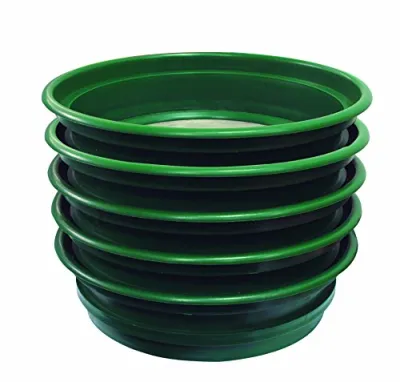
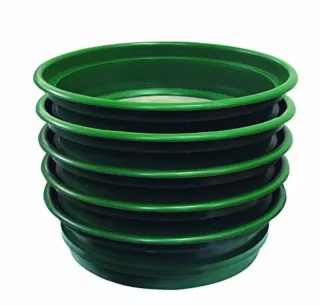
SE 5-Pack Stackable Classifier Set
If you buy one classifying kit, buy this set.
Check price on Amazon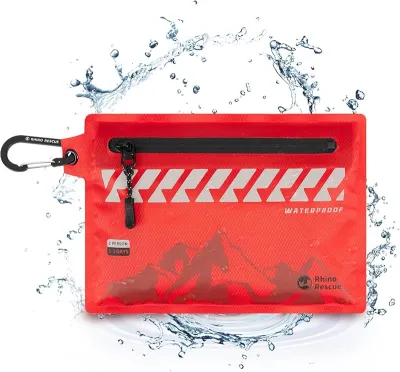
Rhino Rescue Waterproof First Aid Kit
The kit to leave clipped in your pack so you are never caught without it on the trail.
Check price on Amazon
Garrett ACE 400 Metal Detector
The detector most clubs recommend for your first upgrade from a toy.
Check price on Amazon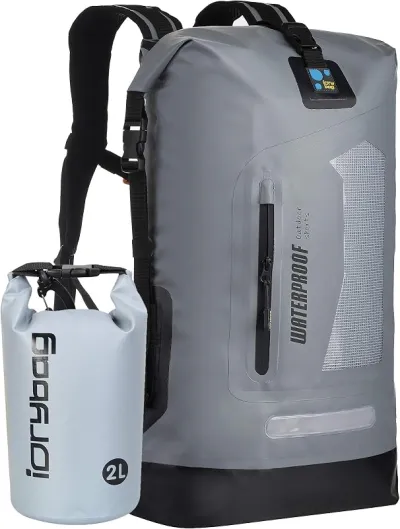
Osprey Talon 22 Backpack
The pack to save for if you collect more than a few times a year.
Check price on AmazonDisclosure: Gear links may earn a commission as an Amazon Associate — at no extra cost to you. Learn more.
Access & fees
Sterling Hill Mining Museum is a private non-profit museum, and access is by paid admission on the museum's terms. Collecting is permitted on the designated Mine Run Dump only, as part of a visit, and the museum sets what may be taken. This is the legitimate way to get Franklin-Sterling Hill fluorescent material: the surrounding mine property, the Franklin ore body and the old dumps elsewhere in the district are not open to casual collecting, and trespassing on them is both illegal and dangerous. Guided tours are the only way into the underground workings. Do not attempt to enter any opening, shaft or adit elsewhere in the district; these are deep, flooded and unstable. The 2026 to 2027 schedule runs the shop, collecting and sluicing 10am to 4pm daily, with mine tours at 1pm on Saturdays and Sundays only. Group and private tours require a minimum of 15 paying visitors and about two weeks' notice, booked by calling 973-209-7212 between 10am and 3pm.
Sterling Hill Mining Museum is a private non-profit museum, and access is by paid admission on the museum's terms.
Collecting is permitted on the designated Mine Run Dump only, as part of a visit, and the museum sets what may be taken. This is the legitimate way to get Franklin-Sterling Hill fluorescent material: the surrounding mine property, the Franklin ore body and the old dumps elsewhere in the district are not open to casual collecting, and trespassing on them is both illegal and dangerous.
Guided tours are the only way into the underground workings. Do not attempt to enter any opening, shaft or adit elsewhere in the district; these are deep, flooded and unstable.
The 2026 to 2027 schedule runs the shop, collecting and sluicing 10am to 4pm daily, with mine tours at 1pm on Saturdays and Sundays only. Group and private tours require a minimum of 15 paying visitors and about two weeks' notice, booked by calling 973-209-7212 between 10am and 3pm.
Frequently asked questions
How much does Sterling Hill Mining Museum cost?
For the 2026 to 2027 season, admission is $16 for adults 13 and over, $15 for seniors 65 and over, $14 for children 4 to 12 and $5 for children under 4. The gift shop, collecting and sluicing run 10am to 4pm daily, and guided mine tours run at 1pm on Saturdays and Sundays only.
Can you collect minerals at Sterling Hill?
Yes, on the designated Mine Run Dump as part of a visit. That is the legitimate way to take Franklin-Sterling Hill fluorescent material home. The surrounding mine property and the historic dumps elsewhere in the district are not open to casual collecting, and entering them is both illegal and dangerous.
What is the Rainbow Tunnel?
An underground passage on the mine tour where ultraviolet light makes the walls fluoresce: willemite glows intense green, calcite glows red, and black franklinite provides the contrast. It is the most direct public demonstration of mineral fluorescence anywhere, and it is the reason most visitors book the guided underground tour.
Do you need a jacket at Sterling Hill?
Yes, in any season. The underground workings hold a steady cool temperature year round, so a summer visitor in shorts and a t-shirt will be uncomfortable within minutes of entering. Closed-toe shoes with grip are also worth wearing, because the tour route is a genuine mine floor rather than a museum corridor.
When do the mine tours run at Sterling Hill?
For 2026 to 2027, guided mine tours run weekends only, Saturday and Sunday at 1pm. Weekdays offer the gift shop, collecting and sluicing from 10am to 4pm but no underground tour. Private tours need at least 15 paying visitors and about two weeks' notice on 973-209-7212.
Why do Franklin and Sterling Hill minerals glow?
Because the ore body contains activator elements, particularly manganese, built into minerals such as willemite and calcite. Under ultraviolet light those activators absorb energy and re-emit it as visible light, producing willemite's intense green and calcite's red. The unusual chemistry of this single deposit is why the effect is so strong and so widespread here.
What is the difference between Sterling Hill and the Franklin Mineral Museum?
They are two separate sites a few minutes apart in the same ore district. Sterling Hill at Ogdensburg preserves an actual mine with an underground tour and the Rainbow Tunnel, plus the Mine Run Dump. The Franklin Mineral Museum in Franklin focuses on collections and has its own collecting dump. Many visitors do both in one day.
Do you need your own UV light at Sterling Hill?
Not for the tour, where lighting is provided, but a shortwave ultraviolet lamp transforms dump collecting, because it lets you test rock on the spot rather than guessing. If you bring one, bring eye protection with it: shortwave UV is not the same as a party blacklight and emits UVC, which damages eyes and skin.
How many mineral species come from Franklin and Sterling Hill?
The district has produced over three hundred species and is the type locality, meaning the place a mineral was first described, for dozens of them. Hardystonite, which fluoresces violet-blue, is one example. That concentration in a single ore body is the reason the district is internationally significant to mineralogists.
Is Sterling Hill Mining Museum good for children?
Yes. The underground tour is a walking tour on a prepared path, the Rainbow Tunnel is genuinely spectacular, and sluicing and dump collecting give children something physical to do. Children 4 to 12 pay $14 and under 4 pay $5. Bring jackets for the cool underground temperature and closed-toe shoes for the mine floor.
Should you visit Sterling Hill or Franklin first?
Collectors who do both in a day usually recommend starting with the Sterling Hill underground tour, because seeing fluorescence in place underground gives you a reference for what you are hunting on the dumps afterwards. Since the Sterling Hill mine tour runs only at 1pm on weekends in the current schedule, planning the day around that fixed time and filling the rest with dump collecting at both sites is the arrangement people report working best.
What UV lamp do collectors recommend for Franklin-Sterling Hill material?
The recurring point in discussions is that shortwave is what matters for this district: willemite and calcite respond dramatically to shortwave ultraviolet and much less to the longwave blacklights sold for parties. Collectors consistently warn that proper shortwave lamps emit UVC and need eye protection and care around skin, and that cheap lamps sold as shortwave often are not. Testing rock on site with a real lamp is described as the difference between a bucket of ore and a bucket of good specimens.
Is the Mine Run Dump still productive after so many visitors?
Trip reports generally say yes, with the caveat that you work for it. The dump is replenished and picked over in cycles, so surface material varies between visits, and people who report good results describe turning rock rather than scanning the top layer, and testing with a lamp rather than judging by daylight appearance. The realistic expectation is a handful of good fluorescent pieces rather than a museum specimen, which is a fair return for the admission price.
Explore related hubs
Report an access change
Field conditions change. If this site is closed, claimed, flooded, or the fee has changed, tell us — we update listings with community tips and desk verification.
Include the date you visited and any land-manager contact. Do not share private gate codes.
Map & location
Culture & history
Zinc mining at Sterling Hill and Franklin ran from the colonial period into the 1980s, and the New Jersey Zinc Company that worked them was one of the defining industrial enterprises of the region. The ore body is unusual in both its richness and its mineralogy, having formed under conditions that produced species found in few other places. When the mine closed, the site was preserved rather than demolished, and it opened as a museum in 1990. That preservation is why visitors today can walk genuine workings and see the ore in place, and why the Franklin-Sterling Hill district remains the reference point for anyone studying fluorescent minerals.
Conservation
The Mine Run Dump is a finite pile of ore that supplies every visiting collector, so take a reasonable personal amount rather than filling buckets. The museum is explicit about where collecting is allowed, and staying within that boundary is what keeps the privilege available. Do not attempt to collect elsewhere in the Franklin-Sterling Hill district; the historic dumps and workings are private, protected or hazardous, and trespass has cost collectors access before. Leave the underground workings entirely undisturbed, since they are a preserved industrial monument as much as a geological one. Pack out all litter and follow staff direction about which parts of the dump are open.
Sources & updates
Spotted outdated access, fees, or safety info? Use Report an access change on this page or send a correction with the page URL — we review every submission.