
Ben Lomond Mountain Garnet
Rockhounding site in Sparta, Tennessee · Gemstones
Ben Lomond Mountain Garnet is a garnet rockhounding site near Sparta, TN. Fee varies. Best season: Late autumn through early spring, when leaf cover is down and creek levels are low.
Typical season: Late autumn through early spring, when leaf cover is down and creek levels are low
About Ben Lomond Mountain Garnet
Ben Lomond Mountain rises on the Cumberland Plateau escarpment in the White County area of middle Tennessee, between Sparta and McMinnville. It appears in collecting lists, and it is worth setting the mineralogy straight, because the record and the regional geology point in a consistent direction that differs from some published descriptions.
This is Highland Rim and plateau escarpment country, underlain by Mississippian limestone, dolomite and chert. It is carbonate terrain, not metamorphic terrain, and independent field records for Ben Lomond Mountain report calcite, celestite, dolomite, marcasite and geodes. Those are exactly the minerals the host rock predicts. Tennessee does have genuine garnet and staurolite localities, but they lie far to the east in the Blue Ridge of the Unaka and Great Smoky ranges, where metamorphic schists actually occur.
Taken on its own terms, the mountain is a reasonable stop for anyone working the Upper Cumberland geode country. Celestite in particular is a distinctive regional find, a strontium sulphate that occurs in vugs and geodes in these carbonates and is uncommon enough to be worth the search. As everywhere on the plateau, access is private and must be arranged.
Key facts
Structured details for trip planning — verify access and fees with the land manager before you visit.
- Specimen type
- Garnet
- Primary specimens
- Calcite, Celestite, Dolomite, Geodes, Marcasite, Quartz
- Fee status
- Fee varies
- Nearest town
- Sparta
- State
- Tennessee
- Coordinates
- 35.78000, -85.62000
- Best season
- Late autumn through early spring, when leaf cover is down and creek levels are low
- Access difficulty
- Moderate. Steep, brushy escarpment slopes and slick limestone creek beds
- Collecting hazards
- Flood / current risk
- Camping
- Campgrounds operate across the Cumberland Plateau; collecting is not permitted in Tennessee state parks
- Activities
- Surface searching creek gravel and weathered carbonate exposures, where permission has been obtained
- Facilities
- None. Sparta and McMinnville have full services
- Last updated
- 2026-09-15
What to pack for Ben Lomond Mountain Garnet
Gear we compare for gemstones trips like this one — tools, safety, and the hike in.



Disclosure: Gear links may earn a commission as an Amazon Associate — at no extra cost to you. Learn more.
The experience
- Best time to visitLate autumn through early spring, when leaf cover is down and creek levels are low
- AccessModerate. Steep, brushy escarpment slopes and slick limestone creek beds
- FacilitiesNone. Sparta and McMinnville have full services
- Camping nearbyCampgrounds operate across the Cumberland Plateau; collecting is not permitted in Tennessee state parks
Highlights & features
- Sits on the Highland Rim and Cumberland Plateau escarpment in the Sparta and McMinnville area
- Independent field records report calcite, celestite, dolomite, marcasite and geodes from this mountain
- Celestite is a distinctive regional mineral in Tennessee's carbonate section
- Part of the broader Upper Cumberland geode country
- Close to Rock Island and Fall Creek Falls state parks for plateau geology viewing
- The Highland Rim is underlain by Mississippian limestone and chert rather than by metamorphic rock, which is why carbonate minerals dominate here
- Celestite, a strontium sulphate, occurs in vugs and geodes in these carbonates
- Geodes from this area typically carry quartz and calcite linings
How to get there
Ben Lomond Mountain lies in the White County area of middle Tennessee, between Sparta on US Highway 70 and McMinnville on US Highway 70S, south of Interstate 40 and Cookeville. Sparta and McMinnville are the practical bases, both reached on paved highways from Interstate 40 or Interstate 24. From either town, county and gravel roads climb toward the escarpment and drop into the creek drainages below it. The escarpment roads are steep and narrow in places, with limited turnarounds and few places to park clear of the carriageway. A county ownership plat is more useful than any collecting guide, because knowing whose land you are looking at is the first practical problem to solve.
Ben Lomond Mountain lies in the White County area of middle Tennessee, between Sparta on US Highway 70 and McMinnville on US Highway 70S, south of Interstate 40 and Cookeville.
Sparta and McMinnville are the practical bases, both reached on paved highways from Interstate 40 or Interstate 24. From either town, county and gravel roads climb toward the escarpment and drop into the creek drainages below it.
The escarpment roads are steep and narrow in places, with limited turnarounds and few places to park clear of the carriageway. A county ownership plat is more useful than any collecting guide, because knowing whose land you are looking at is the first practical problem to solve.
Plan your visit
Plan around access first and weather second. Without landowner permission there is nothing to do here but look at the hills from the road.
With permission arranged, bring a bucket, a small pry bar, a short-handled sledge for testing nodules, boots for creek walking, gloves and a hand lens. Celestite is soft and fragile, so bring wrapping material if you expect to find any.
Timing: late autumn through early spring. Facilities: none; services in Sparta and McMinnville.
Work creek gravel and the weathered aprons below carbonate exposures rather than attacking solid rock. If you are travelling for Tennessee geodes generally, the wider Cumberland Plateau geode country around Livingston and Crossville is better documented, and Rock Island and Fall Creek Falls state parks are excellent for seeing the plateau section, though collecting is prohibited there. See other Tennessee collecting areas.
Things you need to take to Ben Lomond Mountain Garnet

DEWALT DPG82 Concealer Safety Glasses
Buy two pairs — one lives in your pack permanently.
Check price on Amazon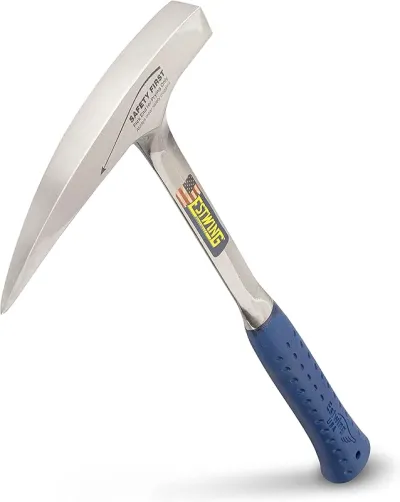
Estwing 22 oz Geological Pick
If you buy one hammer, make it this one.
Check price on Amazon
NoCry Professional Construction Knee Pads
Buy once — your knees will notice by lunch.
Check price on Amazon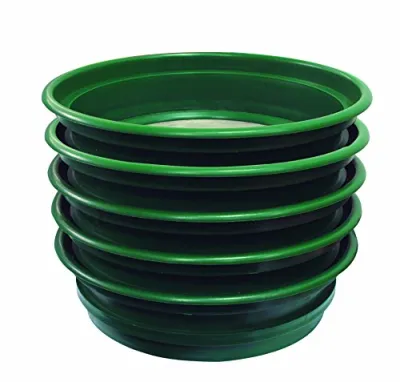
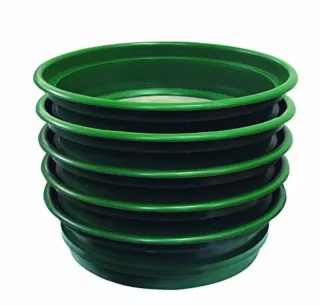
SE 5-Pack Stackable Classifier Set
If you buy one classifying kit, buy this set.
Check price on AmazonDisclosure: Gear links may earn a commission as an Amazon Associate — at no extra cost to you. Learn more.
Access & fees
No public collecting area is documented at Ben Lomond Mountain. Assume private land and act accordingly. Landowner permission is required, including for creek beds, which in Tennessee are generally private where they cross private ground. Agree in advance where you may park, where you may walk and what you may take, and honour those limits. Tennessee state parks prohibit rock and mineral collecting, so nearby parks are viewing destinations rather than alternatives. Road cuts are highway right of way, and stopping to work a cut face is both generally prohibited and unsafe on these narrow escarpment roads. Where permission exists, keep to surface collecting. Digging into the steep, thin-soiled slopes of the escarpment accelerates erosion and can run into state water-quality rules if it reaches a stream. Close gates, keep clear of livestock, and leave the ground as you found it.
No public collecting area is documented at Ben Lomond Mountain. Assume private land and act accordingly.
Landowner permission is required, including for creek beds, which in Tennessee are generally private where they cross private ground. Agree in advance where you may park, where you may walk and what you may take, and honour those limits.
Tennessee state parks prohibit rock and mineral collecting, so nearby parks are viewing destinations rather than alternatives. Road cuts are highway right of way, and stopping to work a cut face is both generally prohibited and unsafe on these narrow escarpment roads.
Where permission exists, keep to surface collecting. Digging into the steep, thin-soiled slopes of the escarpment accelerates erosion and can run into state water-quality rules if it reaches a stream. Close gates, keep clear of livestock, and leave the ground as you found it.
Frequently asked questions
Are there garnets at Ben Lomond Mountain in Tennessee?
Independent field records for this locality report calcite, celestite, dolomite, marcasite and geodes rather than garnet, which matches the Mississippian carbonate geology of the Highland Rim. Tennessee's genuine garnet and staurolite localities lie far to the east in the Blue Ridge, where metamorphic schists actually occur.
What can you find at Ben Lomond Mountain?
Calcite, celestite, dolomite, marcasite and geodes are the reported finds. Celestite, a pale blue strontium sulphate that occurs in vugs and geodes in these carbonates, is the most distinctive of them and is uncommon enough regionally to be worth the search.
Is Ben Lomond Mountain open to collectors?
No public collecting area is documented here. Assume private land, obtain the owner's permission before entering, and note that in Tennessee creek beds crossing private ground are generally private as well. Nearby state parks prohibit collecting entirely.
Where should you go instead for Tennessee geodes?
The Upper Cumberland geode country around Livingston, Jamestown and Crossville is better documented, with geodes weathering out of Mississippian carbonates into creek beds along the plateau escarpment. Access there is also private, so permission is still the first step.
When is the best time to visit this area?
Late autumn through early spring. Leaf cover is down so carbonate exposures and cut banks are visible, creek levels are low, and snakes are inactive. Plateau creeks flash flood quickly in the warm months, so leave the drainage as soon as rain begins.
Where is Tennessee's real garnet country?
In the Blue Ridge of east Tennessee, in the Unaka and Great Smoky ranges, where genuine metamorphic schists occur. The Highland Rim and Cumberland Plateau in the middle of the state are carbonate terrain, which is why the minerals actually reported there are calcite, celestite, dolomite and geodes.
What is the Highland Rim?
The broad upland surrounding the Nashville Basin in middle Tennessee, underlain by Mississippian limestone, dolomite and chert. It is sedimentary carbonate country rather than metamorphic terrain, which determines what minerals occur there and explains the mismatch in some published descriptions of sites like Ben Lomond.
How do you handle celestite specimens?
Carefully. Celestite is soft at around 3 to 3.5 on the Mohs scale and cleaves easily, so specimens need wrapping in the field and separate storage from harder material. It is also slightly soluble, so avoid prolonged washing, and keep it out of direct sunlight, which can fade the pale blue colour.
What minerals is Tennessee known for?
Calcite above all, from the Elmwood mine in Smith County, whose golden and water-clear crystals are among the finest in the world. The state also produces fluorite, sphalerite, barite, celestite and geodes from its carbonate section, plus Blue Ridge metamorphic minerals in the east.
Are Tennessee state parks open to collecting?
No. Tennessee state parks prohibit rock and mineral collecting, which includes Rock Island and Fall Creek Falls near this area. They work well as camping bases and as places to see the plateau geology in cross section, but collecting must happen on permitted private ground.
How common are wrong mineral listings in site guides?
Common enough that experienced collectors treat published mineral lists as claims to verify rather than facts. The pattern people describe is a listing propagating through guides and aggregator sites without anyone checking it against the host geology, which is how a carbonate locality ends up described as garnet and staurolite schist. The suggested test is simple: ask whether the reported minerals could plausibly form in the rock that is actually there.
What is the best-known mineral locality in Tennessee?
The Elmwood mine in Smith County comes up immediately in any discussion, for calcite crystals that rank among the finest in the world, along with fluorite, sphalerite and barite from the same zinc operation. Collectors note that it is a commercial mine rather than an open site, and that specimens reach the market through the operation and dealers rather than through public collecting.
Explore related hubs
Report an access change
Field conditions change. If this site is closed, claimed, flooded, or the fee has changed, tell us — we update listings with community tips and desk verification.
Include the date you visited and any land-manager contact. Do not share private gate codes.
Map & location
Culture & history
White County and the surrounding Highland Rim were settled early in Tennessee's history, and the escarpment country has been farmed, logged and mined for coal and iron at various times since. Sparta and McMinnville both date from the early nineteenth century. The mineral record here belongs to the broader story of Tennessee's carbonate section, which has produced celestite, fluorite, sphalerite and the world-class calcite specimens of the Elmwood mine further west. It is that carbonate chemistry, rather than any metamorphic history, that defines what collectors find on the Highland Rim.
Conservation
This entry exists on private ground, and the main obligation is to the landowner who allows access. Ask every time, close gates, park where told, and take modest amounts. Surface collect rather than digging into escarpment slopes, where thin soil and steep gradients mean any excavation feeds sediment into creeks below. Pack out everything, avoid disturbing livestock and springs, and do not collect in Tennessee state parks, where it is prohibited.
Sources & updates
Spotted outdated access, fees, or safety info? Use Report an access change on this page or send a correction with the page URL — we review every submission.