
Crystal Park
Rockhounding site in Dillon, Montana · Quartz & Crystals
Crystal Park is a quartz rockhounding site near Dillon, MT. Fee required. Best season: Mid-June through mid-October, depending on snowpack.
Typical season: Mid-June through mid-October, depending on snowpack
About Crystal Park
Crystal Park is a rarity: a national forest recreation area created specifically so the public can dig for crystals. The Beaverhead-Deerlodge National Forest set aside roughly 220 acres at 7,800 feet in the Pioneer Mountains of southwest Montana, and the Forest Service maintains it with picnic sites, toilets, interpretive signs and a paved accessible trail leading to an overlook.
The quartz here grew in cavities within the Pioneer batholith, a large body of granite that cooled slowly at depth. Over time the granite weathered into a coarse, sandy grit, which released the crystals from their host rock. That is why Crystal Park is a digging and screening site rather than a hammer-and-chisel one: visitors work the loose decomposed granite with hand tools and sift it, rather than splitting solid outcrop.
Finds run from tiny clear points to crystals several inches across. The material can be clear, cloudy, white, gray or purple, and collectors particularly prize the amethyst and the gray smoky quartz. Because the site is day use only and closed by snow much of the year, plan the trip around the short mountain season.
Key facts
Structured details for trip planning — verify access and fees with the land manager before you visit.
- Specimen type
- Quartz
- Primary specimens
- Quartz, Amethyst, Smoky Quartz
- Fee status
- Fee required
- Nearest town
- Dillon
- State
- Montana
- Coordinates
- 45.76700, -112.06700
- Best season
- Mid-June through mid-October, depending on snowpack. The byway and the park are snowbound the rest of the year
- Access difficulty
- Moderate. The digging itself is easy hand work in loose granite grit, but the site sits at 7,800 feet and the last leg is 17 miles of mountain byway
- Parking
- Designated area
- Collecting hazards
- Access restrictions
- Camping
- No camping at Crystal Park; it is day use only. Forest Service campgrounds are spaced along the Pioneer Mountains Scenic Byway
- Land manager
- U.S. Forest Service
- Activities
- Hand digging and screening decomposed granite for quartz crystals
- Facilities
- Three picnic sites with tables and grills, toilets, interpretive signs, and a paved accessible trail with benches and an overlook
- Last updated
- 2026-09-15
What to pack for Crystal Park
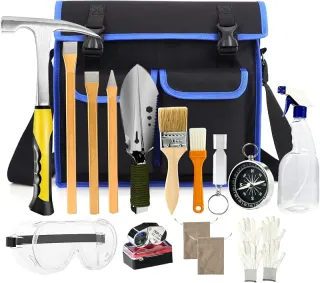
Gear we compare for quartz & crystals trips like this one — tools, safety, and the hike in.



Disclosure: Gear links may earn a commission as an Amazon Associate — at no extra cost to you. Learn more.
The experience
- Best time to visitMid-June through mid-October, depending on snowpack. The byway and the park are snowbound the rest of the year
- AccessModerate. The digging itself is easy hand work in loose granite grit, but the site sits at 7,800 feet and the last leg is 17 miles of mountain byway
- FacilitiesThree picnic sites with tables and grills, toilets, interpretive signs, and a paved accessible trail with benches and an overlook
- Camping nearbyNo camping at Crystal Park; it is day use only. Forest Service campgrounds are spaced along the Pioneer Mountains Scenic Byway
Highlights & features
- One of the few Forest Service sites in the country set aside specifically for public crystal digging
- 220 acres of decomposed granite open to hand collecting
- Clear, smoky and purple amethyst quartz, from tiny points to crystals several inches across
- Paved accessible trail with an overlook, unusual for a rockhounding area
- Managed by the Beaverhead-Deerlodge National Forest
- The crystals grew in cavities in the Pioneer batholith and were freed as the granite weathered to loose grit, so they can be screened rather than chiseled
- Amethyst and smoky quartz occur alongside clear rock crystal in the same diggings
- A five-day-per-person season limit on digging keeps the ground from being stripped
How to get there
The byway is paved or well-maintained gravel and suitable for passenger cars in summer, but it is a mountain road with grades and curves, and it is not plowed in winter. Wise River sits at the north end of the byway if you are approaching from Interstate 15 near Divide. Snowpack governs the opening date. The park typically becomes reachable in mid-June and closes again by mid-October. Check with the Beaverhead-Deerlodge National Forest at 406-683-3900 before making the drive early or late in the season.
From Dillon, take Interstate 15 about 3 miles south, then turn west on Montana Highway 278 and follow it 22 miles. Turn north onto the Pioneer Mountains Scenic Byway, Forest Road 73, and continue roughly 17 miles to the signed Crystal Park entrance.
Plan your visit
Plan a half to full day on site, plus the drive in over the byway.
Bring a shovel or garden trowel, a screen or sifting box, a bucket, knee protection, gloves, safety glasses, water and sun protection. Hand tools are the only tools allowed. A five-day-per-person season limit applies to digging, so serious collectors should spread their visits rather than camping out on one hole.
Timing: mid-June through mid-October, snow dependent. Facilities: three picnic sites with tables and grills, toilets, and a paved accessible trail with benches and an overlook.
The Pioneer Mountains Scenic Byway itself is worth the drive, with Elkhorn Hot Springs and several Forest Service campgrounds along the route. Combine the stop with other Montana collecting areas for a longer trip.
Things you need to take to Crystal Park
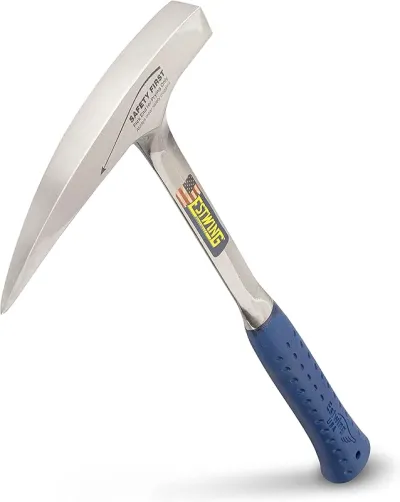
Estwing 22 oz Geological Pick
If you buy one hammer, make it this one.
Check price on Amazon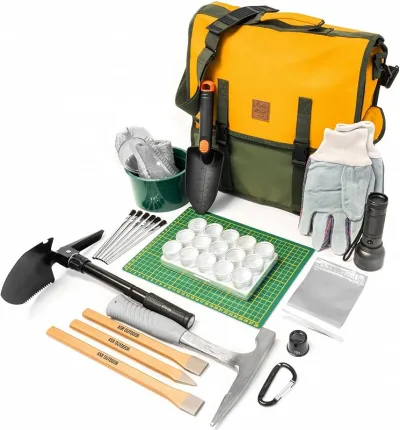
ASR Outdoor 38pc Deluxe Rock Hounding Kit
The kit to buy when you want prospecting-grade accessories, not just a hammer in a bag.
Check price on Amazon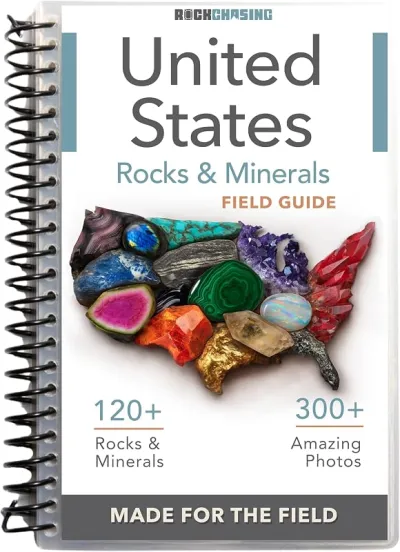
Rock Chasing US Rocks & Minerals Field Guide
The guide to clip on your pack when you do not know what you are looking at yet.
Check price on Amazon
BelOMO 10x Triplet Loupe
The loupe to buy once and carry for decades.
Check price on AmazonDisclosure: Gear links may earn a commission as an Amazon Associate — at no extra cost to you. Learn more.
Access & fees
Crystal Park is managed by the Beaverhead-Deerlodge National Forest as a day-use mineral collection area, and an entrance fee is charged per vehicle at the site. The posted rules are specific. Hand tools are the only tools permitted, so no power equipment, no motorized digging and no sluicing. Tunneling is strictly prohibited. A five-day-per-person season limit applies to digging, which is how the Forest Service keeps a small area productive for everyone. Collecting is for personal, noncommercial use. Rules are posted on signs at the site and in brochures available there, and they take precedence over anything written elsewhere. Fill your excavations before leaving, keep vehicles in the parking area, and pack out all waste. Contact the forest at 406-683-3900 with questions about current conditions or rule changes.
Crystal Park is managed by the Beaverhead-Deerlodge National Forest as a day-use mineral collection area, and an entrance fee is charged per vehicle at the site.
The posted rules are specific. Hand tools are the only tools permitted, so no power equipment, no motorized digging and no sluicing. Tunneling is strictly prohibited. A five-day-per-person season limit applies to digging, which is how the Forest Service keeps a small area productive for everyone. Collecting is for personal, noncommercial use.
Rules are posted on signs at the site and in brochures available there, and they take precedence over anything written elsewhere. Fill your excavations before leaving, keep vehicles in the parking area, and pack out all waste. Contact the forest at 406-683-3900 with questions about current conditions or rule changes.
Frequently asked questions
Is there a fee to dig at Crystal Park, Montana?
Yes. The Beaverhead-Deerlodge National Forest charges a day-use entrance fee per vehicle, collected on site. Crystal Park is day use only, with no camping in the collecting area, though Forest Service campgrounds sit along the Pioneer Mountains Scenic Byway.
What tools are allowed at Crystal Park?
Hand tools only. A shovel or trowel, a bucket and a screen or sifting box are what most collectors use, since the crystals sit loose in decomposed granite. Power tools and mechanized digging are not permitted, and tunneling is strictly prohibited because the loose grit collapses.
What crystals can you find at Crystal Park?
Quartz in several varieties. Crystals may be clear, cloudy, white, gray or purple, ranging from tiny points to specimens several inches across. Collectors particularly prize the purple amethyst and the gray smoky quartz that occur alongside the clear rock crystal.
When is Crystal Park open?
Typically mid-June through mid-October, depending entirely on snowpack. The site sits at 7,800 feet on the Pioneer Mountains Scenic Byway, which is not plowed in winter. Call the Beaverhead-Deerlodge National Forest at 406-683-3900 to confirm before an early or late season trip.
How do you get to Crystal Park from Dillon?
Take Interstate 15 about 3 miles south of Dillon, turn west on Montana Highway 278 for 22 miles, then north on the Pioneer Mountains Scenic Byway, Forest Road 73, for roughly 17 miles to the signed entrance. The route is suitable for passenger cars in summer.
How deep do you have to dig at Crystal Park?
Not deep, which is part of the appeal. Crystals sit loose in decomposed granite, so most collectors work the top foot or two with a trowel or small shovel and screen the material. Tunnelling is prohibited, and the five-day-per-person season limit discourages anyone from excavating a single hole indefinitely.
Can you find amethyst at Crystal Park?
Yes. The quartz here occurs clear, cloudy, white, gray or purple, and the purple amethyst and gray smoky varieties are what collectors prize most. Crystals range from tiny points to specimens several inches across, all weathered free of the Pioneer batholith granite.
Is Crystal Park suitable for wheelchair users?
Partly. The park includes a paved trail with benches and an overlook, and the facilities are described as universally accessible, which is unusual for a rockhounding site. The digging areas themselves are loose decomposed granite on uneven ground, so access to the actual collecting varies.
What is the Pioneer Mountains Scenic Byway?
Forest Road 73, a 49-mile route through the Pioneer Mountains between Wise River and the Highway 278 corridor near Dillon, passing Crystal Park, Elkhorn Hot Springs and several Forest Service campgrounds. It is a seasonal road, snow-closed in winter, and the drive is a destination in itself.
How many crystals can you take from Crystal Park?
The Forest Service does not publish a weight limit but controls collecting through a five-day-per-person season limit on digging, a hand-tools-only rule and a ban on tunnelling. The intent is personal, noncommercial collecting. Rules are posted on signs at the site and in brochures available there.
How do people find the productive spots at Crystal Park?
The advice that recurs is to look for where others have dug and then work the edges and below them rather than re-sifting the same tailings, since 220 acres means a lot of ground has never been touched. Collectors also mention screening rather than eyeballing, because small clear points disappear in granite grit, and working after rain when the dust settles and crystals catch light.
Is Crystal Park a good family stop?
It comes up often as one of the better ones, for concrete reasons: the digging is hand work in loose material rather than hammering, there are picnic sites with tables and grills, toilets and a paved accessible trail, and almost everyone finds something. The cautions people raise are the elevation at 7,800 feet, the intensity of the sun, and the need to keep children away from any deep hole others have left open.
Explore related hubs
Report an access change
Field conditions change. If this site is closed, claimed, flooded, or the fee has changed, tell us — we update listings with community tips and desk verification.
Include the date you visited and any land-manager contact. Do not share private gate codes.
Map & location
Culture & history
The Pioneer Mountains were prospected hard in the late nineteenth century, and the Pioneer batholith that hosts Crystal Park's quartz also hosts the tungsten, silver and gold workings scattered through the range. Elkhorn Hot Springs and the old mining camps along the byway are the visible remnants of that era. Crystal Park itself was known to local collectors long before it was formally developed. The Forest Service's decision to set the ground aside and manage it for public collecting, rather than close it, is the reason it still produces after decades of digging.
Conservation
Crystal Park works because visitors follow the rules that keep it open. Fill every hole, use hand tools only, never tunnel, and respect the five-day-per-person season limit on digging. Stay out of the vegetation at the edges of the diggings, where thin alpine soil recovers slowly at 7,800 feet. Take a reasonable personal amount rather than bucket loads, and leave the picnic sites and trail clean. Report damage or commercial-scale digging to the Beaverhead-Deerlodge National Forest.
Sources & updates
Official land managers cited on this page
Always confirm current rules, closures, and fees on the agency site before visiting.
Spotted outdated access, fees, or safety info? Use Report an access change on this page or send a correction with the page URL — we review every submission.