
Gold Hill Topaz Locality
Rockhounding site in Boulder, Colorado · Quartz & Crystals
Gold Hill Topaz Locality is a topaz rockhounding site near Boulder, CO. Fee varies. Best season: June through October.
Typical season: June through October
About Gold Hill Topaz Locality
Gold Hill sits in the mountains west of Boulder, Colorado, and it was organised in 1859, which makes it one of the earliest mining districts in the state, predating much of the activity that the Colorado gold rush is better remembered for. History Colorado recognises the Gold Hill Historic District as an excellent surviving example of an early Colorado mining camp.
For collectors, the interest is in the pegmatite and vein systems of the Front Range that cut through this part of Boulder County. Colorado pegmatites are known worldwide for the combination of blue-green amazonite feldspar with smoky quartz, and topaz occurs in miarolitic cavities in the granites and pegmatites of the range. Fluorite is also documented from the district. The gold that gave the camp its name came from telluride ores, a different system entirely.
The thing to understand before planning a trip is that this is a mature, heavily claimed district close to a major city. Historical maps show mining claims drawn across the area, many claims remain active, and private parcels and Roosevelt National Forest land are interleaved with them. Verifying where you are standing is not a formality here; it is the whole planning problem.
Key facts
Structured details for trip planning — verify access and fees with the land manager before you visit.
- Specimen type
- Topaz
- Primary specimens
- Topaz, Fluorite, Amazonite, Smoky Quartz, Feldspar
- Fee status
- Fee varies
- Nearest town
- Boulder
- State
- Colorado
- Coordinates
- 40.06200, -105.40800
- Best season
- June through October. Front Range canyon and mountain roads above Boulder are snow-affected from late autumn into spring
- Access difficulty
- Moderate to difficult. Steep forested terrain at 8,000 feet and above, with old workings, claim boundaries and private parcels interleaved
- Collecting hazards
- See safety tips
- Camping
- Roosevelt National Forest campgrounds operate in the Boulder Ranger District; dispersed camping rules vary by area
- Land manager
- U.S. Forest Service
- Activities
- Prospecting weathered pegmatite where access is confirmed, and historic district touring
- Facilities
- None at collecting ground. Gold Hill has a historic townsite; Boulder and Nederland have full services
- Last updated
- 2026-09-15
What to pack for Gold Hill Topaz Locality
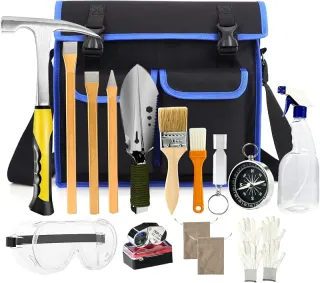
Gear we compare for quartz & crystals trips like this one — tools, safety, and the hike in.



Disclosure: Gear links may earn a commission as an Amazon Associate — at no extra cost to you. Learn more.
The experience
- Best time to visitJune through October. Front Range canyon and mountain roads above Boulder are snow-affected from late autumn into spring
- AccessModerate to difficult. Steep forested terrain at 8,000 feet and above, with old workings, claim boundaries and private parcels interleaved
- FacilitiesNone at collecting ground. Gold Hill has a historic townsite; Boulder and Nederland have full services
- Camping nearbyRoosevelt National Forest campgrounds operate in the Boulder Ranger District; dispersed camping rules vary by area
Highlights & features
- Gold Hill was organised in 1859 and is one of Colorado's earliest mining districts
- The Front Range pegmatites of Boulder County are a classic source of topaz, amazonite and smoky quartz
- Gold Hill Historic District is recognised for its preserved nineteenth-century mining camp pattern
- Roosevelt National Forest surrounds much of the district
- Within 30 minutes of Boulder, making it one of the more accessible Front Range mineral districts
- Colorado pegmatites characteristically pair blue-green amazonite feldspar with smoky quartz, a combination the state is known for worldwide
- Topaz occurs in miarolitic cavities in granite and pegmatite in the Front Range
- The district's telluride gold ores were what made Gold Hill economically important in the nineteenth century
How to get there
Gold Hill lies about 10 miles northwest of Boulder, reached from Boulder Canyon Drive, Colorado Highway 119, via Sunshine Canyon Drive or Fourmile Canyon Drive. These are steep, narrow mountain roads that climb from roughly 5,400 feet in Boulder to around 8,300 feet at Gold Hill. Sections are unpaved. In winter and shoulder seasons they carry snow and ice, and four-wheel drive with proper tyres is often necessary rather than merely helpful. Gold Hill itself is a small historic townsite with limited parking and no visitor services; treat it as a place to pass through respectfully rather than a base. Boulder and Nederland have fuel, food and lodging. Contact the Roosevelt National Forest Boulder Ranger District at 303-541-2500 for road and closure status.
Gold Hill lies about 10 miles northwest of Boulder, reached from Boulder Canyon Drive, Colorado Highway 119, via Sunshine Canyon Drive or Fourmile Canyon Drive.
These are steep, narrow mountain roads that climb from roughly 5,400 feet in Boulder to around 8,300 feet at Gold Hill. Sections are unpaved. In winter and shoulder seasons they carry snow and ice, and four-wheel drive with proper tyres is often necessary rather than merely helpful.
Gold Hill itself is a small historic townsite with limited parking and no visitor services; treat it as a place to pass through respectfully rather than a base. Boulder and Nederland have fuel, food and lodging. Contact the Roosevelt National Forest Boulder Ranger District at 303-541-2500 for road and closure status.
Plan your visit
Do the access research before the drive. That means checking claim status through Bureau of Land Management records and identifying which parcels are Roosevelt National Forest, which are private, and which are claimed.
With that done, bring a rock hammer, chisels, safety glasses, gloves, a hand lens, sturdy boots and layers for mountain weather. Wrapping material protects amazonite and topaz, both of which chip easily.
Timing: June through October. Facilities: none at collecting ground; services in Boulder and Nederland.
Realistically, many visitors come for the historic district rather than to collect, and that is a sound plan given how much of the ground is spoken for. If your goal is Colorado pegmatite minerals specifically, research current access carefully or look at the better-known public localities elsewhere in the state. See other Colorado collecting areas.
Things you need to take to Gold Hill Topaz Locality
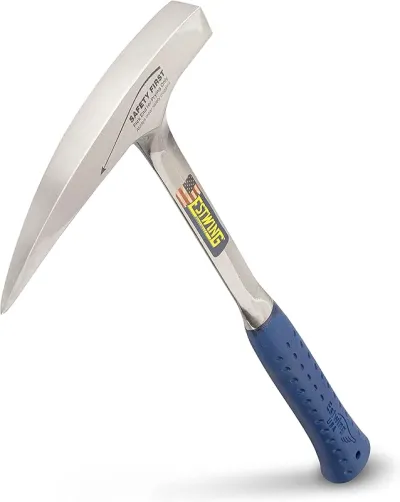
Estwing 22 oz Geological Pick
If you buy one hammer, make it this one.
Check price on Amazon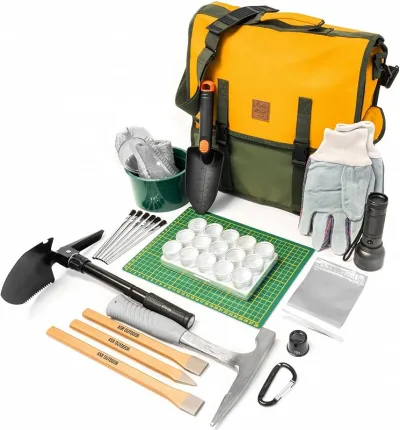
ASR Outdoor 38pc Deluxe Rock Hounding Kit
The kit to buy when you want prospecting-grade accessories, not just a hammer in a bag.
Check price on Amazon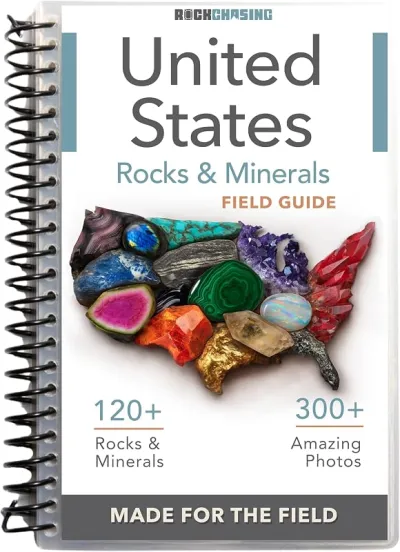
Rock Chasing US Rocks & Minerals Field Guide
The guide to clip on your pack when you do not know what you are looking at yet.
Check price on Amazon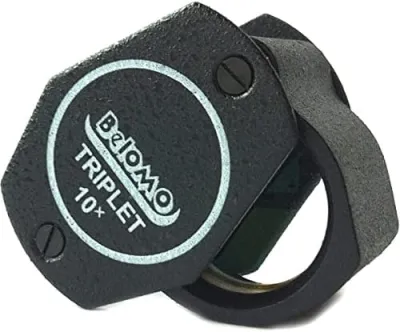
BelOMO 10x Triplet Loupe
The loupe to buy once and carry for decades.
Check price on AmazonDisclosure: Gear links may earn a commission as an Amazon Associate — at no extra cost to you. Learn more.
Access & fees
Claim status is the governing issue in the Gold Hill district and deserves direct treatment. Mining claims are drawn across this district on historical survey maps and many remain active. Collecting on an active claim without the claimant's permission is trespass and can constitute theft of minerals. Check the Bureau of Land Management's mining claim records before collecting anywhere in the district. Claim corners and notices are supposed to be posted but are frequently weathered, fallen or missing, so absence of a marker is not evidence that ground is open. Roosevelt National Forest land surrounds much of the district, and casual mineral collecting for personal, noncommercial use with hand tools is generally allowed on national forest land, subject to claim rights and to area-specific rules. Private parcels, including residential property at and around Gold Hill, are interleaved throughout and are not open. Do not enter old workings under any circumstances. Contact the Boulder Ranger District at 303-541-2500 for current forest rules and closures.
Claim status is the governing issue in the Gold Hill district and deserves direct treatment. Mining claims are drawn across this district on historical survey maps and many remain active. Collecting on an active claim without the claimant's permission is trespass and can constitute theft of minerals.
Check the Bureau of Land Management's mining claim records before collecting anywhere in the district. Claim corners and notices are supposed to be posted but are frequently weathered, fallen or missing, so absence of a marker is not evidence that ground is open.
Roosevelt National Forest land surrounds much of the district, and casual mineral collecting for personal, noncommercial use with hand tools is generally allowed on national forest land, subject to claim rights and to area-specific rules. Private parcels, including residential property at and around Gold Hill, are interleaved throughout and are not open.
Do not enter old workings under any circumstances. Contact the Boulder Ranger District at 303-541-2500 for current forest rules and closures.
Frequently asked questions
Can you collect topaz at Gold Hill, Colorado?
Only where you have confirmed the ground is open. Mining claims are drawn across the Gold Hill district and many remain active, with private parcels and Roosevelt National Forest land interleaved among them. Collecting on an active claim without permission is trespass and potentially theft of minerals.
How do you check mining claim status in Colorado?
Through Bureau of Land Management mining claim records, which is the standard step before collecting in any Colorado historic district. Claim corners and notices are supposed to be posted on the ground but are often weathered or missing, so the absence of a marker does not mean the ground is open.
What minerals occur in the Gold Hill area?
Topaz, fluorite, amazonite feldspar and smoky quartz from the Front Range pegmatite and vein systems. The combination of blue-green amazonite with smoky quartz is the one Colorado is known for worldwide. The gold that named the camp came from telluride ores, a separate system.
How do you get to Gold Hill from Boulder?
About 10 miles northwest via Sunshine Canyon Drive or Fourmile Canyon Drive off Boulder Canyon, climbing from roughly 5,400 feet in Boulder to around 8,300 feet. The roads are steep and narrow with unpaved sections, and four-wheel drive is often necessary outside summer.
Is Gold Hill worth visiting if you cannot collect?
Yes, as history. Gold Hill was organised in 1859, making it one of Colorado's earliest mining districts, and History Colorado recognises the Gold Hill Historic District as an excellent surviving example of an early mining camp. It is a small living community, so visit respectfully and park legally.
How do you check if ground is claimed in Colorado?
Through Bureau of Land Management mining claim records, which is the standard step before collecting in any Colorado historic district. Claim corners and notices are supposed to be posted on the ground but are frequently weathered, fallen or missing, so the absence of a marker is not evidence that ground is open.
Where is the best amazonite collecting in Colorado?
The Pikes Peak batholith south of Denver, particularly the Lake George and Crystal Peak areas in Park and Teller counties, is the classic amazonite and smoky quartz ground and the source of most museum specimens. The Front Range pegmatites around Gold Hill are a smaller, more heavily claimed district.
What is a pegmatite miarolitic cavity?
A gas pocket that formed in cooling granite or pegmatite and later filled with well-formed crystals. Topaz, amazonite and smoky quartz in Colorado typically come from these cavities, which is why collecting often means working weathered granite to find pockets rather than breaking solid rock at random.
Is Gold Hill a real town?
Yes, a small living residential community west of Boulder, organised as a mining district in 1859 and recognised by History Colorado as an excellent surviving example of an early Colorado mining camp. Visitors should treat it as people's homes rather than an open-air museum, park legally and photograph from public roads.
What was mined at Gold Hill, Colorado?
Telluride gold ores, which made the district economically important through the later nineteenth century and into the twentieth. That is a separate mineral system from the pegmatite and vein topaz, fluorite and amazonite that draw collectors to the same country today.
Is collecting near Boulder realistic given how claimed the ground is?
The consensus among Front Range collectors is that it takes homework rather than luck. Discussions repeatedly stress checking BLM claim records before going, treating unmarked ground as potentially claimed, and understanding that collecting on an active claim without permission is trespass and potentially theft of minerals. Several people suggest that visitors wanting Colorado pegmatite minerals are better served heading to the Pikes Peak batholith areas with established public access than working a heavily claimed historic district close to a city.
What do collectors say about old mine workings in Colorado districts?
The advice is uniform and emphatic: do not enter them. Old Front Range workings are unstable, often flooded, and frequently contain bad air, and the surface features are also historic resources that deserve preservation. People point out that the productive collecting in these districts is in dumps and weathered pegmatite on the surface anyway, so there is no collecting reason to go underground even setting the danger aside.
Explore related hubs
Report an access change
Field conditions change. If this site is closed, claimed, flooded, or the fee has changed, tell us — we update listings with community tips and desk verification.
Include the date you visited and any land-manager contact. Do not share private gate codes.
Map & location
Culture & history
Gold was found in this area in 1859, and Gold Hill became one of Colorado's first organised mining districts, predating the camps that dominate the popular history of the rush. The district produced from telluride gold ores through the later nineteenth century and into the twentieth. History Colorado lists the Gold Hill Historic District as an excellent surviving example of the pattern of an early Colorado mining camp, with its street layout and building stock largely intact. It remains a small residential community, which is an important thing for visitors to remember: the historic townsite is people's homes, not an open-air museum.
Conservation
This is a district where collector behaviour has direct consequences, because it is close to a city, heavily claimed, and partly residential. Verify claim and land status before you take anything. Use hand tools and personal quantities on ground where collecting is permitted, and fill any hole you open. Stay out of old workings, which is both a safety and a preservation issue, since the headframes, foundations and dumps are historic resources. Respect Gold Hill as a living community, park legally, and observe fire restrictions absolutely in canyons with a serious wildfire history.
Sources & updates
Official land managers cited on this page
Always confirm current rules, closures, and fees on the agency site before visiting.
Spotted outdated access, fees, or safety info? Use Report an access change on this page or send a correction with the page URL — we review every submission.