
Moat Mountain Smoky Quartz
Rockhounding site in Conway, New Hampshire · Quartz & Crystals
Moat Mountain Smoky Quartz is a quartz rockhounding site near Conway, NH. Fee varies. Best season: Late May through October.
Typical season: Late May through October
About Moat Mountain Smoky Quartz
Moat Mountain sits just west of North Conway in New Hampshire's Mount Washington Valley, and the Moat Mountain Mineral Site is one of only three places in the White Mountain National Forest where the public may dig for minerals under a free permit. The other two are Deer Hill in Stow, Maine, and Lord Hill.
The geology is the White Mountain Magma Series, a suite of alkaline plutons emplaced in the Jurassic that produced granites riddled with miarolitic cavities. Those cavities hold the minerals collectors come for: smoky quartz, amazonite, beryl, topaz and amethyst. Amazonite is a green variety of microcline feldspar, and the combination of green amazonite with smoky quartz is the signature New England granite pairing, the eastern counterpart to what Colorado is known for.
Practically, this is a digging and screening site rather than a hammering one. The granite has weathered to a coarse grus that releases crystals into loose material, so a screen and a trowel often outperform a sledge. A free permit self-issued at the trailhead covers one day at one collecting site, and the forest sets a limit of 50 pounds or one 5-gallon bucket per permit.
Key facts
Structured details for trip planning — verify access and fees with the land manager before you visit.
- Specimen type
- Quartz
- Primary specimens
- Smoky Quartz, Amazonite, Microcline, Beryl, Topaz, Amethyst
- Fee status
- Fee varies
- Nearest town
- Conway
- State
- New Hampshire
- Coordinates
- 44.05000, -71.22000
- Best season
- Late May through October. The site is snow-covered or frozen outside that window and black flies are severe in early summer
- Access difficulty
- Moderate. A hike in from the trailhead followed by hand digging and screening in granite grus on a mountainside
- Collecting hazards
- Access restrictions
- Camping
- No camping at the site. White Mountain National Forest campgrounds operate throughout the Saco Ranger District
- Land manager
- U.S. Forest Service
- Activities
- Hand digging and screening weathered granite for smoky quartz and amazonite
- Facilities
- None at the site. No restrooms and no potable water. North Conway has full services
- Last updated
- 2026-09-15
What to pack for Moat Mountain Smoky Quartz
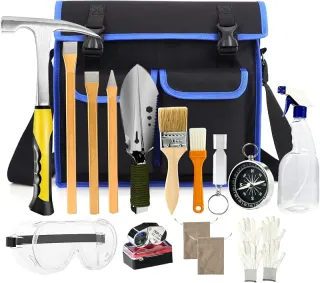
Gear we compare for quartz & crystals trips like this one — tools, safety, and the hike in.



Disclosure: Gear links may earn a commission as an Amazon Associate — at no extra cost to you. Learn more.
The experience
- Best time to visitLate May through October. The site is snow-covered or frozen outside that window and black flies are severe in early summer
- AccessModerate. A hike in from the trailhead followed by hand digging and screening in granite grus on a mountainside
- FacilitiesNone at the site. No restrooms and no potable water. North Conway has full services
- Camping nearbyNo camping at the site. White Mountain National Forest campgrounds operate throughout the Saco Ranger District
Highlights & features
- One of only three designated mineral collecting areas in the White Mountain National Forest
- Free self-issued permit at the trailhead, no advance booking required
- Smoky quartz and green microcline amazonite are the signature finds, the classic New England granite pairing
- Beryl, topaz and amethyst also occur in the same granite
- Minutes from North Conway, one of the busiest outdoor bases in New England
- The Moat Mountain granites are part of the White Mountain Magma Series, alkaline plutons emplaced in the Jurassic
- Miarolitic cavities in that granite hold smoky quartz, amazonite and topaz
- Amazonite is a green variety of microcline feldspar, and it occurs here alongside smoky quartz in the classic combination
How to get there
The Moat Mountain Mineral Site trailhead is reached from the North Conway area on the west side of the Saco valley, off West Side Road and the forest roads that run toward the Moat Range. North Conway is on NH Route 16 and is the practical base, with fuel, food, lodging and outdoor shops. Conway and Fryeburg, Maine, are close by. The approach roads are paved then gravel and generally fine for a passenger car in summer.
From the trailhead, the collecting area requires a hike in on a marked route. There is no vehicle access to the digging ground, so everything you carry in comes back out on your back, which matters once your bucket has rock in it. Call the White Mountain National Forest on 603-536-6100 for current trailhead and road information.
Plan your visit
Pick up the free mineral collecting permit at the trailhead before you start. Each permit covers one day at a single collecting site, and the forest requires one for any surface-disturbing work.
Bring a shovel, a sifting screen, a hand trowel, a rock hammer and chisels, safety glasses, gloves, a pack and something to wrap crystals in. Your permit ceiling is 50 pounds or a single 5-gallon bucket, whichever you reach first, and the tool list is hand tools only, so leave anything motorised or water-driven at home.
Timing: late May through October. Facilities: none at the site.
Work weathered grus and screen it rather than attacking solid granite, which is both easier and more productive. The site pairs naturally with Deer Hill across the state line in Stow, Maine, and with Lord Hill, making a three-site circuit possible over a long weekend. See other New Hampshire collecting areas.
Things you need to take to Moat Mountain Smoky Quartz
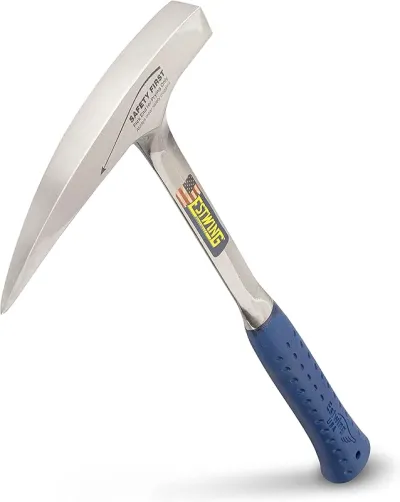
Estwing 22 oz Geological Pick
If you buy one hammer, make it this one.
Check price on Amazon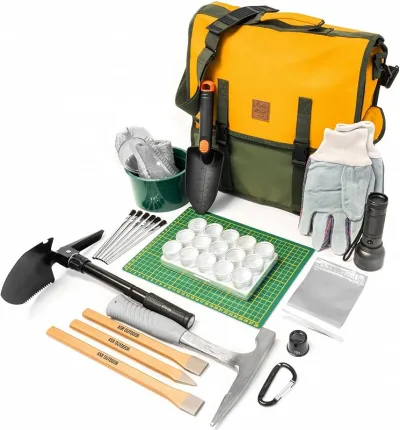
ASR Outdoor 38pc Deluxe Rock Hounding Kit
The kit to buy when you want prospecting-grade accessories, not just a hammer in a bag.
Check price on Amazon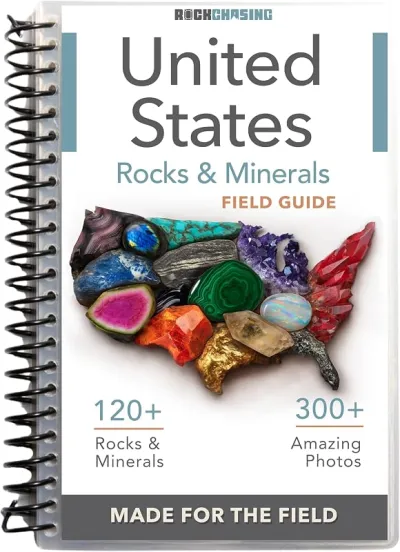
Rock Chasing US Rocks & Minerals Field Guide
The guide to clip on your pack when you do not know what you are looking at yet.
Check price on Amazon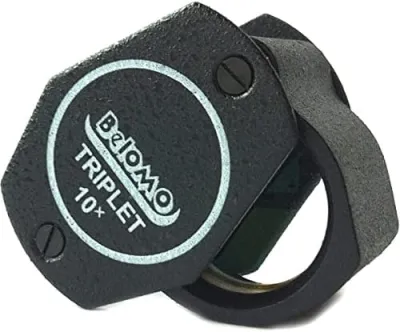
BelOMO 10x Triplet Loupe
The loupe to buy once and carry for decades.
Check price on AmazonDisclosure: Gear links may earn a commission as an Amazon Associate — at no extra cost to you. Learn more.
Access & fees
Moat Mountain Mineral Site is one of three places in the White Mountain National Forest set aside for public mineral collecting, and a free permit is taken from the box at the trailhead. The distinction the forest plan draws is between picking up and digging. Lifting a loose specimen off the ground disturbs nothing and needs no paperwork. The moment you put a trowel or a shovel into the grus you are disturbing the surface, and that is what the permit covers. One permit, one day, one site. On quantity, the ceiling is whichever comes first of 50 pounds or a single 5-gallon bucket. On method, the forest lists what you may use rather than what you may not: hammer, chisels, eye protection, screen, trowel. Anything motorised, anything explosive and anything that processes water, sluices, rockers and dredges included, falls outside that list. Several categories of ground are closed to collecting outright, even to the non-disturbing kind: land above treeline, experimental forest, the Appalachian Trail corridor and research natural areas. None of those overlap the designated site, but they matter if you plan to wander. Ring the forest on 603-536-6100 to check for closures before a long drive.
Moat Mountain Mineral Site is one of three places in the White Mountain National Forest set aside for public mineral collecting, and a free permit is taken from the box at the trailhead.
The distinction the forest plan draws is between picking up and digging. Lifting a loose specimen off the ground disturbs nothing and needs no paperwork. The moment you put a trowel or a shovel into the grus you are disturbing the surface, and that is what the permit covers. One permit, one day, one site.
On quantity, the ceiling is whichever comes first of 50 pounds or a single 5-gallon bucket. On method, the forest lists what you may use rather than what you may not: hammer, chisels, eye protection, screen, trowel. Anything motorised, anything explosive and anything that processes water, sluices, rockers and dredges included, falls outside that list.
Several categories of ground are closed to collecting outright, even to the non-disturbing kind: land above treeline, experimental forest, the Appalachian Trail corridor and research natural areas. None of those overlap the designated site, but they matter if you plan to wander. Ring the forest on 603-536-6100 to check for closures before a long drive.
Frequently asked questions
Do you need a permit to collect at Moat Mountain?
Yes for digging, and it is free. A mineral collecting permit is self-issued at the Moat Mountain Mineral Site trailhead and covers one day at one collecting site. Picking up loose specimens without disturbing the surface does not require a permit under the White Mountain National Forest plan, but any digging does.
What minerals are found at Moat Mountain?
Smoky quartz and amazonite, a green variety of microcline feldspar, are the signature finds, with beryl, topaz and amethyst also occurring. They come from miarolitic cavities in granites of the Jurassic White Mountain Magma Series, and weathering releases crystals into loose grus that can be screened.
How much can you collect at Moat Mountain?
Up to 50 pounds or one 5-gallon bucket per permit. Allowed tools are a rock hammer, chisels, safety glasses, a sifting screen and a hand trowel. Power tools, mechanized equipment, explosives, sluice boxes, rocker boxes and dredges are prohibited throughout the White Mountain National Forest.
What are the three White Mountain National Forest collecting areas?
Moat Mountain Mineral Site, Deer Hill Mineral Collecting Area in Stow, Maine, and Lord Hill. Free permits are available at each trailhead, and each permit is valid for one day at one site. Together they make a practical circuit over a long weekend based out of the Mount Washington Valley.
When is Moat Mountain open for collecting?
Roughly late May through October. The ground is frozen or snow-covered outside that window. Black flies and mosquitoes are severe from late May into July, so repellent and head cover matter, and White Mountain weather can turn quickly even in midsummer.
Is smoky quartz the New Hampshire state gem?
Yes. New Hampshire adopted smoky quartz as its state gem, and the White Mountain granites are why. The alkaline plutons of the White Mountain Magma Series are full of miarolitic cavities where smoky quartz grew, and Moat Mountain is one of the places the public can legally dig it.
What is amazonite?
A green to blue-green variety of microcline feldspar, coloured by trace lead. It occurs in granite pegmatites and is most famously associated with Colorado, but New Hampshire's White Mountain granites produce it too, alongside smoky quartz. The green-and-smoky combination in one specimen is what collectors here are hoping for.
Can you collect minerals anywhere in the White Mountain National Forest?
Not for digging. Surface collecting without disturbing the ground is generally allowed under the forest plan, but any surface-disturbing collecting is confined to the three designated mineral collecting areas under a free permit. Alpine zones, experimental forests, the Appalachian Trail corridor and research natural areas are closed to collecting entirely.
How far is Moat Mountain from North Conway?
Minutes by road. The mineral site trailhead sits on the west side of the Saco valley off West Side Road and the forest roads toward the Moat Range, which makes North Conway an unusually convenient base for a collecting trip, with fuel, food, lodging and outdoor shops all close by.
Do you need to hike to the Moat Mountain collecting area?
Yes. The collecting ground is reached on foot from the trailhead on a marked route, with no vehicle access to the digging area. That matters for planning, because a full bucket of granite grus and specimens is heavy and has to come back out the same way it went in.
Is screening or hammering more productive at the White Mountain sites?
Screening, according to most of the advice shared by collectors who work these sites. The granite has weathered enough that crystals sit loose in coarse grus, so a shovel and a sifting screen recover material that breaking solid rock would never reach. People who arrive with only a sledge and chisels tend to report frustration. The permitted tool list, which includes a sifting screen and a hand trowel, reflects the same reality.
Which of the three White Mountain collecting areas do people prefer?
Preferences split by what collectors are after rather than by any ranking of quality. Moat Mountain comes up most for smoky quartz and amazonite, and for its convenience to North Conway. Deer Hill in Stow, Maine, is the one people name for amethyst. Lord Hill gets mentioned for its pegmatite mineral variety. Since each permit covers one day at one site, most trip plans discussed involve picking a site per day rather than trying to combine them.
Explore related hubs
Report an access change
Field conditions change. If this site is closed, claimed, flooded, or the fee has changed, tell us — we update listings with community tips and desk verification.
Include the date you visited and any land-manager contact. Do not share private gate codes.
Map & location
Culture & history
New Hampshire's White Mountain granites have been collected since the nineteenth century, and the state's mineral tradition runs deep enough that smoky quartz is the New Hampshire state gem. The alkaline plutons of the White Mountain Magma Series drew academic attention early, and the region remains a standard reference in the literature on ring dikes and cauldron subsidence. The Forest Service's decision to designate three sites where the public may dig under a free permit keeps an old amateur tradition alive on federal land at a time when many agencies have narrowed such access. North Conway grew as a tourist town around the same mountains, and the mineral sites sit within easy reach of it.
Conservation
Designated collecting areas stay open because visitors follow the rules. Fill your holes, stay within the 50-pound or one-bucket limit, use only the permitted hand tools, and keep digging inside the marked collecting area. Avoid undercutting slopes above trails, since thin mountain soil erodes fast once disturbed. Pack out every scrap, including any screened tailings you carried in, and leave the trailhead permit box intact and stocked. Report mechanized digging or vandalism to the White Mountain National Forest on 603-536-6100.
Sources & updates
Official land managers cited on this page
Always confirm current rules, closures, and fees on the agency site before visiting.
Spotted outdated access, fees, or safety info? Use Report an access change on this page or send a correction with the page URL — we review every submission.