BLM land allows casual rock and mineral collecting for personal use with hand tools within reasonable limits—sites like Dugway Geode Beds and Topaz Mountain are popular examples with no entry fee.
BLM land holds some of America’s best free rockhounding. Vast tracts across Utah, Nevada, Arizona, and other western states allow casual collecting of rocks and minerals for personal use—often with no entry fee and no permit. Understanding BLM rules before you dig protects you from fines and keeps collecting areas open.
What BLM casual collecting means
The Bureau of Land Management manages roughly one-eighth of U.S. land, mostly in the West. Under standard regulations, noncommercial collecting of common invertebrate fossils, petrified wood (with limits), and reasonable amounts of rocks and minerals is permitted for personal use.
Key principles:
- Personal use only — not for sale or commercial trade without permits
- Hand tools — rock hammers, chisels, shovels; no power sluices or explosives
- Reasonable quantity — enough for a hobby collection, not truckloads
- Surface disturbance — fill holes, minimize scarring, avoid undercutting banks
- Cultural resources — never disturb archaeological sites, petroglyphs, or historic structures
Rules can vary slightly by BLM district. When visiting a new area, note the local field office contact on official maps.
Popular BLM collecting sites
Our directory flags BLM access on individual listings. Flagship examples include:
Dugway Geode Beds, Utah — quartz and chalcedony geodes across open desert; dispersed camping allowed; no services for miles.
Topaz Mountain, Utah — designated free collection area for topaz in rhyolite; spring and fall are best seasons.
Wah Wah Mountains beryllium district, Utah — advanced collectors target rare minerals; rough roads and active claims require careful navigation.
Browse Utah, Arizona, and Nevada state pages for additional BLM listings filtered by specimen type.
Mining claims on BLM land
BLM land is not uniformly open. Valid mining claims reserve mineral rights to claim holders—you cannot collect commercially valuable minerals from an active claim without permission. Claim corners are marked with posts and registration tags.
If you see claim markers, move to unclaimed ground or contact the claim owner. Our site listings note claim awareness where relevant, but claim status changes—verify on BLM claim maps before digging.
What BLM rules prohibit
Even on open BLM land, you cannot:
- Collect in Areas of Critical Environmental Concern with special closures
- Use mechanized or motorized equipment for excavation without permits
- Remove ** vertebrate fossils** or archaeological materials
- Collect petrified wood beyond personal-use limits set by district
- Sell specimens collected under casual use rules without proper authorization
- Leave unfilled holes, trash, or fire rings at dispersed camps
Violations lead to fines, equipment seizure, and pressure to close popular sites.
BLM vs. other public land
Do not assume all public land works like BLM:
| Agency | Collecting status |
|---|---|
| BLM | Casual use often allowed |
| National Forest | Similar casual use in many districts |
| National Park | Collecting prohibited |
| State parks | Varies—some allow, many prohibit |
| State trust land | Often requires permit or lease |
Crater of Diamonds is Arkansas state park land with its own fee and rules—not BLM. Always read the listing land agency before packing tools.
Best practices for sustainable BLM collecting
Experienced BLM collectors follow a simple ethic:
- Take only what you will keep and study
- Fill every test hole completely
- Camp in established dispersed sites where permitted
- Pack out all trash including rock chips
- Avoid sharing exact claim-vulnerable GPS on social media
- Report vandalism or unsafe abandoned shafts to the BLM field office
Pair this guide with our safety basics for desert travel, public gem mining sites for fee digs vs free BLM land, and our Utah regional guide for a practical BLM itinerary.
BLM land is a privilege for hobby collectors—not a warehouse. Collect modestly, follow posted rules, and the best free sites stay productive for decades.
Spots from our directory
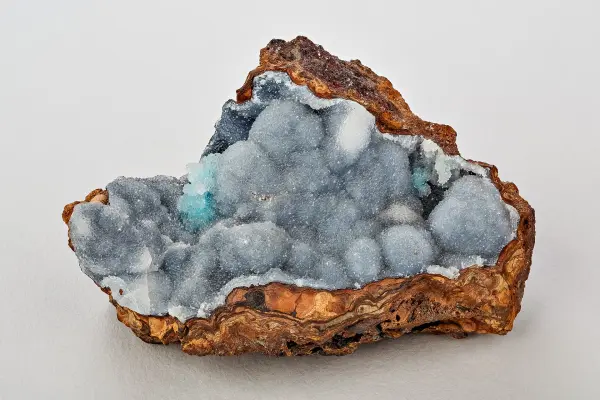
Dugway Geode Beds
Public BLM geode locality in western Juab County, Utah, where Miocene rhyolite cavities were eroded by ancient Lake Bonneville and redeposited as quartz-lined geodes in soft lakebed sediment along the Pony Express Road.
View details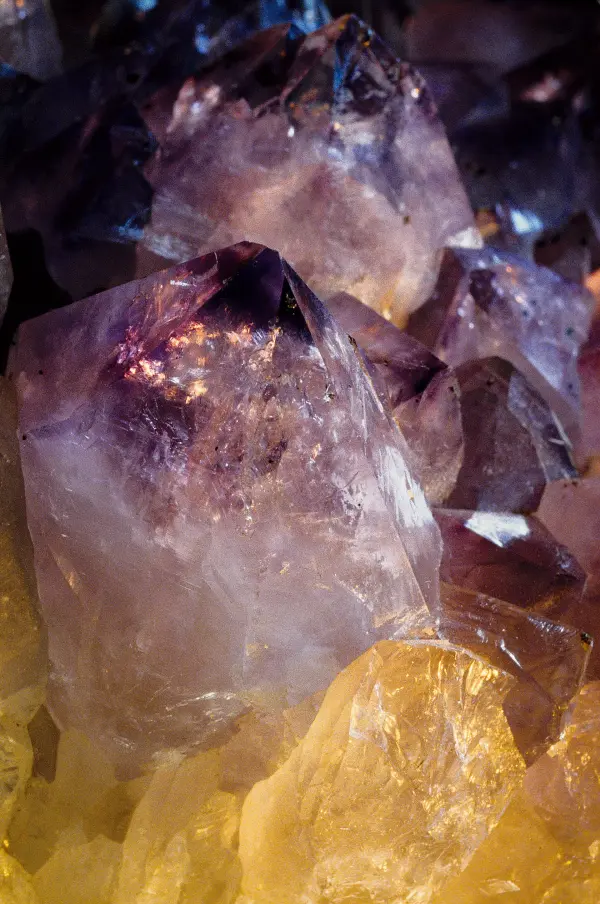
Topaz Mountain
Free BLM rockhound recreation area in the Thomas Range 55 miles west of Delta, Utah, where sherry-coloured topaz crystals weather out of rhyolite vugs alongside red beryl, bixbyite and garnet, and the topaz fades to clear in sunlight.
View detailsWah Wah Mountains Beryllium District
The Wah Wah Mountains host red beryl, one of the rarest gem minerals, in rhyolite flows—most productive zones are claimed and closed to casual collecting.
View detailsFrequently asked questions
Is it legal to collect rocks on BLM land?
Yes. BLM generally allows casual collecting of reasonable amounts of rocks and minerals for personal use without a permit, using hand tools only.
How much can I collect on BLM land?
BLM rules limit casual collecting to personal-use quantities—not commercial volumes. Exact amounts vary by district; when in doubt, take modest amounts and ask the local BLM office.
Can I use a metal detector on BLM land?
Metal detecting for rockhounding is allowed in many BLM districts but restricted near cultural sites and some developed areas. Always check district-specific rules.
What tools are allowed on BLM rockhounding sites?
Hand tools like rock hammers, chisels, and shovels are typically permitted for casual use. Power equipment, blasting, and commercial-scale extraction require permits.
What are the best BLM rockhounding sites?
Dugway Geode Beds and Topaz Mountain in Utah are among America's most popular free BLM collecting areas. Browse our directory for BLM sites by state.