Printable PDF · 36 stones · 53 pages · $7
Rock Tumbling Handbook & Log
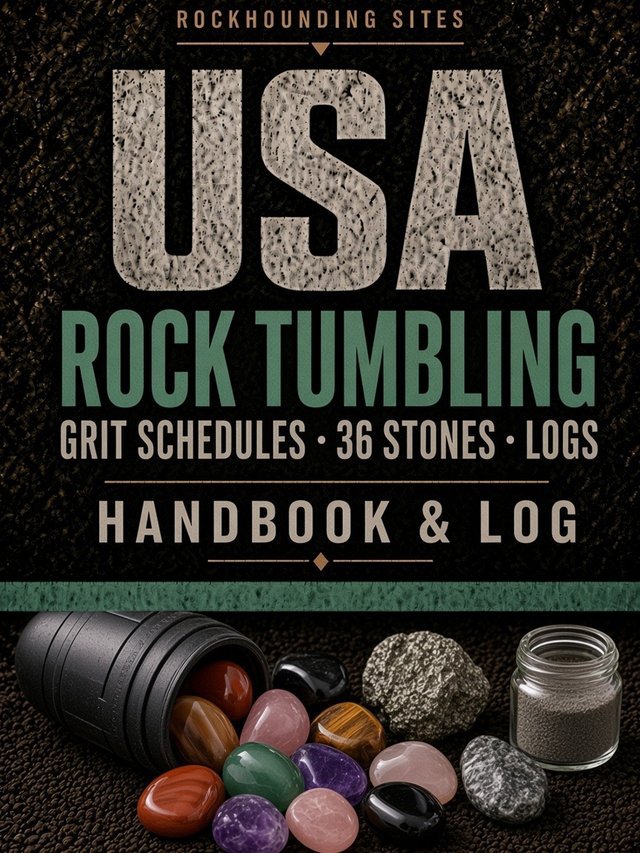
A printable rock tumbling guide and logbook: grit schedules for 36 popular stones, the four-stage method step by step, which stones can share a barrel, how to fix dull or scratched stones, and 12 batch logs.
What’s on every stone card
- Days for each stage: coarse 60/90, medium 120/220, pre-polish 500 and polish, with the stages to skip
- Mohs hardness and its hardness band, so you know what it can share a barrel with
- Polish potential, how much ceramic media to add and which polish works best
- Good rough, tips and watch-outs: dyed material, pitting, undercutting and heat
- Where to find it in the US, a drawing of the polished stone, typical colors and a QR code to the live page
- Check boxes for each stage and a batch number so the card doubles as a tracker
The 36 stones
- Band A · hard silica (Mohs 6.5–7.5)
- Agate, carnelian, chalcedony, jasper, picture jasper, chert and flint, petrified wood, quartz, rose quartz, amethyst and citrine, tiger’s eye, aventurine, bloodstone, quartzite, puddingstone and garnet
- Band B · feldspars and friends (Mohs 5.5–7)
- Unakite, labradorite, moonstone, Oregon sunstone, amazonite, rhodonite, nephrite jade, Yooperlite, and granite and basalt beach stones
- Band C · glassy and brittle (Mohs 5–6)
- Obsidian and Apache tears, sodalite, lapis lazuli, turquoise, beach glass and opalite
- Band D · soft stones (Mohs 3–4.5)
- Malachite, howlite, Petoskey stone, septarian and rhodochrosite
Also inside
- Choosing a tumbler: rotary vs vibratory, popular models and typical prices
- Supplies and costs: what one batch really costs in grit, polish and electricity
- The four stages, loading the barrel, grit amounts for 1.5 to 12-lb barrels and a vibratory schedule
- Cleaning between stages, burnishing and display ideas
- Do not tumble list and two pages of troubleshooting
- Where to get tumbling rough for free or cheap, polishing by hand and a glossary
- Batch planner, 12 batch logs, a rough inventory and a grit and supply log
New to tumbling? Start with our guides to the best rocks for a rock tumbler and polishing stones without a tumbler, or compare rock tumblers, grit kits and tumbling rough.
How to use it
Pick a hardness band, load stones from that band only, and follow the card for your softest stone. Clean the barrel and stones completely between stages and log each batch so you can repeat what worked. Times are starting points: follow your tumbler maker’s manual, never pour slurry down a drain, and confirm collecting rules with the land owner or manager before you collect rough.
Questions
- How long does it take to tumble rocks?
- In a rotary tumbler, plan on about a month for hard stones like agate and jasper: 7–21 days in coarse 60/90 grit, then about a week each in medium, pre-polish and polish. Vibratory tumblers finish in roughly a week or two. Every stone card in the handbook lists the days for each stage.
- What are the best rocks for a beginner to tumble?
- Agate, jasper, carnelian, chalcedony and other hard quartz-family stones. They take a high polish, forgive mistakes and can all go in the same barrel. Keep softer stones such as obsidian, malachite or Petoskey stones for later, and never mix them with agate.
- How much grit do I use?
- It depends on barrel size. A 3-lb rotary barrel takes about 4 tablespoons of coarse and medium grit and 4–6 tablespoons of pre-polish and polish. The handbook has a chart for 1.5 to 12-lb barrels and a vibratory schedule.
- Why are my tumbled stones dull?
- Usually stage 1 was too short, so pits and frosted spots carried through, or grit from an earlier stage got into the polish. The troubleshooting pages list dull, frosted, scratched and chipped stones with the fix for each.
- What format is it?
- A 53-page US Letter PDF. Print the stone cards and logs, or read it on a tablet next to your tumbler.