Rock tumbler rocks work best when hardness matches — agate, jasper, and quartz for beginners. Use bagged tumbling rough to learn grit stages, then add legal field finds; skip soft rocks and fragile points.
Rock tumbler rocks are the feedstock that make a rotary polish possible, and picking the right ones matters more than which machine you own. A barrel of well-matched stones comes out glossy. A barrel of random pebbles comes out scratched, rounded unevenly and full of mud.
Watch: rocks for a rock tumbler
Hardness-matched agate, jasper, and quartz — what to load and what to skip.
Watch on YouTube: Rocks for a Rock Tumbler — then use the hardness table below.
Watch: how to clean a rock
Clean mud off before you tumble — soap, water, and a soft brush.
Watch on YouTube: How to Clean a Rock — then pick hardness-matched feed below.
Things you need for Rock Tumbler Rocks
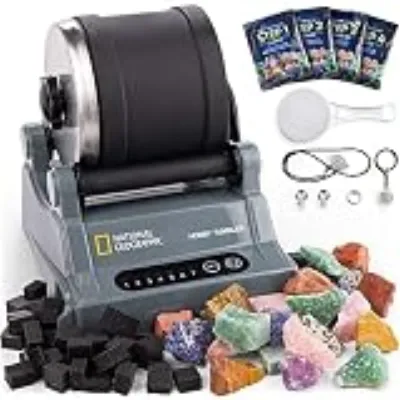
National Geographic Hobby Rock Tumbler Kit
If you want one rock tumbler kit that just works, start here.
Check price on Amazon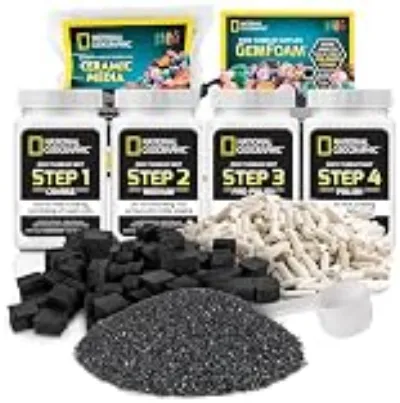
National Geographic Rock Tumbler Grit & Media Refill Kit
Best all-in-one rock polishing grit kit when you want media and grit together.
Check price on Amazon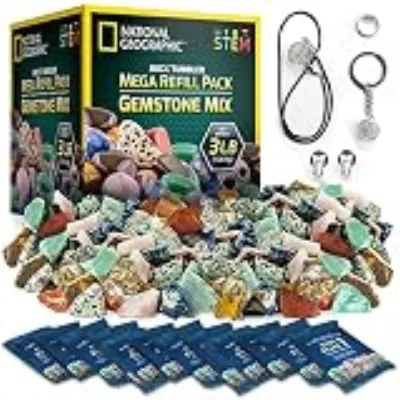
National Geographic Rock Tumbler Refill Kit (3 lb Rough)
Best rocks for tumbling when you want grit and rough together.
Check price on Amazon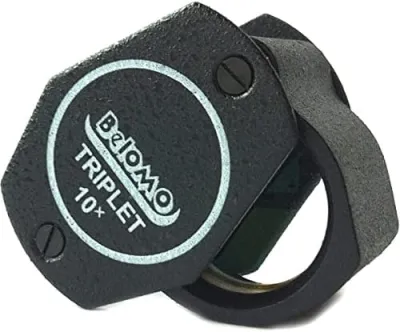
BelOMO 10x Triplet Loupe
The loupe to buy once and carry for decades.
Check price on AmazonDisclosure: Gear links may earn a commission as an Amazon Associate — at no extra cost to you. Learn more.
The hardness rule
Tumbling is controlled abrasion. Grit grinds every stone in the barrel, and softer stones wear faster than harder ones. Load rocks of similar hardness, ideally Mohs 6.5 to 7 silica, and everything shapes and polishes together. Mix in soft limestone and it disappears into the slurry. Mix in much harder material and it never catches up. Our quartzite Mohs hardness page explains scratch testing.
Good choices
| Rock | Why it works |
|---|---|
| Agate and chalcedony | Hard, waxy, takes a mirror polish |
| Jasper | Opaque, colorful, forgiving for beginners |
| Quartz and rose quartz | Durable; fractured pieces round well |
| Carnelian and petrified wood | Polish well if free of cracks |
| Bagged tumbling rough | Pre-sorted size and hardness |
Stones to skip
- Soft or cleaving minerals such as calcite, fluorite, selenite and mica
- Limestone, sandstone and shale, which turn to mud
- Crystal points and geode interiors you want to keep sharp
- Porous fossils that soak up grit
- Pyrite-rich stones, which stain slurry and pit as they wear faster than silica
- Dyed material of unknown coating; dye can bleed into the barrel
Field finds versus bagged rough
Bagged rough is the fastest way to learn the stages because the size and hardness are consistent. Field finds make better keepsakes, but they need cleaning, sorting and sometimes trimming. Rinse off mud before loading, and break oversized pieces with eye protection; see essential tools. Only tumble what you collected legally. Parks ban removal, and a polished souvenir does not change that.
The basic process
- Fill the barrel roughly two-thirds to three-quarters full with a mix of sizes, so small stones cushion large ones.
- Run coarse grit about a week, then clean everything thoroughly.
- Repeat with medium grit, fine grit and polish, cleaning between each stage so coarse particles never reach the final step.
- Open the lid carefully, especially after the first day of coarse grit, because slurry can build pressure.
- Never pour used slurry down a drain. It can set like cement in pipes; let it settle and dispose of the solids in the trash.
Compare rock tumblers and tumbler grit once you know the stages.
Common mistakes
- Skipping the clean between stages, the most common cause of dull results.
- Overfilling the barrel or running it nearly empty.
- Tumbling cracked stones that fall apart in week two.
- Buying the cheapest mini barrel and blaming the stones when it fails.
- Expecting polish from stones that had no business being tumbled.
Buying advice without the hype
Mid-size rotary tumblers with replaceable belts and a durable barrel suit most beginners. Quiet is relative: rotary machines make noise, so use a mat in a garage or closet. “Best rated” lists shift with retail reviews, so prioritize capacity, parts availability and grit support over star counts. A hand lens helps you check cracks before loading; see hand lenses.
Plan your next stop
Continue with the national hubs so you can compare digs, GPS distance, and state maps:
- Dig-sites map — national fee digs with fees and keep rules
- Near me GPS — sort sites by distance from you
- Essential rockhounding tools — field kit baseline
Reality check
A month in a barrel can turn a plain pebble into a gem-looking stone, but it will not create hidden banding or fix fractures. If a stone looks poor wet, it will look poor polished. Start with one barrel of matched silica, finish the grit stages, then expand. Related reading: how to polish stones without a tumbler.
Frequently asked questions
What rocks are best for a rock tumbler?
Beginners should tumble similar-hardness silica — agate, jasper, quartz, and chalcedony around Mohs 7. Mixed soft and hard rocks leave the soft ones ruined and the hard ones unfinished.
What rocks work in a rock tumbler machine?
The same hardness-matched silica — agate, jasper, quartz — whether you say “rock tumbler rocks” or “rocks for rock tumbler machine.” Soft limestone and fragile points still fail.
Can I tumble rocks I find rockhounding?
Yes if they are hard enough and legal to collect. Avoid soft limestone, sandstone, and fragile crystal points. Clean mud off before loading the barrel.
Should I buy tumbling rough instead?
Bagged tumbling rough is the fastest way to learn grit stages with consistent hardness. Compare tumbling rough and tumblers on our products pages, then add field finds once you know the process.
What is the best rock tumbler for professional use?
“Professional” usually means larger barrels, robust motors, and spare belts for frequent batches — not a toy mini tumbler. Compare capacity and duty cycle on our rock tumblers product page after you know grit stages with a mid-size rotary.
What is the best hobby rock tumbler?
The best hobby rock tumbler for most beginners is a mid-size rotary with spare belts — not a mini toy barrel. Compare capacity on our rock tumblers page after you learn grit stages with consistent agate/jasper rough.
What is the best rock tumbler for beginners?
Beginners should start with a mid-size rotary tumbler and a grit kit — not the cheapest mini barrel that overheats. Learn stages with bagged tumbling rough before loading mixed field rocks. Compare starter models on our rock tumblers page.
What is the quietest rock tumbler?
Rotary tumblers are never silent, but placing the unit on a mat in a garage or closet and choosing a well-balanced mid-size barrel reduces noise versus cheap vibrating mini units on bare floors. Compare builds on our rock tumblers page.
What makes a good rock tumbler?
A good rock tumbler for hobbyists is a mid-size rotary with a durable barrel, replaceable belts, and enough capacity for a grit kit — not the cheapest mini unit. Match feed hardness first, then compare models on our rock tumblers product page.
What is the best rated rock tumbler?
“Best rated” changes with retail reviews — for rockhounds, prioritize mid-size rotary capacity and spare parts over star ratings alone. Compare current models on our rock tumblers page after you know grit stages.
What is the best rock tumbler to buy?
Same answer as “best rated” and “beat rock tumbler” searches — mid-size rotary, grit kit, hardness-matched feed. Compare live models on our rock tumblers product page.