
3m Quarry
Rockhounding site in New Jersey, New Jersey · Quartz & Crystals
3m Quarry is a quartz rockhounding site near New Jersey, NJ. Fee varies. Best season: Not applicable as an open site.
Typical season: Not applicable as an open site
About 3m Quarry
This entry covers a documented mineral occurrence in Somerset County, in the Millstone and Raritan valley country of central New Jersey, reporting quartz, agate, jasper and chalcedony. It is worth saying at the outset that this is a recorded occurrence rather than a confirmed public collecting site, and that no open access is documented here.
The regional geology is genuinely interesting. Central New Jersey lies in the Newark Basin, a rift valley that opened as Pangaea began to break apart in the Triassic and Jurassic. Basalt flows and diabase intrusions in that basin host vesicle and fracture fillings, and the state's traprock quarries are famous among mineralogists for prehnite, datolite and a long list of zeolites alongside quartz and chalcedony.
The practical difficulty is that all of that material comes out of quarries, and quarries in New Jersey are private industrial sites. Fresh rock faces are exactly what makes them productive and exactly what makes them dangerous, and operators do not admit casual visitors. The established route for collectors in this state is a mineral club field trip, where permission, insurance and safety supervision are arranged in advance. For a guaranteed, legal New Jersey collecting experience, Sterling Hill Mining Museum in the northwest is the answer.
Key facts
Structured details for trip planning — verify access and fees with the land manager before you visit.
- Specimen type
- Quartz
- Primary specimens
- Quartz, Agate, Jasper, Chalcedony, Zeolites
- Fee status
- Fee varies
- Nearest town
- New Jersey
- State
- New Jersey
- Coordinates
- 40.45828, -74.71350
- Best season
- Not applicable as an open site. Club field trips to New Jersey quarries typically run spring through autumn
- Access difficulty
- Access is the difficulty. Quarry collecting itself is straightforward but requires permission, safety gear and supervision
- On-site staff
- Present (seasonal)
- Collecting hazards
- Access restrictions
- Camping
- No camping. Campgrounds operate elsewhere in central and northwestern New Jersey
- Activities
- None on site without arranged access. Mineral club field trips are the realistic route into New Jersey quarries
- Facilities
- None available to the public. Somerville, Manville and Hillsborough have full services
- Last updated
- 2026-09-15
What to pack for 3m Quarry
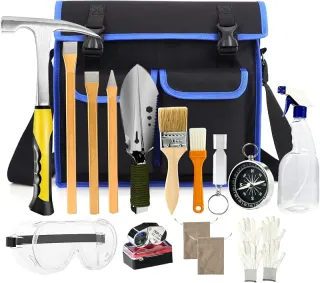
Gear we compare for quartz & crystals trips like this one — tools, safety, and the hike in.



Disclosure: Gear links may earn a commission as an Amazon Associate — at no extra cost to you. Learn more.
The experience
- Best time to visitNot applicable as an open site. Club field trips to New Jersey quarries typically run spring through autumn
- AccessAccess is the difficulty. Quarry collecting itself is straightforward but requires permission, safety gear and supervision
- FacilitiesNone available to the public. Somerville, Manville and Hillsborough have full services
- Camping nearbyNo camping. Campgrounds operate elsewhere in central and northwestern New Jersey
Highlights & features
- Somerset County sits in the Newark Basin, a Triassic and Jurassic rift valley with distinctive volcanic and sedimentary geology
- Quartz, agate, jasper and chalcedony are the reported finds from this occurrence
- The Watchung basalts and associated diabase in the wider region are classic New Jersey zeolite ground
- Central New Jersey quarries have produced notable specimens for collectors over many decades
- Mineral club field trips are the established way collectors reach quarries in this state
- The Newark Basin formed as the supercontinent Pangaea began to rift apart in the Triassic and Jurassic
- Basalt flows and diabase intrusions in that basin host vesicle-filling minerals including quartz, chalcedony and zeolites
- Prehnite, datolite and a long list of zeolites are the minerals New Jersey traprock is best known for
How to get there
The coordinates place this occurrence in Somerset County, central New Jersey, in the corridor between Manville, Hillsborough and the Millstone River, reached from US Highway 206 and Interstate 287. Somerville, Manville and Hillsborough are the nearest communities with services, and the area is roughly an hour from both New York City and Philadelphia. There is nothing to direct a visitor to on the ground, because no public access is confirmed. Anyone planning to collect in this part of New Jersey should be arranging a club field trip to a specific permitted quarry rather than navigating to a coordinate.
The coordinates place this occurrence in Somerset County, central New Jersey, in the corridor between Manville, Hillsborough and the Millstone River, reached from US Highway 206 and Interstate 287.
Somerville, Manville and Hillsborough are the nearest communities with services, and the area is roughly an hour from both New York City and Philadelphia.
There is nothing to direct a visitor to on the ground, because no public access is confirmed. Anyone planning to collect in this part of New Jersey should be arranging a club field trip to a specific permitted quarry rather than navigating to a coordinate.
Plan your visit
The realistic plan for collecting in central New Jersey is to join a mineral club and go on its field trips. Clubs in New Jersey and the surrounding region hold long-standing relationships with quarry operators, arrange insurance, and run supervised visits that no individual can replicate.
A permitted quarry trip requires a hard hat, safety glasses, steel-toed boots and usually a high-visibility vest, plus a rock hammer, chisels, gloves, a bucket and wrapping material. Operators set the rules on which benches are open.
Timing: club trips typically run spring through autumn. Facilities: none applicable.
For a guaranteed legal collecting day in New Jersey without club membership, Sterling Hill Mining Museum in Ogdensburg offers an underground tour and collecting on its Mine Run Dump. See other New Jersey areas.
Things you need to take to 3m Quarry
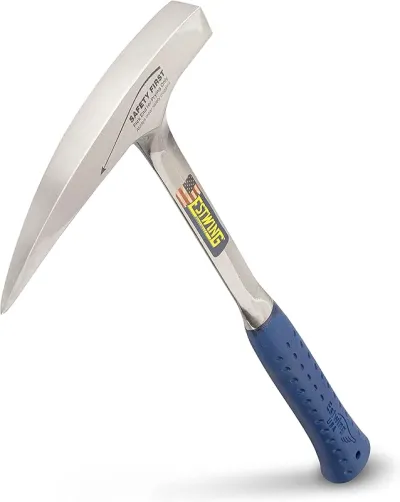
Estwing 22 oz Geological Pick
If you buy one hammer, make it this one.
Check price on Amazon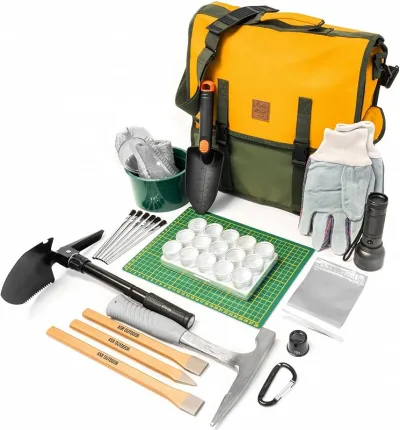
ASR Outdoor 38pc Deluxe Rock Hounding Kit
The kit to buy when you want prospecting-grade accessories, not just a hammer in a bag.
Check price on Amazon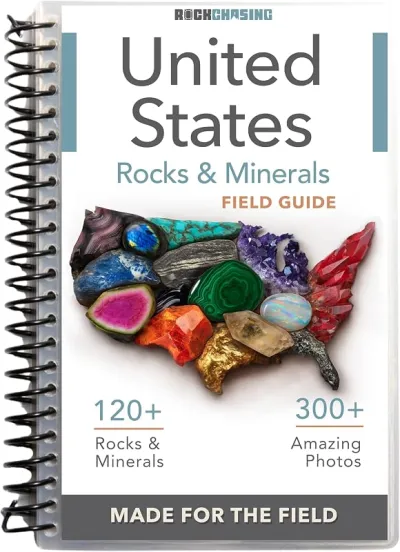
Rock Chasing US Rocks & Minerals Field Guide
The guide to clip on your pack when you do not know what you are looking at yet.
Check price on Amazon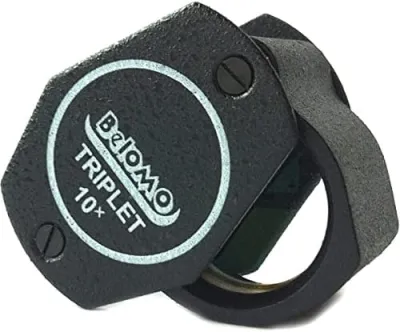
BelOMO 10x Triplet Loupe
The loupe to buy once and carry for decades.
Check price on AmazonDisclosure: Gear links may earn a commission as an Amazon Associate — at no extra cost to you. Learn more.
Access & fees
No public collecting access is confirmed at this location, and that should be the operating assumption. Quarries in New Jersey, whether working or abandoned, are private industrial property. Entering one without the operator's permission is trespass, and it is trespass onto ground with unstable faces, deep water and heavy equipment. Abandoned quarry pools in this region have caused fatalities. The legitimate route is a mineral club field trip. Clubs negotiate access with operators, carry insurance, enforce safety equipment requirements and supervise the visit. Operators who allow any access at all generally allow it only on those terms. New Jersey state parks and forests prohibit removing natural features, so they are not an alternative. Road cuts are highway right of way where stopping is generally prohibited. If you want to collect in New Jersey with certainty and without club membership, Sterling Hill Mining Museum in Ogdensburg permits collecting on its Mine Run Dump as part of a paid visit.
No public collecting access is confirmed at this location, and that should be the operating assumption.
Quarries in New Jersey, whether working or abandoned, are private industrial property. Entering one without the operator's permission is trespass, and it is trespass onto ground with unstable faces, deep water and heavy equipment. Abandoned quarry pools in this region have caused fatalities.
The legitimate route is a mineral club field trip. Clubs negotiate access with operators, carry insurance, enforce safety equipment requirements and supervise the visit. Operators who allow any access at all generally allow it only on those terms.
New Jersey state parks and forests prohibit removing natural features, so they are not an alternative. Road cuts are highway right of way where stopping is generally prohibited.
If you want to collect in New Jersey with certainty and without club membership, Sterling Hill Mining Museum in Ogdensburg permits collecting on its Mine Run Dump as part of a paid visit.
Frequently asked questions
Can you collect at the 3M Quarry in New Jersey?
No public collecting access is confirmed at this location. Quarries in New Jersey are private industrial property, whether working or abandoned, and entering one without the operator's permission is trespass onto genuinely dangerous ground. Mineral club field trips are the established route into New Jersey quarries.
What minerals occur in central New Jersey?
Quartz, agate, jasper and chalcedony are reported from this occurrence, and the wider Newark Basin is known for prehnite, datolite and a long list of zeolites filling vesicles and fractures in basalt and diabase. Almost all of that material comes out of quarries rather than from surface outcrop.
How do you get into a New Jersey quarry to collect?
Through a mineral club. Clubs hold long-standing relationships with operators, arrange insurance, enforce safety equipment requirements and supervise field trips. Operators who permit any access generally do so only on those terms, and individuals approaching a quarry directly are almost always refused.
Where can you collect legally in New Jersey without a club?
Sterling Hill Mining Museum in Ogdensburg permits collecting on its Mine Run Dump as part of a paid visit, alongside an underground tour of a preserved zinc mine and two museums. It is the most reliable legal collecting day in the state for anyone without club access.
What is the Newark Basin?
A rift valley that opened across central and northern New Jersey and neighbouring states as Pangaea began to break apart in the Triassic and Jurassic. Its basalt flows and diabase intrusions host the vesicle-filling minerals, including zeolites, prehnite and chalcedony, that New Jersey traprock is known for.
Is rockhounding legal in New Jersey?
It is heavily constrained. State parks and forests prohibit removing natural features, quarries are private industrial property, and the state has very little open public collecting ground. The practical options are mineral club field trips, the fee collecting at Sterling Hill Mining Museum, and private land with permission.
What is New Jersey best known for mineralogically?
Franklin and Sterling Hill in the northwest, one of the world's richest zinc ore bodies and the type locality for dozens of mineral species, internationally famous for fluorescent willemite and calcite. Separately, the Newark Basin traprock quarries are known among collectors for zeolites, prehnite and datolite.
Are abandoned quarries safe to explore?
No. Abandoned quarries have unstable benches and faces that shed rock without warning, and their pools are deep, cold and have caused fatalities across the region. They are also private property. There is no version of exploring one without permission that is either safe or legal.
What are zeolites?
A family of hydrated aluminosilicate minerals that crystallise in cavities in volcanic rock, often as delicate sprays and radiating clusters. New Jersey's Newark Basin basalts are a classic American source, and zeolite specimens from the state's traprock quarries are in collections worldwide.
How do you join a mineral club?
Most regional clubs accept new members with a modest annual fee, hold monthly meetings and run a field trip programme. Membership is what unlocks quarry access, since clubs carry the insurance and relationships that operators require. In states like New Jersey, where open ground is scarce, it is the difference between collecting and not.
Why do so many New Jersey quarry localities appear in guides but turn out to be closed?
The explanation collectors give is that most of these localities were documented decades ago, when casual quarry access was far more common, and the guides were never updated as operators consolidated and liability concerns grew. A site that produced classic specimens in the 1970s may have been off limits since the 1990s. The advice given repeatedly is to treat any quarry entry in an older guide as closed until proven otherwise, and to work through a club rather than a coordinate.
Is joining a mineral club actually worth it for access?
This comes up constantly in mid-Atlantic and northeastern discussions, and the answer is close to unanimous: yes, and it is usually the only route. Clubs hold the insurance and the operator relationships that individuals cannot obtain, and their field trips reach quarry faces that are otherwise entirely closed. People also mention the secondary benefits, identification help, equipment access and shared knowledge of what is currently open, which matter in a region where published site information ages badly.
Explore related hubs
Report an access change
Field conditions change. If this site is closed, claimed, flooded, or the fee has changed, tell us — we update listings with community tips and desk verification.
Include the date you visited and any land-manager contact. Do not share private gate codes.
Map & location
Culture & history
New Jersey's mineralogical reputation rests on two very different foundations. The Franklin and Sterling Hill zinc district in the northwest is one of the most important mineral localities on earth, the type locality for dozens of species and world famous for fluorescence. The Newark Basin traprock quarries of the centre and north are the other, known for zeolites, prehnite and datolite from basalt and diabase. Quarrying in the Newark Basin supplied crushed stone for the roads and rail of the New York and Philadelphia metropolitan regions, and the specimens that reached collectors were a byproduct of that industry. As operations consolidated and liability concerns grew, casual access to quarry faces largely disappeared, which is why club trips became the norm.
Conservation
The conservation issue in New Jersey quarry collecting is access rather than resource. Quarry operators who have had trespassers, injuries or liability claims close their gates to everyone, including the clubs that had worked with them for decades. So the single most useful thing a collector can do is not go where they have not been invited. On permitted trips, follow every rule the operator sets, wear the required safety equipment, stay off faces, leave the site tidy and do not publicise specific access arrangements in ways that produce uninvited visitors. That behaviour is what keeps the remaining doors open.
Sources & updates
Spotted outdated access, fees, or safety info? Use Report an access change on this page or send a correction with the page URL — we review every submission.