
Ellensburg Blue Agate Beds
Rockhounding site in Ellensburg, Washington · Agate & Jasper
Ellensburg Blue Agate Beds is a agate rockhounding site near Ellensburg, WA. Fee varies. Best season: Spring and early summer, after runoff has scoured the creek beds and before vegetation hides the gravel bars.
Typical season: Spring and early summer, after runoff has scoured the creek beds and before vegetation hides the gravel bars
About Ellensburg Blue Agate Beds
Ellensburg Blue is the rarest of the North American agates in the practical sense that it occurs in exactly one place. Kittitas County, in central Washington, is the only source on earth, and collectors have been working the same few drainages for generations without exhausting either the ground or the fascination.
The geology explains why the colour is so unusual. The agate formed when silica-rich groundwater moved through the Teanaway Basalt, an older volcanic unit distinct from the vast Columbia River Basalt Group that covers most of eastern Washington, and filled vesicles and fractures in the rock. The result ranges from pale ice blue through to a deep cornflower blue that cutters treat as a semiprecious gem rather than as ordinary chalcedony.
Finding it is another matter. Nodules weather out of outcrops that are often invisible, travel downslope and downstream, and end up scattered among ordinary gray and white chalcedony on gravel bars. The Reecer Creek and Green Canyon areas are the classic ground, with material also reported near Thorp and west of Ellensburg. Much of the best historic land is private, so the accessible public searching is concentrated in the Teanaway drainage and along public road corridors.
Key facts
Structured details for trip planning — verify access and fees with the land manager before you visit.
- Specimen type
- Agate
- Primary specimens
- Ellensburg Blue Agate, Chalcedony, Agate, Jasper, Petrified Wood
- Fee status
- Fee varies
- Nearest town
- Ellensburg
- State
- Washington
- Coordinates
- 46.99600, -120.54700
- Best season
- Spring and early summer, after runoff has scoured the creek beds and before vegetation hides the gravel bars. Autumn after the first rains also works well
- Access difficulty
- Moderate. Walking gravel bars and eroded slopes, plus a lot of patient looking. Ellensburg Blue is genuinely rare and most visits end without one
- Collecting hazards
- Access restrictions
- Camping
- Dispersed camping is available in the Teanaway Community Forest; developed campgrounds operate in the wider Kittitas County area
- Activities
- Surface searching gravel bars, road cuts and eroded slopes for blue chalcedony
- Facilities
- None in the field. Ellensburg has full services, and the Teanaway Community Forest has trailheads and dispersed camping
- Last updated
- 2026-09-15
What to pack for Ellensburg Blue Agate Beds
Gear we compare for agate & jasper trips like this one — tools, safety, and the hike in.



Disclosure: Gear links may earn a commission as an Amazon Associate — at no extra cost to you. Learn more.
The experience
- Best time to visitSpring and early summer, after runoff has scoured the creek beds and before vegetation hides the gravel bars. Autumn after the first rains also works well
- AccessModerate. Walking gravel bars and eroded slopes, plus a lot of patient looking. Ellensburg Blue is genuinely rare and most visits end without one
- FacilitiesNone in the field. Ellensburg has full services, and the Teanaway Community Forest has trailheads and dispersed camping
- Camping nearbyDispersed camping is available in the Teanaway Community Forest; developed campgrounds operate in the wider Kittitas County area
Highlights & features
- Ellensburg Blue agate is endemic to Kittitas County and cannot be found anywhere else in the world
- The colour ranges from pale ice blue to a prized deep cornflower blue
- The Reecer Creek and Green Canyon areas are the classic ground, with material also reported near Thorp and west of Ellensburg
- The Teanaway Community Forest offers public land in the right geological setting
- Central Washington University has studied the agate, giving the deposit unusual academic attention
- The agate forms when silica-rich groundwater flows through the Teanaway Basalt and fills vesicles and fractures in the rock
- The Teanaway Basalt is older and distinct from the much more extensive Columbia River Basalt Group that covers most of eastern Washington
- Deep blue material is scarce enough that cutters treat it as a semiprecious gem rather than as ordinary agate
How to get there
Ellensburg sits at the junction of Interstate 90 and Interstate 82 in central Washington, about 110 miles east of Seattle over Snoqualmie Pass. For the Reecer Creek and Green Canyon ground, take Reecer Creek Road north out of Ellensburg. Upper Green Canyon Road branches west; continuing north on Reecer Creek Road climbs deeper into the hills. For the Teanaway, take Highway 970 northeast from Interstate 90 toward Teanaway Road and the Teanaway Community Forest. Paved roads reach the lower drainages easily. Beyond that the surfaces turn to gravel and then to forest road, rough in places and snow-blocked into late spring at higher elevations. High clearance helps, and a current map of land ownership helps more.
Ellensburg sits at the junction of Interstate 90 and Interstate 82 in central Washington, about 110 miles east of Seattle over Snoqualmie Pass.
For the Reecer Creek and Green Canyon ground, take Reecer Creek Road north out of Ellensburg. Upper Green Canyon Road branches west; continuing north on Reecer Creek Road climbs deeper into the hills. For the Teanaway, take Highway 970 northeast from Interstate 90 toward Teanaway Road and the Teanaway Community Forest.
Paved roads reach the lower drainages easily. Beyond that the surfaces turn to gravel and then to forest road, rough in places and snow-blocked into late spring at higher elevations. High clearance helps, and a current map of land ownership helps more.
Plan your visit
Go expecting to look rather than to fill a bucket. Experienced collectors describe multiple trips between good finds, and that is the honest baseline.
Bring a spray bottle, which is the single most useful tool here: wetting gravel makes blue chalcedony jump out of a bar that looks uniformly gray when dry. Add sunglasses, a hand lens, sturdy boots for creek walking, gloves and a small bag. A rock hammer is less useful than patience, because most material is found loose rather than broken from outcrop.
Timing: spring and early summer after runoff, or autumn after the first rains. Facilities: none in the field; Ellensburg has everything.
Work gravel bars, eroded cut banks and the shoulders of old road cuts on public ground, and look for the pale translucent blue rather than for a vivid gemstone; most pieces are subtle until they are cut. Combine with other Washington collecting areas in Kittitas County.
Things you need to take to Ellensburg Blue Agate Beds

Mechanix Work Gloves with Grip
The default glove for collectors who need feel and protection.
Check price on Amazon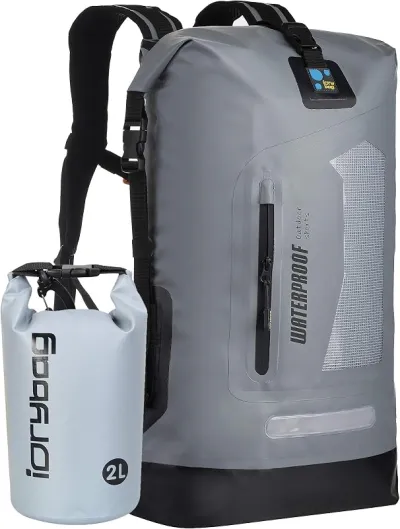
Osprey Talon 22 Backpack
The pack to save for if you collect more than a few times a year.
Check price on Amazon
Willit UPF 50+ Sun Shirt UPF 50+
The best all-around sun shirt for rockhounding sites — light enough to collect at, dry enough to hike out in.
Check price on Amazon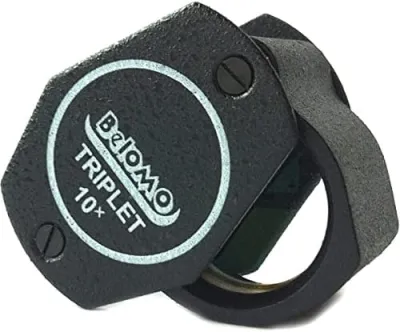
BelOMO 10x Triplet Loupe
The loupe to buy once and carry for decades.
Check price on AmazonDisclosure: Gear links may earn a commission as an Amazon Associate — at no extra cost to you. Learn more.
Access & fees
Land status is the deciding factor for any Ellensburg Blue trip, and it varies parcel by parcel across the county. A large proportion of the historically productive ground is private ranch and timber land, much of it posted. Collecting there requires the owner's permission, and local landowners have dealt with enough trespass over the decades to be wary. Ask, do not assume. The Teanaway Community Forest is public land managed by the Washington Department of Natural Resources, which makes it the most straightforward legal option in the right geology. Washington DNR notes that each landowner sets their own rules for collecting, so check current DNR guidance for the specific unit before you dig or remove material. State parks do not permit collecting. Road cuts on state highway right-of-way are not open for collecting and stopping on them is unsafe. Where you do collect, keep it to hand tools and personal quantities, fill any holes, and close gates behind you.
Land status is the deciding factor for any Ellensburg Blue trip, and it varies parcel by parcel across the county.
A large proportion of the historically productive ground is private ranch and timber land, much of it posted. Collecting there requires the owner's permission, and local landowners have dealt with enough trespass over the decades to be wary. Ask, do not assume.
The Teanaway Community Forest is public land managed by the Washington Department of Natural Resources, which makes it the most straightforward legal option in the right geology. Washington DNR notes that each landowner sets their own rules for collecting, so check current DNR guidance for the specific unit before you dig or remove material. State parks do not permit collecting. Road cuts on state highway right-of-way are not open for collecting and stopping on them is unsafe.
Where you do collect, keep it to hand tools and personal quantities, fill any holes, and close gates behind you.
Frequently asked questions
Where is Ellensburg Blue agate found?
Only in Kittitas County, Washington. It is endemic to the area and cannot be found anywhere else in the world. The Reecer Creek and Green Canyon areas north of Ellensburg are the classic ground, with material also reported near Thorp and west of town, and in the Teanaway drainage.
Can you collect Ellensburg Blue on public land?
Yes, in places. The Teanaway Community Forest, managed by the Washington Department of Natural Resources, is the most straightforward public option in the right geology. Much of the historically productive ground, though, is private ranch land that is posted and requires the owner's permission.
How does Ellensburg Blue agate form?
Silica-rich groundwater flows through the Teanaway Basalt and fills vesicles and fractures in the rock, producing chalcedony that ranges from pale ice blue to deep cornflower blue. The Teanaway Basalt is an older, separate unit from the much more extensive Columbia River Basalt Group.
How hard is it to find Ellensburg Blue?
Genuinely hard. Most trips end without one, and experienced local collectors describe long stretches between good pieces. A spray bottle is the most useful tool, because wetting a gravel bar makes blue chalcedony stand out from ordinary gray and white material that looks identical when dry.
When is the best time to search for Ellensburg Blue?
Spring and early summer, after runoff has scoured the creek beds and before vegetation hides the gravel bars, or autumn after the first rains. Higher forest roads can stay snow-blocked into late spring, and summer fire closures are common in Kittitas County.
How rare is Ellensburg Blue agate?
Rare enough that cutters treat deep cornflower blue material as a semiprecious gem rather than as ordinary agate. It occurs only in Kittitas County, Washington, and much of the historically productive ground is private. Experienced local collectors describe multiple trips between good pieces, which is the honest baseline.
How do you identify Ellensburg Blue agate in the field?
Look for pale translucent blue rather than a vivid gemstone, because most pieces are subtle until cut. Wetting gravel is the essential technique: a spray bottle makes blue chalcedony stand out from a bar that looks uniformly grey when dry. Backlighting a thin piece against the sky confirms translucency.
Where is the Teanaway Community Forest?
In Kittitas County northeast of Cle Elum, managed by the Washington Department of Natural Resources, covering the Teanaway River drainage. It is public land in the right geology, which makes it the most straightforward legal option for searching in a county where much of the historic agate ground is private.
What rock does Ellensburg Blue form in?
The Teanaway Basalt. Silica-rich groundwater flows through that unit and fills vesicles and fractures, producing the chalcedony. The Teanaway Basalt is older and separate from the much more extensive Columbia River Basalt Group that covers most of eastern Washington.
Can you buy Ellensburg Blue if you cannot find it?
Yes. Local jewellers in Ellensburg and Kittitas County have sold it for generations, and it has been a regional identity marker sold at the Ellensburg rodeo and county fair since long before rockhounding became a national hobby. Older stones from ground now closed command the highest prices.
Is finding Ellensburg Blue realistic for a visitor?
Local collectors are candid that it is a long-odds pursuit even for people who search regularly, and that visitors hoping for a deep blue stone on a single weekend are usually disappointed. What they do describe as achievable is finding pale blue chalcedony that confirms you were in the right ground, and learning the wetted-gravel technique that makes any of it possible. The recommendation is to treat it as a search with a bonus rather than a collecting trip with a target.
How do people handle the private land problem in Kittitas County?
The recurring advice is to concentrate on the Teanaway Community Forest and other Washington DNR ground rather than trying to negotiate private ranch access, because local landowners have dealt with decades of trespass and are understandably wary. People also warn against following older guidebook directions to ground that has since been posted, and note that being caught on private land is what closes access for everyone who asks politely afterwards.
Explore related hubs
Report an access change
Field conditions change. If this site is closed, claimed, flooded, or the fee has changed, tell us — we update listings with community tips and desk verification.
Include the date you visited and any land-manager contact. Do not share private gate codes.
Map & location
Culture & history
Ellensburg Blue has been collected since the late nineteenth century and became a regional identity marker for Kittitas County, sold through local jewellers and shown at the Ellensburg rodeo and county fair for generations. Some of the best historic material came from ground that has since been closed to collecting, which is part of why the older specimens command the prices they do. Central Washington University in Ellensburg has taken up the study of the agate, which is unusual for a gem material of this kind and has helped clarify the link to the Teanaway Basalt rather than to the younger Columbia River basalts.
Conservation
This is a small, non-renewable deposit in a county where collector behaviour has already closed ground. The most useful thing any visitor can do is respect posted land and ask permission rather than slipping through a fence. Surface collect rather than dig where you can, since the material concentrates naturally in gravel and does not need excavation to find. Fill any hole you do open, keep vehicles on established roads, close gates, and pack out all litter. Take what you will cut and use, and leave the rest for the next collector in a deposit that exists nowhere else.
Sources & updates
Spotted outdated access, fees, or safety info? Use Report an access change on this page or send a correction with the page URL — we review every submission.