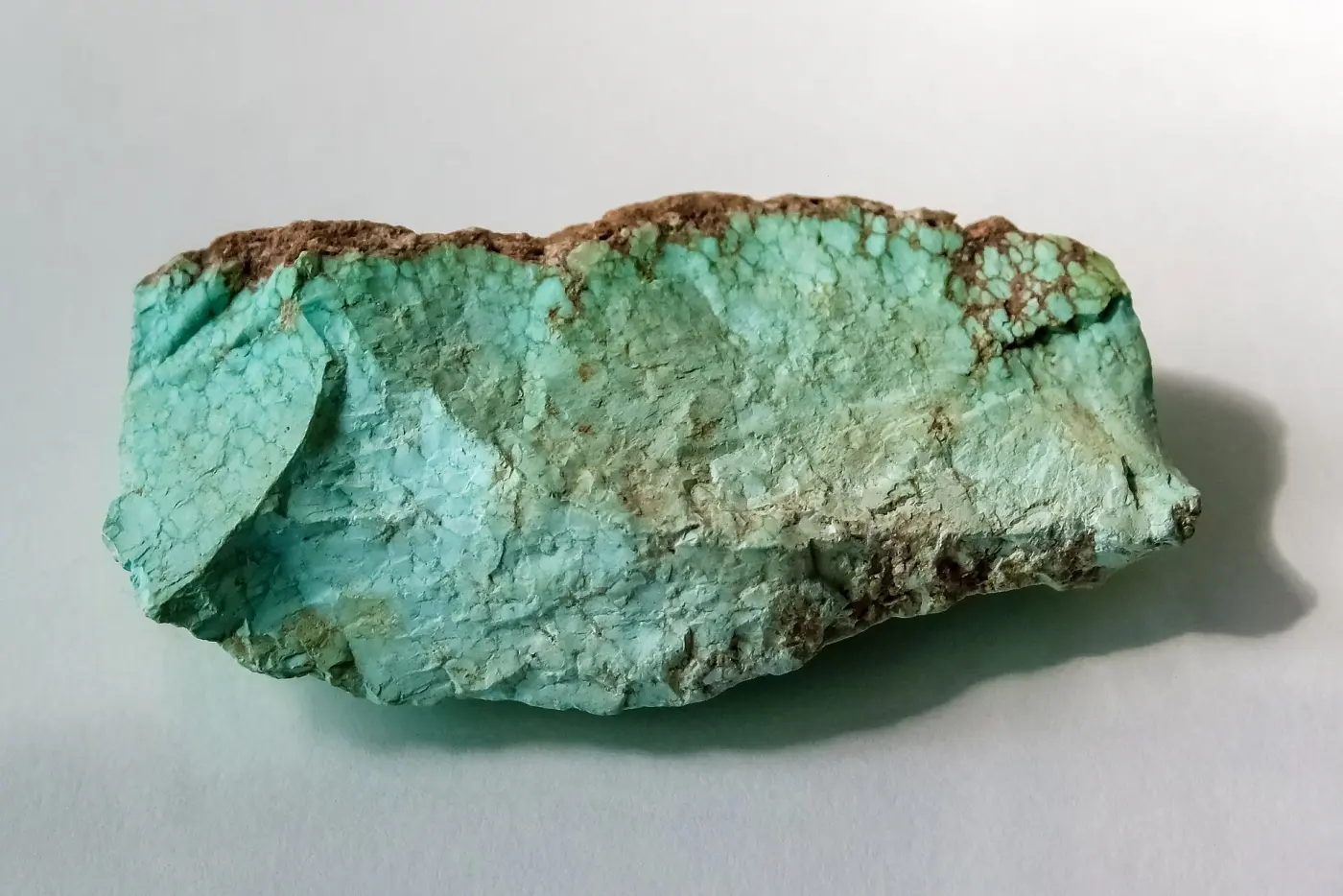
Virgin Valley Opal District
Rockhounding site in Denio, Nevada · Turquoise & Opal
Virgin Valley Opal District is a opal rockhounding site near Denio, NV. Fee required. Best season: The short summer season.
Typical season: The short summer season
About Virgin Valley Opal District
Virgin Valley sits in the far north of Humboldt County, Nevada, close to the Oregon line and hard against the Sheldon National Wildlife Refuge, and it is the reason black fire opal is Nevada's precious gemstone. Opal from here carries an intensity of colour that made the district internationally known in the early twentieth century, and it is still worked today by three family-run fee mines.
The geology is unusual and explains much of what collectors find. Miocene volcanic ash buried standing forest, and silica-rich groundwater later replaced the wood and filled cavities, so a large share of Virgin Valley material is opalized wood rather than nodular opal: replaced limb sections, chunks of trunk, even cones. The finest precious opal shows black or dark body colour with broad flashes of red, green and blue.
The practical choice is between two kinds of digging. Tailings raking works material earlier diggers passed over, costs less and suits families. Bank digging works virgin ground that has never been moved and carries both the higher price and the real chance of a significant stone. Either way, what you find is yours.
Key facts
Structured details for trip planning — verify access and fees with the land manager before you visit.
- Specimen type
- Opal
- Primary specimens
- Black Fire Opal, Precious Opal, Opalized Wood, Common Opal, Petrified Wood
- Fee status
- Fee required
- Nearest town
- Denio
- State
- Nevada
- Coordinates
- 41.82000, -118.65000
- Best season
- The short summer season. Rainbow Ridge runs May 1 to September 27, 2026; Royal Peacock runs May 1 to October 18, 2026, weather permitting
- Access difficulty
- Moderate to strenuous. Tailings raking suits families; bank digging in virgin ground is sustained pick and shovel work and Royal Peacock bars children under 12 from it
- Collecting hazards
- Flood / current risk
- Camping
- Royal Peacock operates a campground and RV park on site; Virgin Valley Campground at Sheldon National Wildlife Refuge is nearby with a warm spring pool
- Land manager
- Bureau of Land Management
- Activities
- Raking mine tailings and digging virgin opal-bearing ground under supervision
- Facilities
- Rock shops and porta-toilets at the mines; Royal Peacock has a campground and RV park. Nearest fuel is 32 to 100 miles away and the nearest hospital is roughly 100 miles
- Last updated
- 2026-09-15
What to pack for Virgin Valley Opal District
Gear we compare for turquoise & opal trips like this one — tools, safety, and the hike in.




Disclosure: Gear links may earn a commission as an Amazon Associate — at no extra cost to you. Learn more.
The experience
- Best time to visitThe short summer season. Rainbow Ridge runs May 1 to September 27, 2026; Royal Peacock runs May 1 to October 18, 2026, weather permitting
- AccessModerate to strenuous. Tailings raking suits families; bank digging in virgin ground is sustained pick and shovel work and Royal Peacock bars children under 12 from it
- FacilitiesRock shops and porta-toilets at the mines; Royal Peacock has a campground and RV park. Nearest fuel is 32 to 100 miles away and the nearest hospital is roughly 100 miles
- Camping nearbyRoyal Peacock operates a campground and RV park on site; Virgin Valley Campground at Sheldon National Wildlife Refuge is nearby with a warm spring pool
Highlights & features
- The source of black fire opal, Nevada's precious gemstone, found in pastel volcanic host rock
- Three family-run fee mines operate seasonally: Rainbow Ridge (since 1949), Royal Peacock (since 1981) and Bonanza
- Opalized wood is common, including replaced limb sections and whole cones
- Everything you find is yours to keep, with no value cap
- Sits beside the Sheldon National Wildlife Refuge in one of the emptiest corners of Nevada
- Opal here replaced buried wood and filled cavities in volcanic ash from Miocene eruptions, which is why so much of it is opalized wood
- Virgin Valley opal carries a high water content, which is what produces the intense play of colour and also what makes it prone to crazing
- Bank digging works ground that has never been moved, while tailings raking works material earlier diggers passed over
How to get there
Virgin Valley lies in northern Humboldt County, reached from Nevada State Route 140 between Winnemucca and Lakeview, Oregon, with the mines signed off the highway on Virgin Valley Road and Sagebrush Creek Road. This is one of the emptiest road corridors in the American West. Rainbow Ridge puts the nearest fuel at 32 to 100 miles depending on direction, and the nearest hospital is Lake District Hospital in Lakeview, Oregon, roughly 100 miles away. Denio is the closest settlement of any kind. The highway is paved; the mine access roads are gravel and generally fine for a passenger car in dry conditions. Arrive with a full tank, water, and enough supplies that a delay is an inconvenience rather than a crisis. Cell service is unreliable to absent.
Virgin Valley lies in northern Humboldt County, reached from Nevada State Route 140 between Winnemucca and Lakeview, Oregon, with the mines signed off the highway on Virgin Valley Road and Sagebrush Creek Road.
This is one of the emptiest road corridors in the American West. Rainbow Ridge puts the nearest fuel at 32 to 100 miles depending on direction, and the nearest hospital is Lake District Hospital in Lakeview, Oregon, roughly 100 miles away. Denio is the closest settlement of any kind.
The highway is paved; the mine access roads are gravel and generally fine for a passenger car in dry conditions. Arrive with a full tank, water, and enough supplies that a delay is an inconvenience rather than a crisis. Cell service is unreliable to absent.
Plan your visit
Decide which mine and which kind of digging before you travel, because the booking rules differ.
Rainbow Ridge, 2026 season: open May 1 to September 27, daily 8am to 4pm, closed Wednesdays and Thursdays, rock shop open until 5pm. Tailings digging is $100 per person per day with no reservation but a 9am cutoff; children 10 to 15 with an adult pay half price and under 10 are free. Virgin ground loads are $900 for up to three adults, or $600 for half loads, reserved by phone from February 15 and requiring an 8am arrival. Additional adults are $100 each, and steel tables for anyone with mobility issues rent for $50. Cash, cheque, MasterCard and Visa, with card surcharges.
Royal Peacock, 2026 season: open May 1 to October 18 weather permitting, 8am to 4pm daily, check in at the gift shop. Bank digging is $210 per person per day with children under 12 not permitted; tailings raking is $85 per person per day with children 12 and under free alongside a paying adult. Discounts apply for active military, veterans and visitors 65 and over with ID.
Bring your own tools. Royal Peacock notes it now has only a very limited number available on site. Add sunscreen, a hat, closed-toe boots, gloves, containers for your finds and water bottles for opal storage. See other Nevada collecting areas.
Things you need to take to Virgin Valley Opal District
Osprey Talon 22 Backpack
The pack to save for if you collect more than a few times a year.
Check price on Amazon
BelOMO 10x Triplet Loupe
The loupe to buy once and carry for decades.
Check price on Amazon
ThinkSport Sport Mineral Sunscreen
The best blend of mineral protection and wearability for field work — start here.
Check price on Amazon
SE Specimen Storage Bags 10-Pack
The basic system every collector should have in their pack.
Check price on AmazonDisclosure: Gear links may earn a commission as an Amazon Associate — at no extra cost to you. Learn more.
Access & fees
The productive ground in Virgin Valley is privately held and worked by the fee mines, so this is a pay-to-dig district rather than a free public one. Each operator sets its own season, prices, hours and safety rules, and those rules govern your visit. Royal Peacock requires hard hats, closed-toe footwear and eye protection for bank digging, and does not permit children under 12 in the bank. Rainbow Ridge requires reservations and an 8am arrival for virgin ground loads, and a 9am cutoff for tailings. Neither offers half-day rates. Surrounding land includes the Sheldon National Wildlife Refuge, where collecting is not permitted; the refuge is for camping, wildlife watching and the warm spring pool, not for prospecting. Bureau of Land Management ground in the wider area follows the usual casual-collecting rules but the opal itself is on the private parcels. Confirm season and pricing by phone before you commit to the drive, because dates shift with weather.
The productive ground in Virgin Valley is privately held and worked by the fee mines, so this is a pay-to-dig district rather than a free public one. Each operator sets its own season, prices, hours and safety rules, and those rules govern your visit.
Royal Peacock requires hard hats, closed-toe footwear and eye protection for bank digging, and does not permit children under 12 in the bank. Rainbow Ridge requires reservations and an 8am arrival for virgin ground loads, and a 9am cutoff for tailings. Neither offers half-day rates.
Surrounding land includes the Sheldon National Wildlife Refuge, where collecting is not permitted; the refuge is for camping, wildlife watching and the warm spring pool, not for prospecting. Bureau of Land Management ground in the wider area follows the usual casual-collecting rules but the opal itself is on the private parcels. Confirm season and pricing by phone before you commit to the drive, because dates shift with weather.
Frequently asked questions
How much does it cost to dig opal in Virgin Valley?
It depends on the mine and the method. For 2026, Rainbow Ridge charges $100 per person per day for tailings and $900 for a virgin ground load covering up to three adults. Royal Peacock charges $210 per person per day for bank digging in virgin ground and $85 per person per day for tailings raking, with discounts for military, veterans and visitors 65 and over.
When are the Virgin Valley opal mines open?
Only in summer. Rainbow Ridge runs May 1 to September 27, 2026, daily 8am to 4pm but closed Wednesdays and Thursdays. Royal Peacock runs May 1 to October 18, 2026, weather permitting, 8am to 4pm daily. Dates move with weather, so confirm by phone before committing to the drive.
Why does Virgin Valley opal crack?
Because it holds a high water content. As the stone dries, it shrinks unevenly and develops fine internal cracks, a process collectors call crazing. Keeping fresh opal in water slows the drying, though it does not guarantee stability. Opalized wood behaves differently and is often better kept dry and sealed.
Do you keep what you find in Virgin Valley?
Yes. Both Rainbow Ridge and Royal Peacock operate on a keep-what-you-find basis with no value cap, which is the core premise of the fee. That applies to precious opal, common opal and opalized wood alike, and it is why a single good stone can more than justify a virgin ground load.
How remote is Virgin Valley?
Very. Rainbow Ridge puts the nearest fuel at 32 to 100 miles depending on direction, and the nearest hospital is roughly 100 miles away in Lakeview, Oregon. Cell service is unreliable to absent. Arrive with a full tank, enough fuel to get back to town, water and supplies.
What is black fire opal?
Precious opal with a dark or black body colour, against which the play of colour reads far more intensely than it does in light-bodied material. Virgin Valley is its best known American source, and it is Nevada's official precious gemstone. The dark body tone comes from inclusions and host material rather than from any treatment.
Is tailings digging or bank digging better for beginners?
Tailings. Raking through previously mined material is far less physically demanding, costs substantially less, and still produces opal that earlier diggers missed. Royal Peacock does not permit children under 12 in the bank at all. Bank digging in virgin ground is where the significant stones come from, but it is sustained pick and shovel work in unmoved ground.
Can you camp at the Virgin Valley opal mines?
Royal Peacock operates a campground and RV park on site, which is the most convenient option if you are digging there. The Virgin Valley Campground at Sheldon National Wildlife Refuge is nearby and has a warm spring pool, though collecting is not permitted on refuge land. Book or plan ahead, because there is nothing else within an hour.
How do you store Virgin Valley opal after digging it?
Precious opal is normally kept in water as soon as it comes out of the ground, which slows drying and reduces the chance of crazing. Opalized wood with a high fossil-wood content is treated differently: Royal Peacock advises keeping it dry in a sealed bag for about a year, because water can cause the wood component to expand and split the piece.
What tools do you need at the Virgin Valley opal mines?
Bring your own. Royal Peacock states it now has only a very limited number of tools available on site. A pick, a rock hammer, a sturdy hand rake for tailings, a spray bottle, buckets, knee protection and containers with water for your finds cover most of it, along with the mandatory hard hat and eye protection for bank digging.
Do collectors think a virgin ground load is worth the money?
Opinion in forum threads splits sharply, and both sides are describing the same reality: a load is a gamble. Regulars who buy one or two loads a season report enough good material over time to justify it, while visitors posting one-off trip reports sometimes describe spending several hundred dollars for very little. The consistent advice is to start with tailings on a first visit, learn what opal looks like in the dirt, and only buy virgin ground once you can recognise it.
What do experienced diggers say about keeping Virgin Valley opal from crazing?
The standard practice shared among collectors is to put precious opal straight into water or a glycerin bath at the mine and keep it there, then dry it very slowly over months if you intend to cut it. Nobody claims this is a guarantee. The point people make repeatedly is that Nevada opal cracks as it dries because of its water content, so the water bath buys time rather than solving the problem, and any stone you plan to sell or set should be stabilised and given a long settling period first.
Which Virgin Valley mine do people recommend for a first visit?
Threads tend to recommend picking by digging style rather than by mine reputation. Royal Peacock's tailings raking at the lower day rate, with children 12 and under free, is the option most often suggested for families and first-timers. Rainbow Ridge's tailings option fills the same role at a similar level of effort. Regulars who go for bank or virgin ground usually have several seasons of experience and know what they are looking at before they commit to the higher price.
Explore related hubs
Report an access change
Field conditions change. If this site is closed, claimed, flooded, or the fee has changed, tell us — we update listings with community tips and desk verification.
Include the date you visited and any land-manager contact. Do not share private gate codes.
Map & location
Culture & history
Opal was found in Virgin Valley in the early twentieth century, and the district quickly gained an international reputation for black fire opal of a quality found almost nowhere else. Specimens from here entered major museum collections, including the Smithsonian. The mines that operate today carry that history directly. Rainbow Ridge has been family owned and operated since 1949, and Royal Peacock has welcomed diggers since 1981. The commercial-to-recreational shift that happened at many American gem localities happened here too, but with unusual continuity: the same families, the same ground, across generations.
Conservation
These are private mines, so the conservation questions are mostly about conduct: follow staff direction about which faces are open, do not undercut banks, and leave your dig area tidy. Off the mine properties, the Sheldon National Wildlife Refuge is protected habitat where collecting is not permitted and where pronghorn, wild horses and sage grouse are the priority. Stay on established roads throughout the valley, since this is fragile high desert where a single set of tracks lasts for years. Pack out everything, and do not remove material from refuge land.
Sources & updates
Official land managers cited on this page
Always confirm current rules, closures, and fees on the agency site before visiting.
Spotted outdated access, fees, or safety info? Use Report an access change on this page or send a correction with the page URL — we review every submission.