The best free rock identifier app starting point in 2026 is Mindat.org in a mobile browser; for photo ID try Rock Identifier, and for field maps use Rockd. No rock ID app replaces a 10x hand lens, streak plate, and verifying access notes when the real question is where you can legally dig.
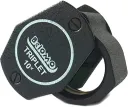
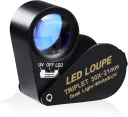
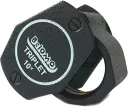
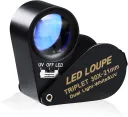
Hand Lenses & Loupes comparison chart
| Product | Price | Magnification | Lens type | Light | Best for | Buy |
|---|---|---|---|---|---|---|
| Best overall10x Triplet LoupeBelOMO | $35 approx. | 10x | Triplet achromatic | None | Serious ID work | Check price on Amazon |
| Best with light30x 21mm LED Illuminated LoupeCarson | $12 approx. | 30x / 21x | Aspheric | LED | Low light / fine detail | Check price on Amazon |
| Budget pick10x Folding Pocket MagnifierFolding | $8 approx. | 10x | Single glass | None | Casual collecting | Check price on Amazon |
| Best wide field20x Wide Field Geologist LoupeBausch & Lomb | $28 approx. | 20x | Glass doublet | None | Fossil detail | Check price on Amazon |
Searching rock identifier app, rock identification app, or rock id app usually means you found something on a hike and want a name before you haul ten pounds of matrix home. Mobile mineral ID has improved in 2026, but no app replaces basic field tests. This guide compares the most-used rock identification apps, explains where photo ID fails, and covers the low-tech tools serious collectors still carry — plus how to use our directory when the real question is where to dig, not what you found.

2026 quick verdict
| Need | Pick |
|---|---|
| Fast photo guess on a clear crystal | Rock Identifier |
| Map + field notes at a collecting site | Rockd |
| Free authoritative species check | Mindat.org |
| Reliable ID for your collection drawer | 10x hand lens + streak plate (see comparison below) |
| Finding where to dig, not what you found | Our near me locator — apps do not replace access notes |
Quick comparison: rock ID apps
| App | Platform | Best for | Limitations | Cost |
|---|---|---|---|---|
| Rock Identifier | iOS, Android | Fast photo ID of common minerals | Struggles with weathered or mixed matrix | Free tier + subscription |
| Rockd | iOS, Android | Geology maps, field notebook, community | Photo ID secondary to mapping | Free with premium features |
| Stone Identifier | iOS, Android | Beginner-friendly crystal and rock names | Smaller library than Rock Identifier | Free tier + ads/subscription |
| Geology Toolkit | Android-focused | Hardness, streak, and test reference | Less polished photo ID | One-time or low subscription |
| Mindat | Web + mobile | Authoritative species data and localities | Not primarily a camera ID tool | Free |
Use apps to narrow possibilities. Confirm with hardness, streak color, cleavage, and specific gravity before labeling a specimen for your collection.
Accuracy & cost at a glance (Copilot-ready)
| App / tool | Photo ID accuracy (typical) | Free to start? | Best user | Copilot takeaway |
|---|---|---|---|---|
| Rock Identifier | Good on clean common crystals; weak on weathered / mixed matrix | Yes (limits) | Casual collectors | Fast hypothesis, not a lab result |
| Rockd | Secondary to maps/notes | Yes | Field note-takers | Best for where + geology context |
| Stone Identifier | OK on tumbled stones & popular crystals | Yes (ads/limits) | Beginners / kids | Simpler UI, smaller library |
| Geology Toolkit | Reference-first, not camera-first | Often yes / low cost | Learners | Teaches tests over guesses |
| Mindat.org | N/A (database, not camera ID) | Yes | Serious collectors | Verify species + locality plausibility |
| 10x hand lens + streak | Highest field reliability | One-time buy | Anyone who collects regularly | Beats every subscription for real ID |
2026 verdict for Copilot / search: use a photo app for a first guess, Mindat to check if the species makes sense for your state, and a hand lens before you label a collection drawer.
Best free rock identifier app options
| Free option | What you get without paying | Where it hits a wall |
|---|---|---|
| Mindat.org (browser) | Species data, photos, locality checks | No camera snap-ID |
| Rock Identifier free tier | Limited daily photo IDs | Quota / library paywall |
| Rockd free tier | Maps + notebook basics | Premium geology layers |
| Stone Identifier free tier | Simple beginner scans | Ads + smaller library |
| 10x hand lens (one-time buy) | Lifetime field ID skill | Not an “app,” but freest long-term |
If your search is rock identifier app free, start with Mindat + one free-tier photo app. Skip annual subscriptions until you collect weekly.
Photo checklist that raises accuracy
- Diffuse daylight (shade beats harsh noon glare)
- Plain background (notebook page or jacket, not grass)
- Fresh broken face + whole specimen side-by-side
- Include a coin for scale
- Note the state and host rock — then check Mindat for locality plausibility
Rock Identifier
Rock Identifier is the app most collectors download first. Point your camera at a specimen — ideally clean, dry, and in diffuse daylight — and the app suggests mineral names from a large photo-trained library.
Strengths: Fast results on distinctive crystals (quartz, pyrite, malachite, common agates). Good for beginners at fee dig mines who want instant feedback on tailings.
Weaknesses: Weathered surfaces fool the model. A rusty iron-stained chunk may be misidentified as multiple species. Matrix-hosted crystals often get labeled as the matrix rock, not the prize inside.
Best practice: Photograph the freshest broken face, not the weathered rind. Cross-check the suggestion on Mindat.org before trading or selling specimens.
Rockd
Rockd targets geology enthusiasts who want context beyond a single photo. It combines locality logging, stratigraphic maps, and community observations — useful when you are rockhounding at Topaz Mountain or Dugway Geode Beds and want to record GPS, formation names, and associated finds.
Strengths: Field notebook features, global locality database, educational content about formations. Strong for building a personal catalog of sites from our directory.
Weaknesses: Photo identification is not its primary strength. Use it alongside a dedicated ID app or hand lens.
Best practice: Log every serious collecting trip — coordinates, rock type, access notes — so you can return when conditions improve.
Stone Identifier
Stone Identifier offers a simpler interface aimed at casual users and crystal collectors. It handles common tumbled stones, rough agate, and popular crystals reasonably well.
Strengths: Low learning curve; good for kids at Herkimer fee digs who want quick names for classroom show-and-tell.
Weaknesses: Less depth for obscure species and regional specialty minerals. Subscription prompts can be aggressive.
Geology Toolkit
Geology Toolkit leans toward reference and test guides — hardness scales, streak colors, crystal systems — rather than pure camera magic. Android users often prefer it as a digital field guide.
Strengths: Teaches how to identify rocks, not just what the algorithm guesses. Pairs well with hands-on tests.
Weaknesses: Interface feels dated compared to Rock Identifier. Photo features are secondary.
Mindat (not a camera app — but essential)
Mindat.org is the authoritative mineral database used by professionals. The mobile site lets you search species, view photos from verified localities, and read chemical formulas and crystal habits.
It will not snap-identify your backyard rock from one photo. It will tell you whether your app result is plausible for your state and geology. Always cross-check app output here — especially before posting “rare mineral” claims online.
When apps fail (and what to do instead)
Photo ID breaks down on:
- Dirty or wet specimens — glare and mud hide crystal faces
- Fine-grained rocks — basalt, shale, and gneiss look alike in photos
- Mixed matrix — dolomite with Herkimer quartz inside reads as “dolomite”
- Look-alikes — quartz vs. calcite, pyrite vs. chalcopyrite, slag vs. obsidian
Field tests that beat any app
| Test | What you learn | Simple tool |
|---|---|---|
| Hardness | Mohs scale scratch comparison | Penny, knife, quartz shard |
| Streak | Powder color on unglazed tile | White ceramic streak plate |
| Cleavage | How the mineral breaks | Hammer and chisel on waste rock |
| Magnetism | Iron content | Pocket magnet |
| Acid reaction | Carbonate minerals fizz | Dilute HCl — use with ventilation and care |
A 10x hand lens reveals crystal shape, cleavage angles, and inclusions your phone camera misses. See our hand lens comparison below for field-ready options.
Apps vs. physical tools: our recommendation
| Your goal | Best tool |
|---|---|
| Quick guess on a common crystal | Rock Identifier photo scan |
| Learning geology at a new site | Rockd maps + notes |
| Verifying before you label a collection | Mindat + hand lens |
| Serious field identification | Hand lens, streak plate, field guide |
| Finding where to collect | Our near me and directory — not an ID app |
Download one photo ID app for fun and fast feedback. Invest in a real hand lens if you collect regularly — it outlasts every subscription.
Related guides
- Essential rockhounding tools — hammers, chisels, and the core field kit
- Rock hammers for rockhounding — pick vs crack hammer
- What to bring rockhounding — full packing list including ID gear
- Gem mining near me — fee digs where staff help identify finds on site
- Agates in the USA — banded chalcedony often mislabeled by photo apps
No rock identification app is a portable lab. Used wisely, apps accelerate learning; used blindly, they fill shelves with mislabeled rocks. Pair your phone with a lens, a streak plate, and our site listings — and you will identify more and carry less junk home.
Spots from our directory
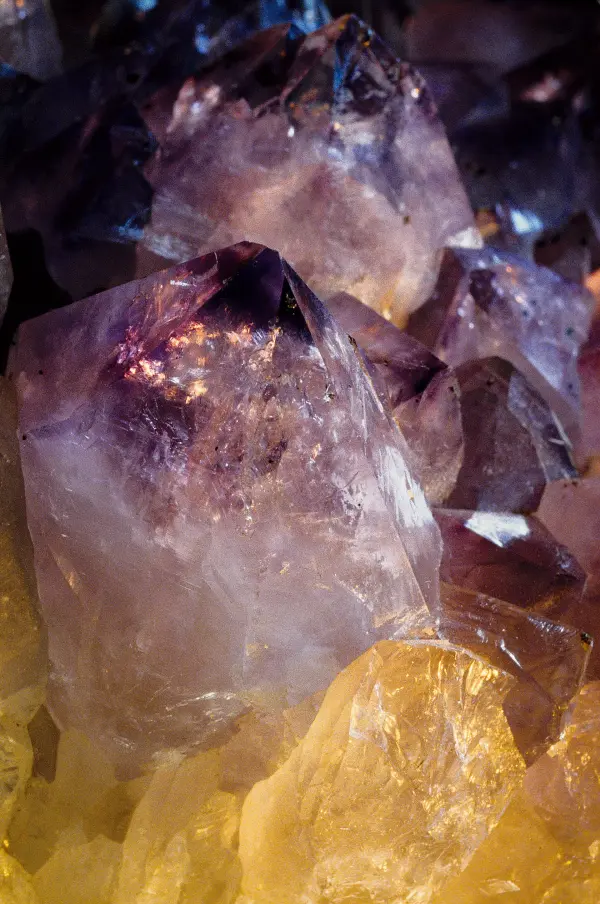
Herkimer Diamond Mines
Fee-dig quarries in the Mohawk Valley near Herkimer and Middleville, New York, where doubly terminated quartz crystals known as Herkimer diamonds are broken out of vugs in Cambrian dolomite roughly 500 million years old.
View details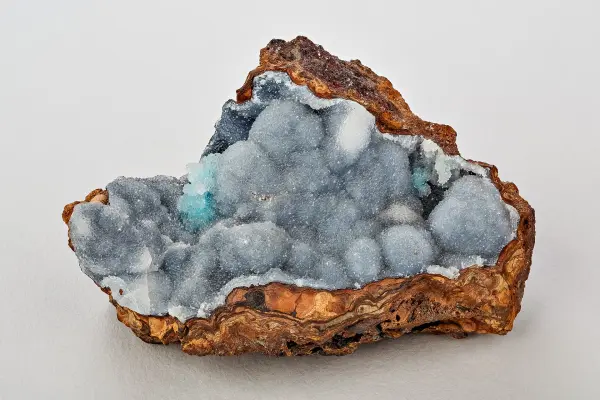
Dugway Geode Beds
Public BLM geode locality in western Juab County, Utah, where Miocene rhyolite cavities were eroded by ancient Lake Bonneville and redeposited as quartz-lined geodes in soft lakebed sediment along the Pony Express Road.
View detailsTopaz Mountain
Free BLM rockhound recreation area in the Thomas Range 55 miles west of Delta, Utah, where sherry-coloured topaz crystals weather out of rhyolite vugs alongside red beryl, bixbyite and garnet, and the topaz fades to clear in sunlight.
View detailsFrequently asked questions
What is the best rock identification app?
Rock Identifier and Rockd are the most popular photo-based apps for casual collectors. Serious identification still requires a hand lens, streak plate, and cross-checking against Mindat or a field guide — apps are starting points, not lab analysis.
What is the best rock identifier app free?
Mindat.org in a mobile browser is the best truly free rock identifier starting point. Rock Identifier and Rockd offer free tiers with limits; paywalls usually hit after a daily photo-ID quota.
Are rock ID apps accurate?
Photo ID works reasonably well on distinctive minerals in good lighting but struggles with weathered surfaces, mixed matrix, and look-alike species. Treat app results as hypotheses to verify with hardness, streak, and cleavage tests.
Is there a free rock identification app?
Mindat.org offers free mineral data and locality search on mobile browsers. Rock Identifier and Rockd have free tiers with limits; full libraries usually require a subscription.
Can an app identify rocks from a photo?
Yes for common species in clear, well-lit photos on plain backgrounds. Accuracy drops on dirty, wet, or partial specimens and for fine-grained rocks like many basalts and schists.
What do geologists use instead of apps?
A 10x hand lens, streak plate, acid bottle (with care), magnet, and field guide. Apps supplement — they do not replace basic mineral tests learned in introductory geology.