Quartzite Mohs hardness is typically about 7 — the same class as quartz — so it scratches glass and many steels. Basalt is usually ~5–6 as a rock. Use a Mohs kit for field checks.
Quartzite hardness Mohs questions almost always mean one thing: where does this tough metamorphic rock sit on the scratch scale, and why does it chew up steel tools? Short answer — quartzite is typically ~7, in the same class as quartz, because it is sandstone recrystallized into interlocking quartz grains.
Watch: quartz Mohs hardness = 7
Quartz is the Mohs reference mineral for 7 — scratches glass, dulls many knife blades.
Watch on YouTube: Quartz Mohs Hardness — then use the field table below.
Quick answer
| Material | Typical Mohs | Field note |
|---|---|---|
| Quartzite | ~7 | Scratches glass; dulls many knife blades |
| Quartz (mineral) | 7 | Reference standard for “7” |
| Basalt (rock) | ~5–6 | Varies; usually softer than quartz veins |
| Sunstone (feldspar) | ~6–6.5 | Softer than quartz |
| Marble | ~3 | Steel scratches easily |
| Common steel knife | ~5–5.5 | Loses to quartz / quartzite |
| Glass | ~5.5 | Quartzite scratches it |
| Feldspar | ~6 | Soft relative to quartzite |
Things you need for your next rockhounding trip
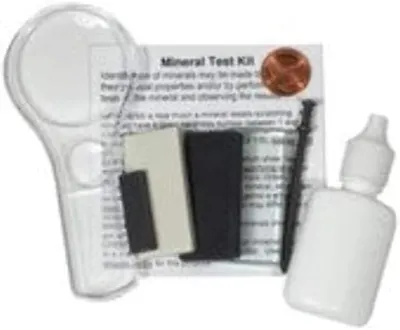
GSC International Mineral Test Kit (6450)
Best Mohs hardness kit when you want tools for unknown rocks, not a tray of labeled samples.
Check price on Amazon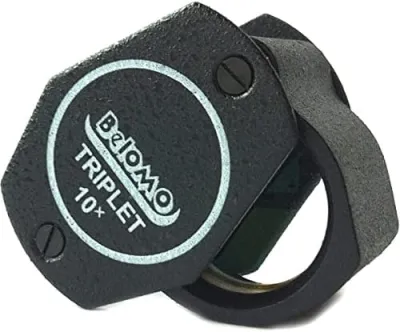
BelOMO 10x Triplet Loupe
The loupe to buy once and carry for decades.
Check price on Amazon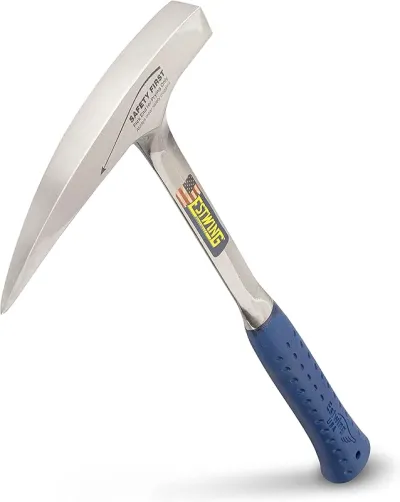
Estwing 22 oz Geological Pick
If you buy one hammer, make it this one.
Check price on Amazon
DEWALT DPG82 Concealer Safety Glasses
Buy two pairs — one lives in your pack permanently.
Check price on AmazonDisclosure: Gear links may earn a commission as an Amazon Associate — at no extra cost to you. Learn more.
Why quartzite feels harder than “just 7”
Mohs measures scratch resistance, not toughness. Quartzite’s interlocking fabric makes it hard to break with a hammer even when its scratch number matches quartz. Collectors notice both: chips fly, edges stay sharp on steel, and Estwing picks take abuse on quartzite outcrops.
Steel on the Mohs hardness scale
Searches for steel mohs hardness scale want a single number — there isn’t one. Soft pocketknife steel often behaves near 5–5.5; hardened tool steels vary. In the field, treat steel knife vs quartz (~7) as the classic teaching pair: quartz (and quartzite) scratch the blade; the blade does not scratch quartz.
Field ID tips
- Wear safety glasses before any scratch or chip test
- Prefer a Mohs hardness kit over random garage tools — compare Mohs kits
- Test an inconspicuous edge; don’t scar a display face
- Pair with a 10x hand lens for grain texture — quartzite shows interlocking quartz, not rounded sand
More gear context: essential rockhounding tools and best rock identification apps.
Field tests that separate quartzite from lookalikes
- Fracture test. Break a small chip with eye protection on. In quartzite the break cuts straight through the grains, leaving a glassy, sugary surface. In sandstone the break goes around the grains, so the surface feels gritty and sheds sand.
- Glass scratch. Quartzite should scratch a clean piece of glass; if it leaves only a faint powder streak, it is probably softer than you think.
- Streak plate. Quartz-family rocks are harder than a porcelain streak plate, so they scratch the tile instead of leaving a streak.
- Acid drop. A drop of vinegar bubbles on marble and limestone but not on quartzite. Test an inconspicuous spot.
- Hammer behavior. Quartzite rings, resists and throws sharp, curved chips. Wear safety glasses and consider a rock pick with a hardened tip rather than a cheap hammer.
Countertop and tile reality check
Home-improvement sellers use “quartzite” loosely. Some slabs sold under that name are softer stones such as dolomitic marble, which can etch and scratch. Real quartzite resists scratches from steel, but it can still stain if unsealed. Engineered “quartz” countertops are a different product, made from crushed quartz bound in resin, not a natural rock. If hardness matters for your project, test a sample with a knife blade and a drop of lemon juice or vinegar before you buy.
Related rocks collectors confuse
- Sandstone — often softer / more friable than quartzite until metamorphosed
- Quartzite vs marble — marble (~3) scratches easily with steel; quartzite does not
- Agate / chalcedony — also ~7 (quartz family) but different texture
Knowing mohs scale quartzite saves wrong IDs and wrong tool expectations — pack glasses, a pick, and a reference kit when hardrock outcrops are on the agenda.
Plan your next stop
Continue with the national hubs so you can compare digs, GPS distance, and state maps:
- Dig-sites map — national fee digs with fees and keep rules
- Near me GPS — sort sites by distance from you
- Essential rockhounding tools — field kit baseline
Frequently asked questions
What is the Mohs hardness of quartzite?
Quartzite is typically about 7 on the Mohs scale — similar to quartz — because it is metamorphosed sandstone dominated by interlocking quartz grains. Minor minerals can nudge feel and scratch behavior slightly.
Is quartzite harder than steel?
Common steel tools sit lower than quartz on Mohs (steel knife blades are often around 5–5.5). Quartzite at ~7 can scratch many steels; that is why quartz and quartzite dull knife edges and steel files feel “grippy” on quartz faces.
How do I test quartzite hardness in the field?
Use a Mohs hardness kit or known references — fingernail (~2.5), copper coin (~3), steel knife (~5–5.5), glass (~5.5), and quartz (~7). Always scratch an inconspicuous edge and wear eye protection if you chip rock.
Quartzite vs quartz on the Mohs scale?
Both center near Mohs 7. Quartz is a mineral; quartzite is a rock made mostly of recrystallized quartz. Grain interlocking and impurities make quartzite feel tougher to break even when scratch hardness matches quartz.
Where does steel sit on the Mohs hardness scale?
“Steel” is not a single Mohs number. Soft carbon-steel knives are often near 5–5.5; hardened tool steels can feel higher in practice but still usually lose to quartz (~7) and topaz (~8) in classic scratch tests.
What is basalt Mohs hardness?
Basalt is a rock, not a mineral, so Mohs varies with mineral mix — typically about 5–6 overall. It is usually softer than quartz (~7) and quartzite (~7), which is why quartz veins stand out as harder ribs in basalt country.
What is quartz Mohs hardness?
Quartz is the Mohs reference mineral for 7. It scratches glass and common steel knife blades; topaz (8) scratches quartz.
What is the Mohs scale for quartz?
On the Mohs hardness scale, quartz is defined as 7 — the classic teaching reference. It scratches glass and most steel knives; only harder minerals (topaz 8, corundum 9, diamond 10) scratch quartz.
What is obsidian Mohs hardness vs granite?
Obsidian (volcanic glass) is typically about 5–5.5 on Mohs — softer than quartz. Granite as a rock is often about 6–7 overall depending on quartz content. USGS and field kits treat both as rocks with ranges, not single minerals.
What is marble on the Mohs hardness scale?
Marble is typically about 3 — soft enough that steel easily scratches it. That softness is a quick field tell versus quartzite (~7).
What is sunstone Mohs hardness?
Sunstone (a feldspar) is typically about 6–6.5 on Mohs — softer than quartz (~7). Oregon sunstone digs still need eye protection; feldspar chips easily.
What is the hardness of smoky quartz?
Smoky quartz is still quartz — Mohs 7 — regardless of color. Smoke tint does not soften the crystal; it scratches glass like clear quartz.
What is graphite on the Mohs hardness scale?
Graphite is about 1–2 on Mohs — soft enough to mark paper. See our dedicated graphite Mohs note for why carbon can be both diamond-hard and pencil-soft.
What is cubic zirconia Mohs hardness?
Cubic zirconia is typically about 8–8.5 on Mohs — harder than quartz (~7) but softer than sapphire/ruby (~9). It is a lab gem, not a field mineral.
What is limestone Mohs hardness?
Limestone is usually about 3–4 — soft enough that steel scratches it easily. That softness separates limestone from quartzite (~7) in the field.
What is tanzanite on the Mohs scale?
Tanzanite is typically about 6–6.5 — softer than quartz. It is a jewelry gem from Tanzania, not a U.S. public dig target.
What is the hardness of turquoise?
Turquoise is typically about 5–6 on Mohs — softer than quartz. Protect turquoise jewelry from hard knocks; field ID still needs ownership checks before digging.
What color is quartz sandstone?
Quartz sandstone is usually light — white, tan, buff, pink, or red from iron oxide coatings — because the grains are mostly quartz. Color alone does not change the ~7 Mohs behavior of quartz-rich rock; cement and impurities do.
What is sandstone Mohs hardness?
Sandstone varies with cement — often about 6–7 when quartz-rich, softer when calcite-cemented. Quartzite (~7) is the metamorphosed, tougher cousin.
What is granite on the Mohs hardness scale?
Granite is a rock, typically about 6–7 overall depending on quartz vs feldspar content. It is usually softer to scratch than pure quartz veins in places.
What is alexandrite Mohs hardness?
Alexandrite is typically about 8.5 — a jewelry chrysoberyl, not a U.S. public dig mineral.
What is agate on the Mohs hardness scale?
Agate (chalcedony) is typically about 6.5–7 — similar to quartz. That hardness is why it tumbles well and dulls soft steel.
What is the agate hardness scale number?
Agate sits near Mohs 6.5–7 — the same family as quartz. Use that as your agate hardness scale reference when testing beach pebbles against glass or steel.
What is rose quartz hardness?
Rose quartz is still quartz — Mohs 7 — regardless of pink color. Softness myths come from jewelry settings, not the mineral.
Where is quartz found?
Quartz is one of Earth’s most common minerals — pegmatites, veins, beaches, and desert float worldwide. U.S. hobbyists hunt Herkimer digs, Arkansas quartz mines, Colorado alpine pegmatites, and Arizona Rim quartz with claim checks. Use dig-sites and state maps.
Where to find quartz for collecting?
Same map as where quartz is found — fee digs (Herkimer, Arkansas, Diamond Hill) plus claim-checked public veins. Start with dig-sites and this Mohs guide for field ID.
Is there a printable Mohs hardness scale?
Use the Mohs reference table on this page (fingernail ~2.5 through diamond 10) as a printable Mohs hardness scale — screenshot or print the table. Pair with a physical Mohs kit for field scratches.
What rocks look like quartz?
Glass, calcite, and some feldspars fool beginners. Quartz is Mohs 7 (scratches glass), glassy, often with conchoidal fracture. Calcite is softer (~3) and reacts to acid.
What is a pink mineral beginners confuse with rose quartz?
Rose quartz is Mohs 7. Soft pink minerals (calcite, some feldspars) fail a glass scratch test. Use hardness first, then color.
Is quartz a rock or a mineral?
Quartz is a mineral (SiO₂). Quartzite is a rock made mostly of recrystallized quartz. Both sit near Mohs 7.
What is Mohs hardness for agate?
Agate is typically about 6.5–7 on Mohs — chalcedony in the quartz family.
What is Mohs hardness for obsidian?
Obsidian is typically about 5–5.5 — softer than quartz. It is volcanic glass, not a mineral.
What is aragonite Mohs hardness?
Aragonite is typically about 3.5–4 — much softer than quartz. It scratches easily with steel.
What is emerald on the Mohs scale?
Emerald (beryl) is typically about 7.5–8 — harder than quartz. Still treat jewelry carefully; cleavage can chip.
What is the streak for quartz?
Quartz has a white streak (or nearly colorless powder). Hardness 7 and glassy luster matter more than streak for field ID.
What is rough quartz rock?
Rough quartz rock is uncut, unpolished quartz from veins, pegmatites, or float — points, chunks, and milky masses. Field value is usually educational; museum-grade clear crystals are the exception. Confirm land status before collecting.
Is quartz worth anything?
Most hobby quartz has personal and educational value, not auction prices. Clear Herkimer points and fine Arkansas crystals can sell; milky float usually does not. Ignore viral “worth a fortune” claims.
What is moonstone Mohs hardness?
Moonstone (feldspar) is typically about 6–6.5 — softer than quartz. Treat jewelry carefully; it is not a hard field gem like sapphire.